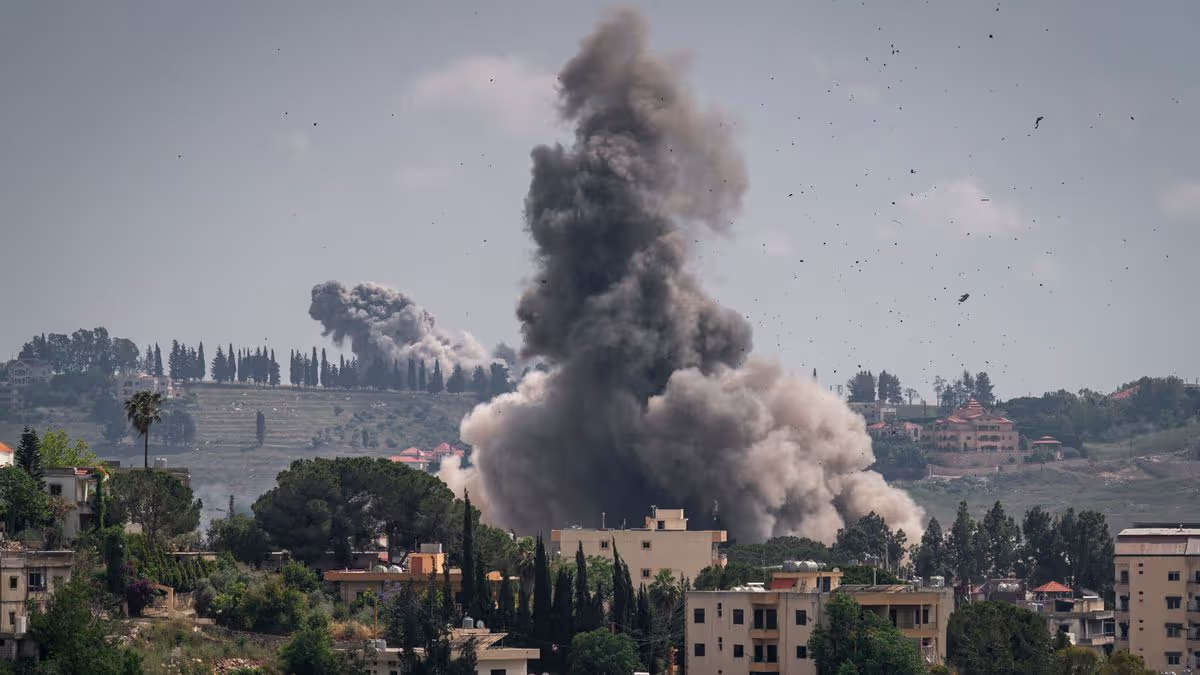
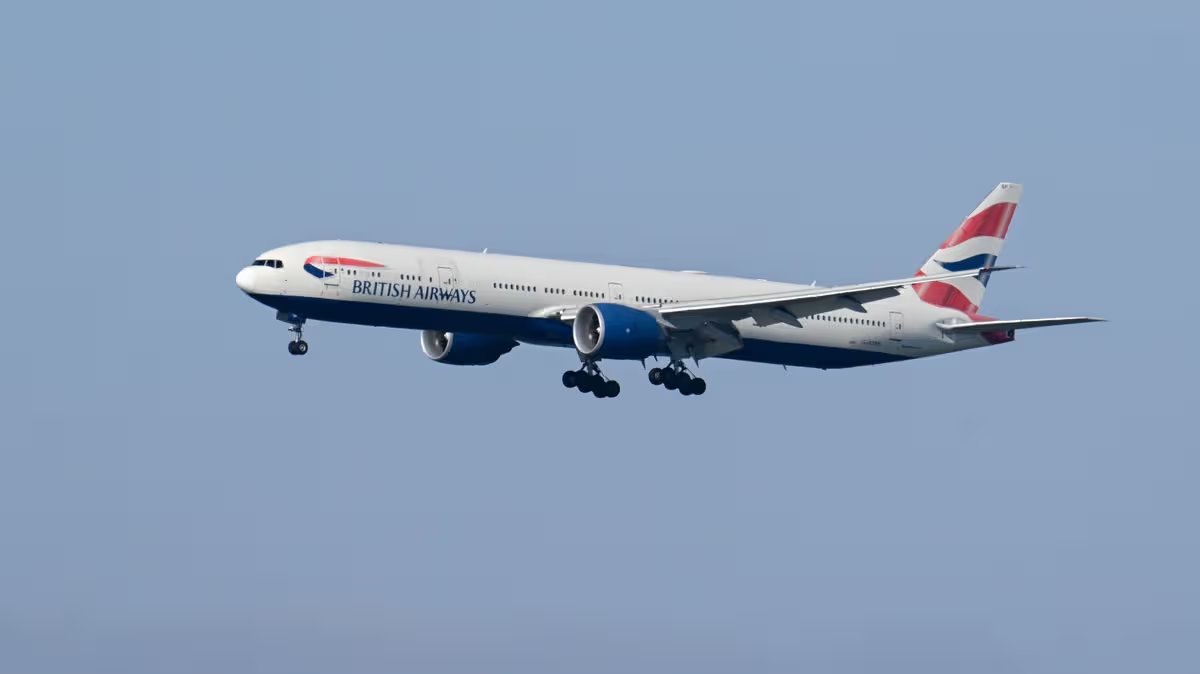



Based on ongoing regional instability, British Airways has significantly extended its suspension of services to several major Middle Eastern hubs, casting a long shadow over the summer and autumn travel plans of thousands of passengers. Initially pausing flights at the outbreak of the Iran war, the airline had aimed to restart journeys to destinations like Dubai, Doha, and Tel Aviv by early July. However, in a recent update, the carrier has pushed this timeline back by nearly four months, now stating that flights to Dubai, Tel Aviv, Bahrain, and Amman will not resume until at least October 25th, well after the peak summer season concludes. This decision underscores the profound and prolonged impact the conflict is having on global aviation networks and passenger confidence in the region.
The ripple effects of this extended grounding are widespread. For Dubai, a perennial favorite for British holidaymakers and business travelers alike, the absence of a major carrier like British Airways represents a notable void in air connectivity. The airline has also implemented reduced frequencies on other key routes; services to Doha have been halved to just one daily flight, with a return to a twice-daily schedule not expected until August 1st. Similarly, flights to Riyadh are operating on a reduced single daily service until August 8th. These scaled-back operations, coupled with the full suspensions, reflect a cautious corporate strategy prioritizing safety and operational certainty over immediate commercial opportunities in a volatile airspace.
In response to the widespread disruption, British Airways has implemented a comprehensive and flexible customer care policy. Recognizing the inconvenience and uncertainty faced by travelers, the airline is offering full refunds to all customers booked to travel to or from the affected cities—including Abu Dhabi, Amman, Bahrain, Doha, Dubai, Tel Aviv, and Riyadh—on any date up to October 31st. Crucially, this refund option stands even for flights that are still technically scheduled to operate, giving passengers full control to seek alternative arrangements without financial penalty. This proactive approach aims to provide clarity and reassurance during a deeply uncertain time.
Beyond refunds, the airline is offering significant rebooking flexibility. Customers holding tickets for the suspended or reduced services can change their travel dates or reroute their journeys without incurring the standard change fee, though any difference in fare would still apply. This fee waiver extends to an additional city, Jeddah in Saudi Arabia, broadening the options for affected passengers. A British Airways spokesperson emphasized that the situation is under “constant review,” noting that the airline has already assisted thousands in returning home and has added capacity on other long-haul routes where feasible to absorb displaced demand.
The broader aviation landscape mirrors British Airways’ cautious stance, with several international carriers having cancelled or curtailed their Middle Eastern operations since the conflict’s onset. This collective retraction highlights the industry’s acute sensitivity to geopolitical instability, where safety assessments and insurance considerations can swiftly ground entire networks. For the affected destinations, the reduction in flight links poses a significant economic and logistical challenge, potentially dampening tourism, business travel, and diplomatic exchange during a critical period.
Ultimately, the extension of these flight suspensions until late October signals a sobering expectation that the regional climate will remain too unstable for normal operations for the foreseeable future. For countless travelers, this means revised itineraries, cancelled holidays, and postponed business. As British Airways and its counterparts navigate this complex environment, their primary focus remains the safety of passengers and crew, with commercial services only resuming when a durable operational certainty can be assured. The airline’s commitment to customer options, through refunds and flexible rebooking, offers a essential lifeline of flexibility amid the disruption, as the industry watches and waits for calmer skies ahead.