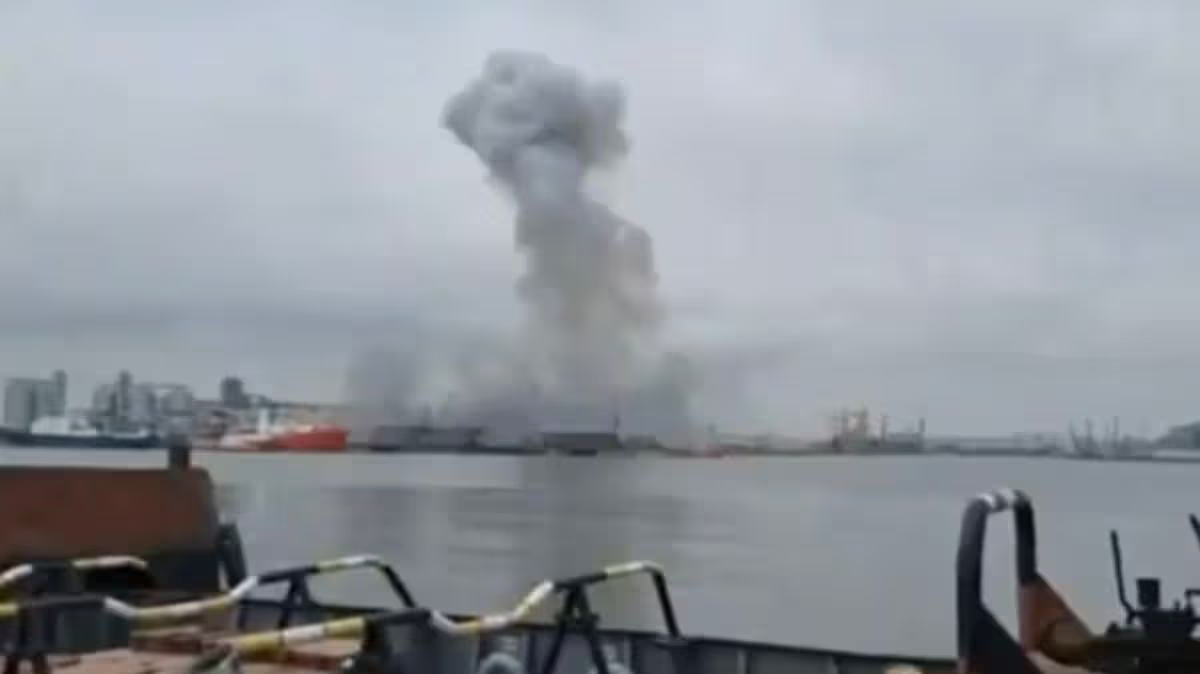



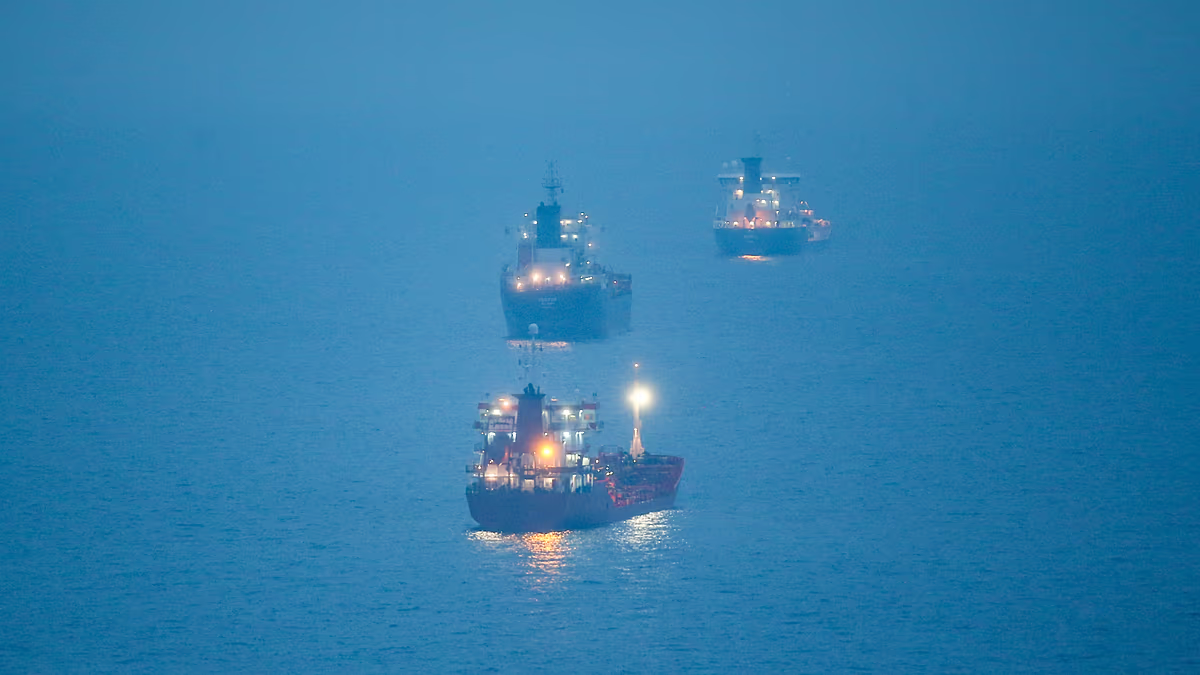
In a tragic incident underscoring the deadly reach of the war in Ukraine, five civilian sailors lost their lives when two cargo ships were struck by drone attacks in the Sea of Azov. According to Azerbaijan’s foreign ministry, the vessels Natra and Zirkon were hit near the Russian port of Taganrog overnight on Friday, June 5th, 2026. The ships were on a routine commercial journey from Turkey to Rostov-on-Don, intending to load grain. Preliminary reports confirmed that among the crews were 26 Azerbaijani nationals working under private civilian contracts, explicitly unconnected to any state activity. While several survivors were evacuated to nearby ports for medical care, the attack resulted in the devastating loss of two crew members aboard the Natra and three aboard the Zirkon, casting a pall of grief over their communities and highlighting the profound human cost of maritime conflict.
The attack unfolded with brutal efficiency. The Natra, sailing under the flag of Belize, was struck multiple times, killing two sailors and igniting a fire on board. Although the blaze was eventually brought under control and the ship remained afloat, it was left crippled, having lost its propulsion. The second vessel, the Zirkon, registered under the flag of Palau, suffered a similar fate. It sustained multiple strikes, triggering a fire that claimed the lives of three crew members. In a desperate bid for survival, the remaining crew was forced to abandon ship before emergency responders could reach them. These stark details paint a picture of sudden terror on the high seas, where civilian mariners going about their work found themselves caught in a violent crossfire, their ships transformed into scenes of chaos and tragedy.
The flag histories of the targeted vessels immediately drew scrutiny from maritime analysts. Both the Zirkon and Natra have sailed under various “flags of convenience,” including those of the Cook Islands and Vanuatu, with the Zirkon having previously flown the Russian flag before re-registering in Palau in 2022. This pattern is consistent with vessels belonging to Russia’s so-called “shadow fleet”—a network of older, often poorly insured ships used to circumvent Western sanctions on Russian commodities, particularly oil. Registries like Belize and Palau are commonly used in this opaque network. While neither ship appeared on published sanctions lists at the time of the attack, their association with this fleet placed them squarely in a contested logistical chain that Ukraine has vowed to disrupt.
Ukraine’s military later claimed responsibility for a broader drone operation that night, though without directly acknowledging the specific fatalities. The commander of Ukraine’s unmanned systems forces, Robert Brovdi, stated that Ukrainian drones had “struck five illegally loitering vessels” in the ports of Mariupol and Berdiansk and in the coastal waters of temporarily occupied territories. He asserted these ships were being used to transport grain looted from occupied Ukrainian regions. This declaration aligns with the ships’ destination, Rostov-on-Don, a port repeatedly identified by Ukraine and Western governments as a key transit point for grain systematically stolen from the occupied territories of Zaporizhzhia, Kherson, Donetsk, and Luhansk since the full-scale invasion began in 2022.
This deadly encounter is a stark escalation within Ukraine’s extensive and innovative naval drone campaign. Since 2022, Ukraine has relentlessly targeted Russian naval assets and logistics in the Black Sea and Sea of Azov, achieving significant strategic successes. The reported strike on commercial vessels marks a pointed intensification of this campaign, directly aiming to cripple the maritime corridors used for what Ukraine and the international community deem illegal exports of plundered resources. The attack demonstrates Kyiv’s capability and willingness to project force deep into Russian-controlled waters, transforming them into a high-risk zone not only for military vessels but for any ship operating within Moscow’s sanctioned shadow trade network.
Ultimately, the aftermath leaves a complex tableau of geopolitical strife and human sorrow. Azerbaijan, while mourning its lost citizens, reiterated its longstanding advisory for nationals to avoid employment in conflict zones, a warning rendered grimly prescient. The incident lays bare the perilous convergence of wartime strategy, sanctions evasion, and civilian life. The five sailors were not combatants but workers entangled in a globalized system of shipping and sanctions, who paid the ultimate price for being aboard vessels perceived as instruments of occupation and theft. Their deaths are a somber reminder that modern warfare extends beyond traditional battlefields, with unseen drone operators and anonymous cargo ships colliding in ways that irrevocably shatter lives far from the front lines.