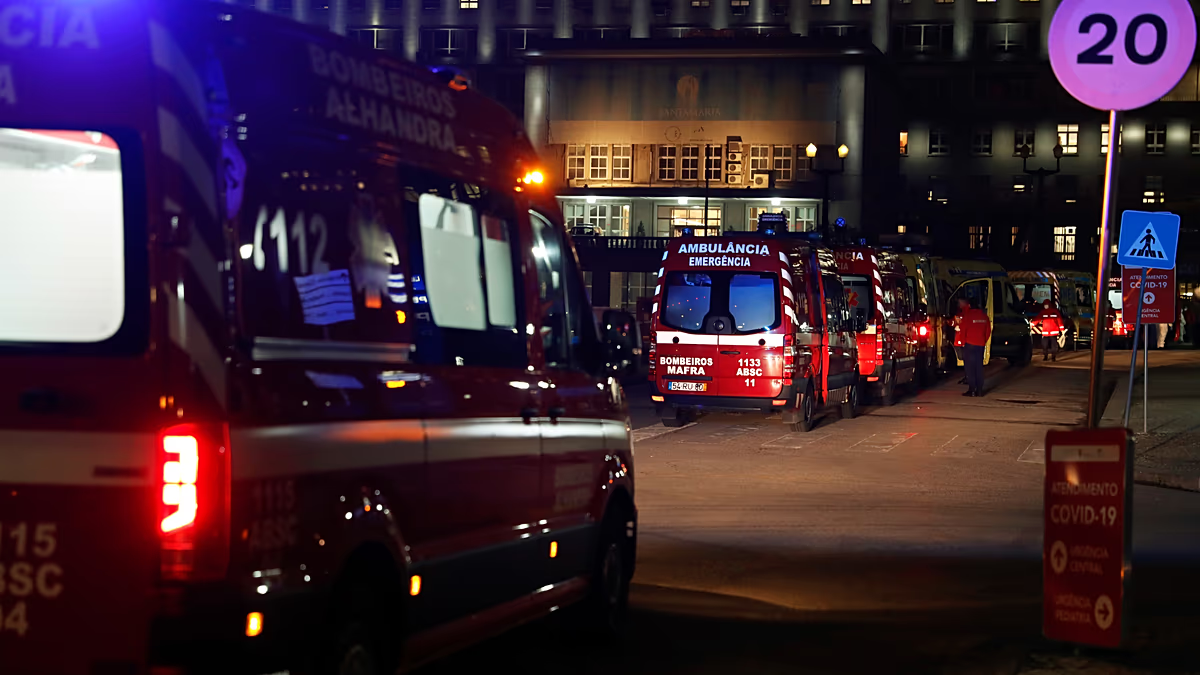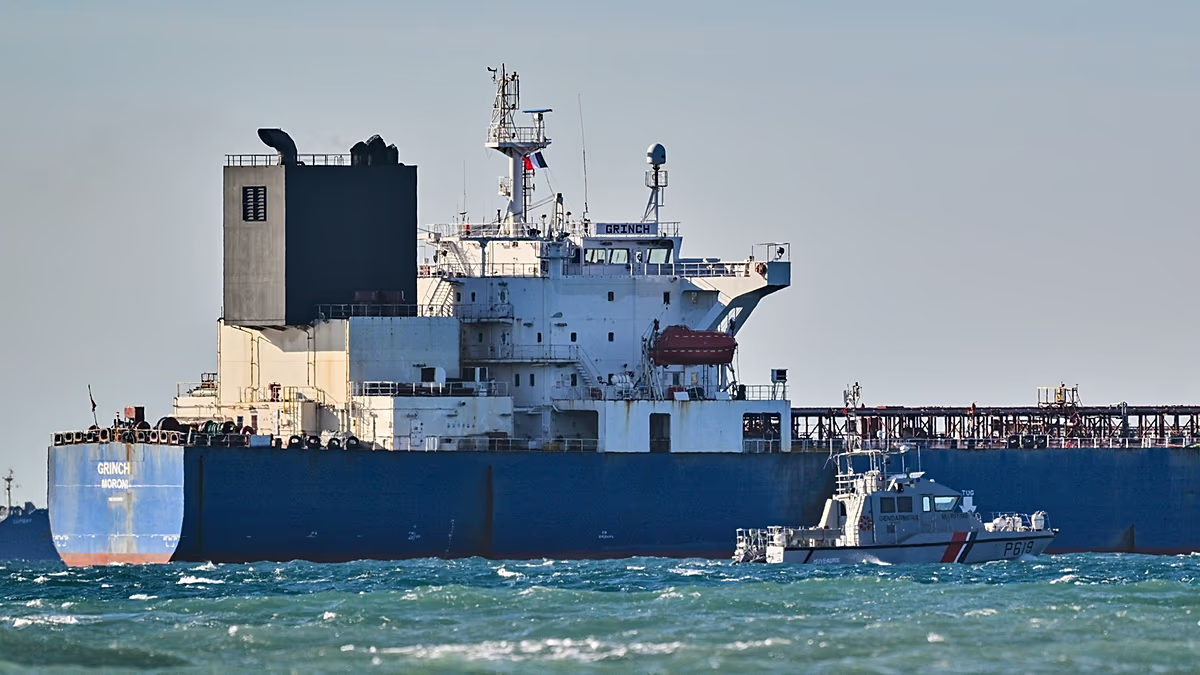

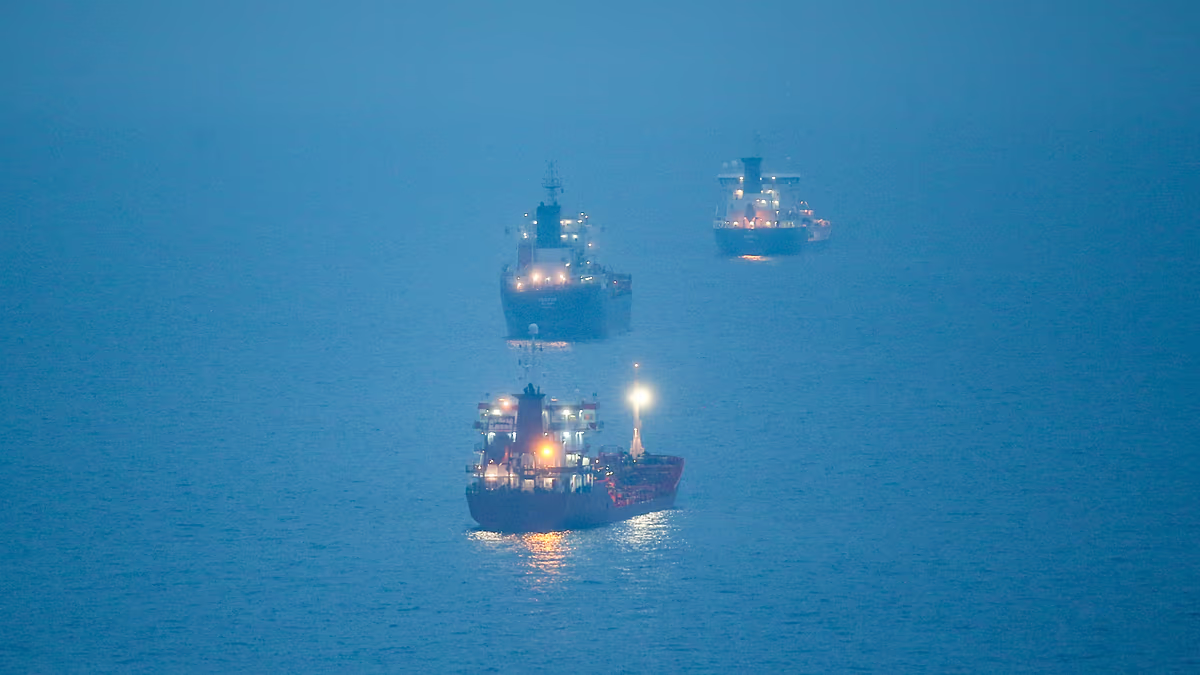


A week after a Russian drone crashed into an apartment building in the Romanian city of Galați, a new and unsettling incident has occurred on the country’s Black Sea coast. In the early hours of Friday morning, a maritime drone—an unmanned, explosives-laden vessel—exploded in the port of Constanța. According to Romania’s Defence Ministry, the device was not part of the Romanian military’s equipment and was not involved in any recent exercises. It self-detonated at 10:30 AM local time, and fortunately, no injuries were reported. This event, however, marks a serious escalation, bringing the tangible risks of the war in Ukraine directly to a key NATO and European Union member state.
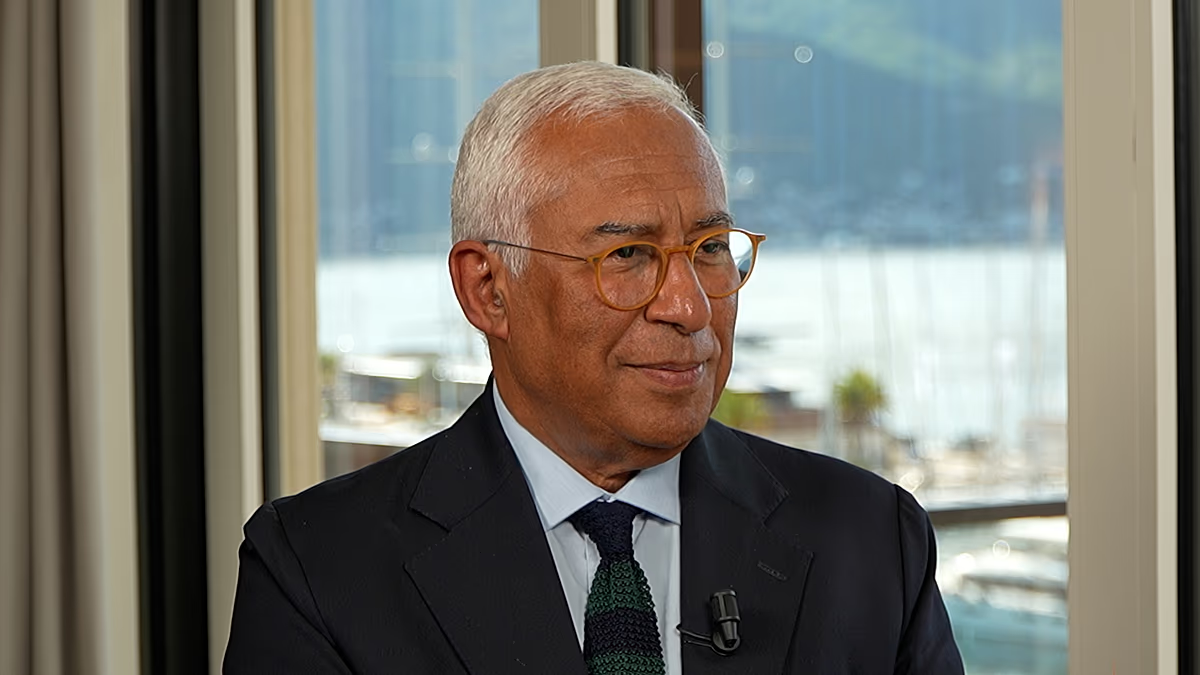
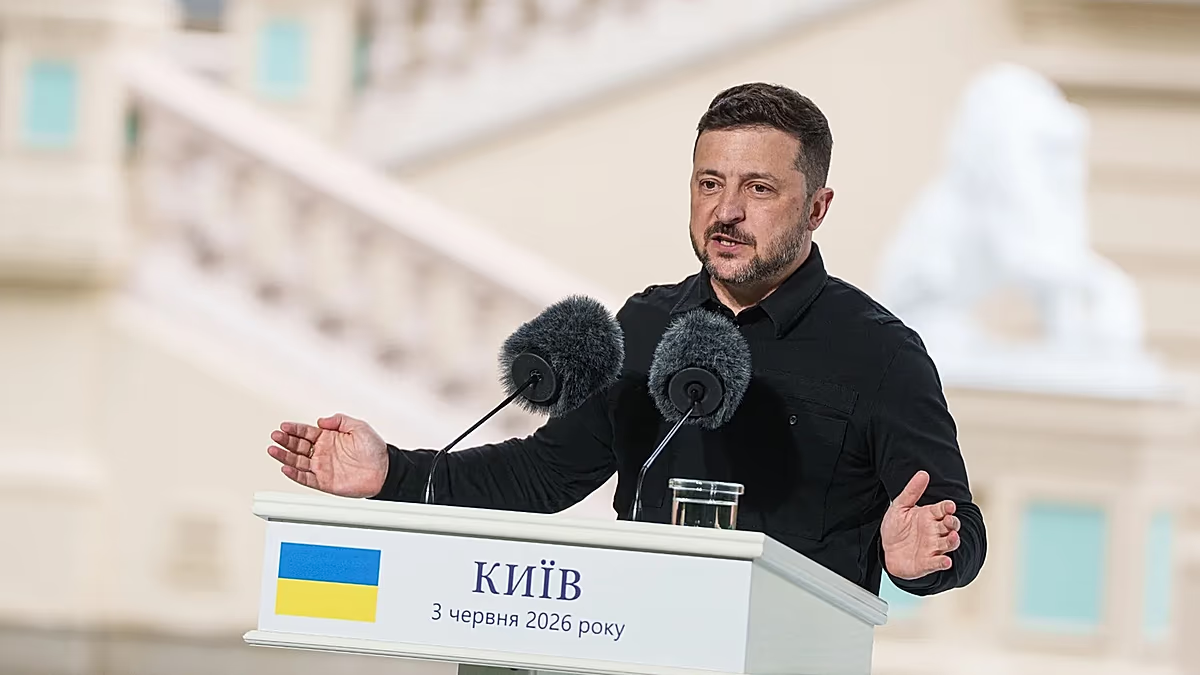
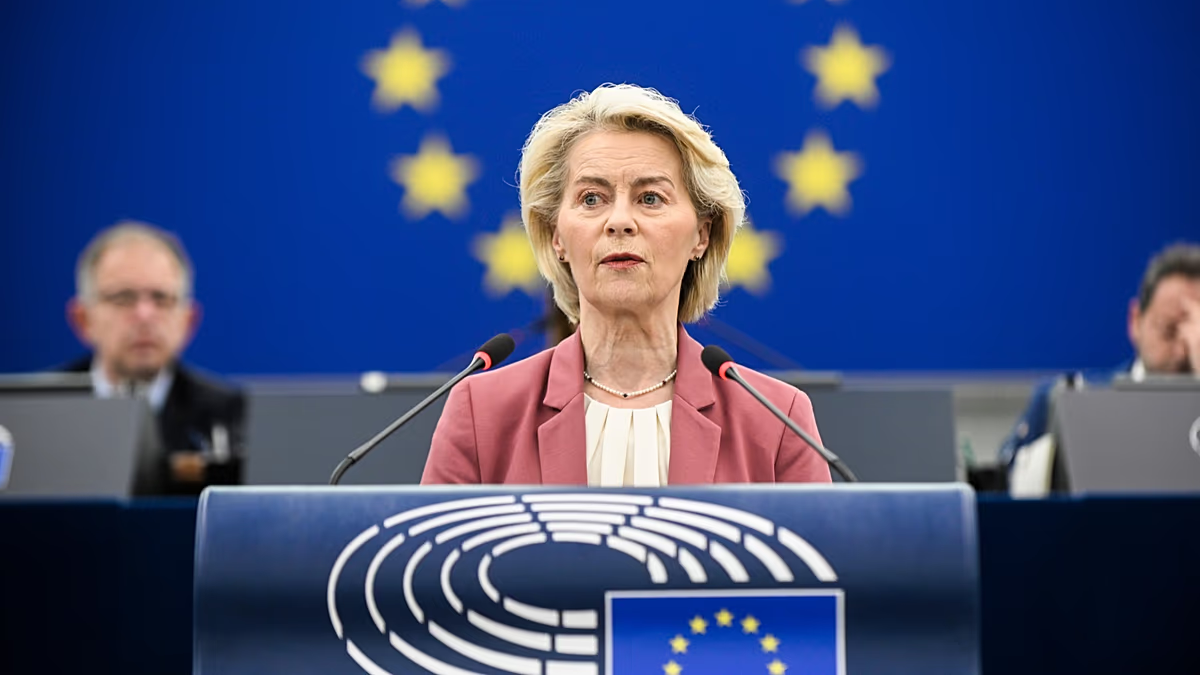
The immediate response from the highest levels of the European Union was one of unequivocal solidarity and grave concern. European Commission President Ursula von der Leyen directly linked the explosion to Russia’s ongoing war, stating that such incidents are “increasingly becoming a direct threat to countries on our Eastern border.” Her message underscored a firm commitment to collective security. Echoing this sentiment, European Council President António Costa offered Romania the EU’s “full solidarity,” condemning the repeated violations of member states’ airspace and reaffirming an unwavering commitment to their security. This unified political front highlights how these incidents are no longer seen as distant spillover but as direct challenges to European security.
For Romania, a nation with a long Black Sea coastline and a border with Ukraine, these back-to-back events have sharply heightened tensions. President Nicușor Dan confirmed that law enforcement and security services acted swiftly to secure the area before the drone’s detonation, prioritizing the protection of lives and critical port infrastructure. He framed the situation with sober clarity, noting that with a military conflict raging next door, the security environment is inherently sensitive and volatile. President Dan left no room for ambiguity about the source of the threat, reiterating that the Constanța incident is a “direct consequence of the war of aggression unleashed by Russia against Ukraine.”
These episodes in Romania are not isolated. They represent the latest and among the most serious in a growing pattern of drone incursions affecting NATO territory since the full-scale invasion began in 2022. Similar unsettling events have recently rattled the Baltic states, suggesting a broader pattern of testing and destabilization along NATO’s entire eastern flank. Each incursion, whether from Russian or Ukrainian forces—as both sides utilize long-range drones—pushes against the boundaries of the conflict zone, creating moments of high risk and demanding immediate diplomatic and military assessment from the Alliance.
The strategic implications are profound. The port of Constanța is not just a Romanian asset; it has become a vital logistical hub for Ukrainian grain exports and a key node for Western support to Ukraine. An attack, even an accidental drift, targeting or affecting such infrastructure moves beyond a localized security scare and strikes at a cornerstone of regional stability and economic resilience. It forces a recalculation of defensive postures in the Black Sea, an area already dominated by Russian naval activity, and compels NATO to consider how to protect both sovereign territory and these critical arteries of support.
In conclusion, the drone explosion in Constanța, following so closely the incident in Galați, serves as a stark reminder that the war’s perimeter is fluid and dangerously porous. While thankfully causing no casualties this time, it has successfully delivered a psychological and political shockwave. The absolute solidarity expressed by EU leaders is a necessary first step, but as President von der Leyen pointed out, the response must now match the urgency of the threat. For Romania and its allies, the challenge is to convert this solidarity into concrete, enhanced measures that bolster deterrence, protect critical infrastructure, and navigate this new, unsettling reality where the front line can, without warning, appear on a quiet pier or in a residential neighborhood.