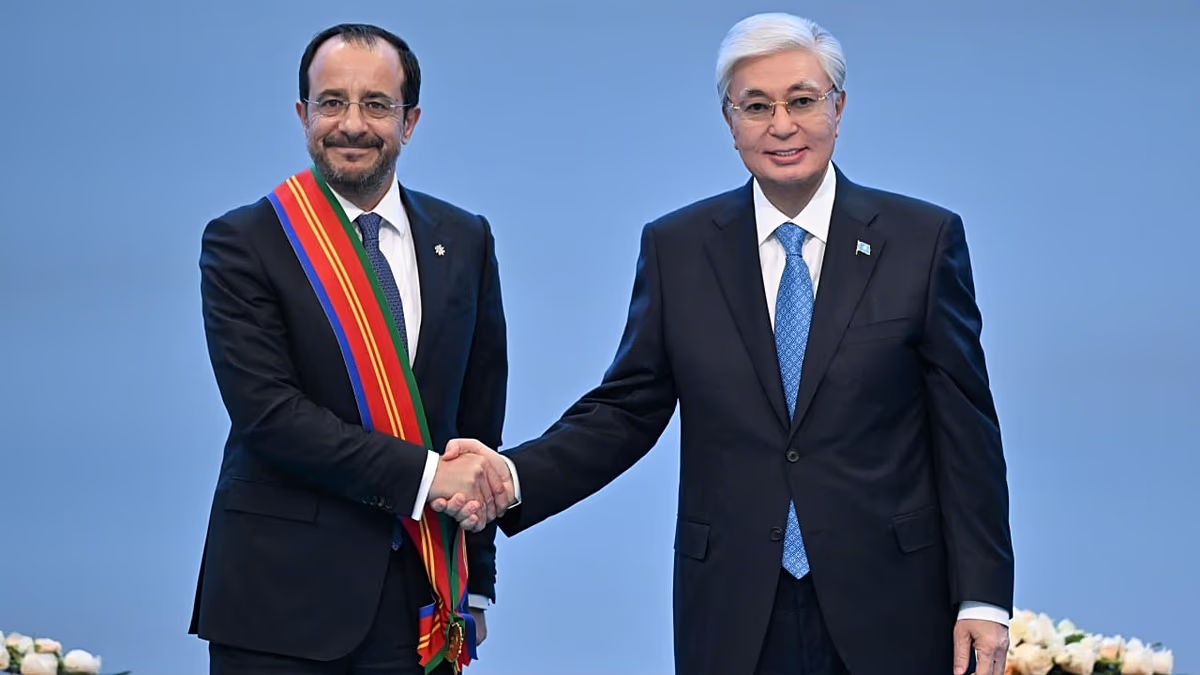



After a grueling, nearly twelve-hour meeting in Brussels, where diplomats had been meticulously working through an exhaustive agenda ranging from European defense to tobacco taxes, a sudden and decisive breakthrough finally arrived. Just as exhaustion was setting in, the Cypriot presidency received the long-awaited signal: Hungary was prepared to lift its veto on Ukraine’s accession talks with the European Union. This moment ended two years of political paralysis, a period during which successive EU presidencies had tried and failed to overcome the blockage engineered by Hungary’s then-Prime Minister, Viktor Orbán. The Cypriot ambassador’s procedural question—“Does anybody have any objections?”—was met with a profound, relieved silence in the room. That quiet marked the end of an era of frustration and the start of a new chapter, authorizing the formal letters to be sent to Kyiv and Chisinau, informing them that negotiations on the foundational “fundamentals” cluster could begin. There was no applause, but the collective emotion was palpable; as one diplomat simply put it, “All Brussels was waiting for this.”
The path to this breakthrough was neither quick nor easy, rooted in a deeply sensitive historical issue: the rights of the Hungarian minority in Ukraine’s Transcarpathia region. For Hungary, this is a matter touching a national nerve, stemming from the traumatic 1920 Treaty of Trianon, which left millions of ethnic Hungarians outside the country’s borders. Tensions had been exacerbated in recent years by Ukrainian laws strengthening the official use of the Ukrainian language, which Budapest saw as discriminatory. The political shift in Hungary following the April elections, which brought Péter Magyar to power, created a critical window of opportunity. Unlike his predecessor’s confrontational stance, Magyar’s administration engaged in swift, good-faith consultations with Kyiv throughout May, focusing on finding a practical compromise on minority rights that could satisfy both nations and unblock the EU process.
Parallel to these bilateral talks, the Cypriot presidency, determined to avoid the failures of its predecessors, worked discreetly with the European Commission and Hungarian officials to ensure any agreement would be fair and squarely within the EU framework. The goal was a “win-win” solution—one that protected minority communities without forcing Ukraine into unfair concessions under the pressure of martial law. Public signals from Ukrainian officials, such as Deputy Prime Minister Taras Kachka’s assurance that the Hungarian minority is “an absolutely integral part of Ukrainian society,” helped foster a more constructive atmosphere. Meanwhile, the European Commission’s decision to release billions in frozen EU funds to Hungary, while publicly denied as a direct quid pro quo, undoubtedly eased tensions and built political capital in Budapest for a compromise.
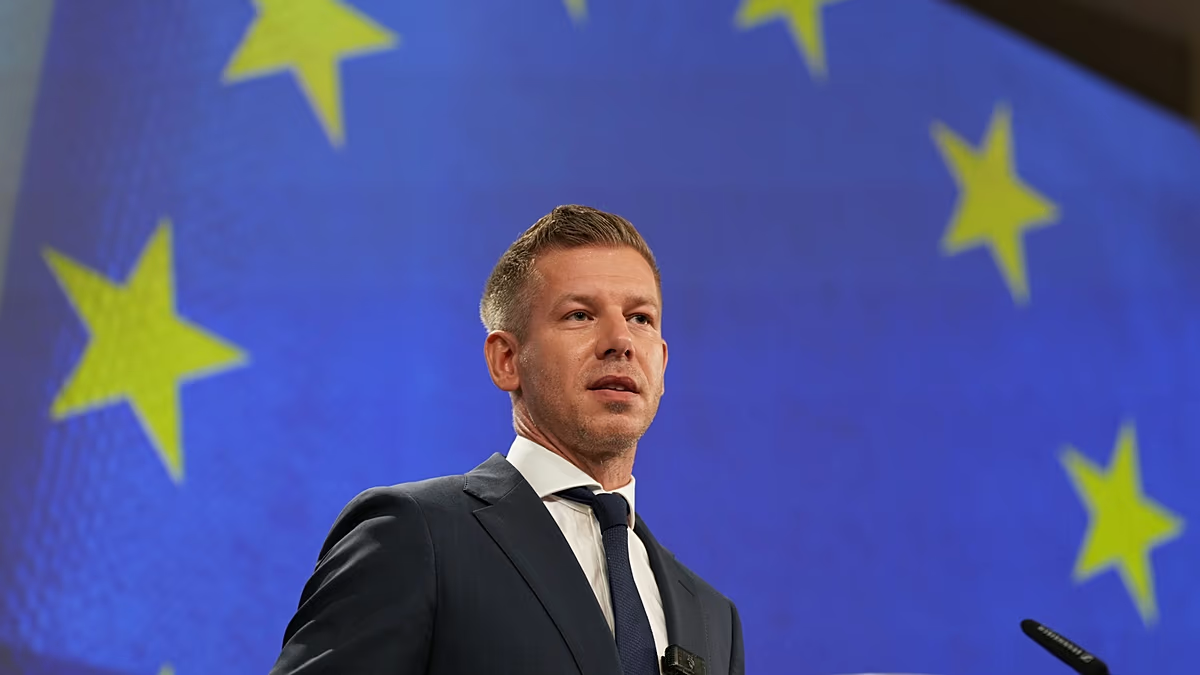
The final pieces fell into place with remarkable speed in late May. Following a high-profile meeting between Péter Magyar and European Commission President Ursula von der Leyen, technical teams from Hungary and Ukraine quickly reached a preliminary deal. Magyar, signaling his personal commitment, then took his diplomatic campaign to Europe’s capitals. In Berlin, he expressed optimism about a forthcoming meeting with President Zelenskyy, and in Paris, after talks with President Macron, he gave his final, crucial sign-off. From the French capital, he announced the “great news” via social media, framing the agreement as a restoration of fundamental rights for over 100,000 ethnic Hungarians, achieved in “just three weeks”—a pointed contrast to Orbán’s decade of stalemate.
The specifics of the deal, as outlined by Magyar, are substantial. They include the establishment of a minority school status with administration in the native language, granting parents a veto over expanded Ukrainian-language use, and allowing the use of Hungarian in public administration and political campaigning in areas where minorities constitute over 10% of the population. Crucially, these provisions apply to all national minorities linked to EU member states, carefully excluding Russian claims. The reaction from Kyiv was notably restrained, with officials offering generic thanks to the Cypriot presidency and expressions of hope for a new chapter in relations, but pointedly avoiding public discussion of the agreement’s details—a likely reflection of the sensitive domestic context in wartime Ukraine.
For the European Union, this breakthrough is momentous. It lifts a veto that had become a symbol of internal division and unlocks a key pillar of the bloc’s strategic response to Russia’s war—the political integration of Ukraine. The formal opening of the “fundamentals” cluster on June 15th in Luxembourg will mark the true start of a long, complex, and transformative journey. In Brussels corridors, the overwhelming sentiment among exhausted but relieved diplomats was summed up in one word: “Finally.” The agreement proves the enduring, if often arduous, power of dialogue, and it reaffirms that even the most entrenched geopolitical deadlocks can be overcome when political will, changed circumstances, and discreet diplomacy converge at the right moment.