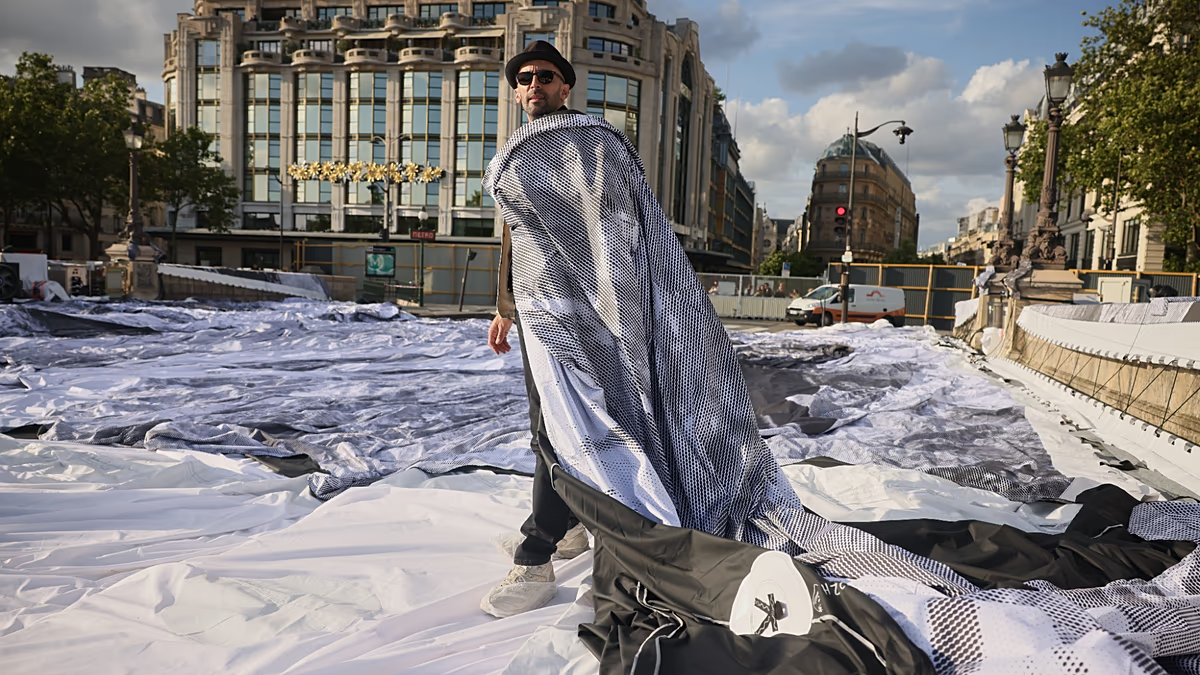

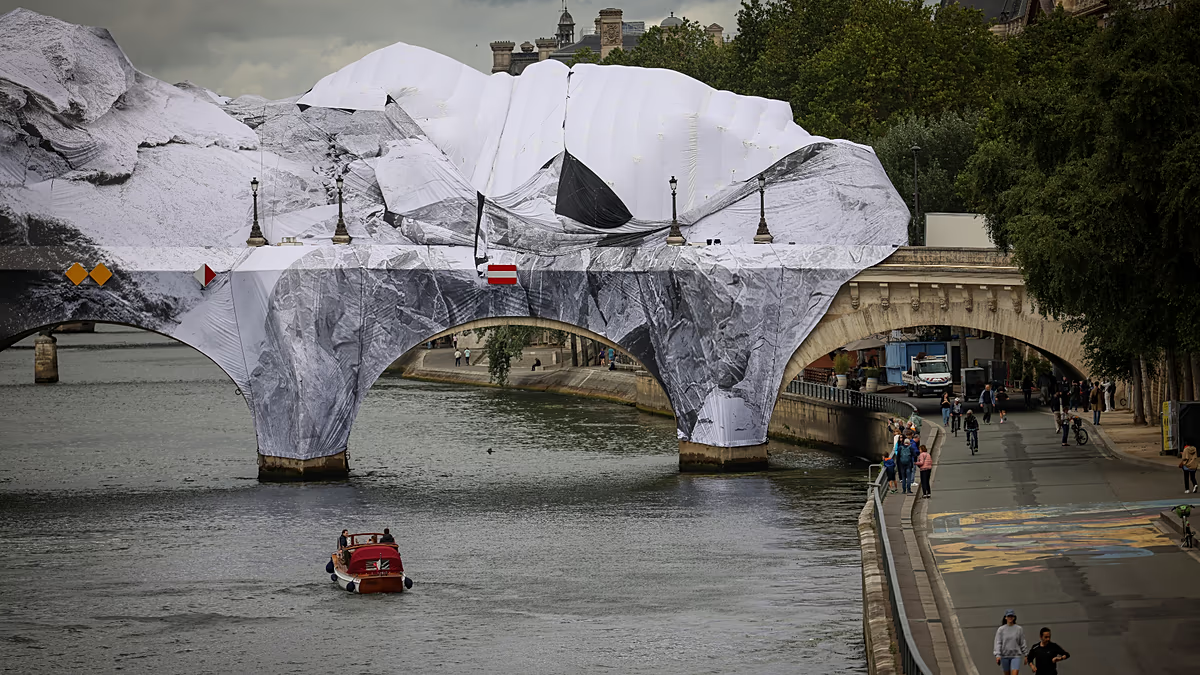


Of the many ambitious artworks destined for Paris’s public spaces, few have captured the imagination quite like JR’s monumental inflatable installation, “La Caverne,” poised dramatically above the Seine. Conceived as a direct homage to the legendary artists Christo and Jeanne-Claude—who famously wrapped the Pont-Neuf in 1985—this colossal structure promised to be a breathtaking addition to the city’s artistic legacy. Designed to provoke thought about our relationship with urban environments, its inauguration was eagerly anticipated for June 6th. However, in a twist of fate mirroring the unpredictable nature of public art itself, the project has been delayed following an encounter with the very elements it sought to engage.
The setback occurred on a recent Tuesday afternoon, when violent gusts of wind swept through the capital. During this “exceptional weather event,” the giant canvas sustained a tear. The project’s technical teams, who were swiftly deployed to assess the situation, have since provided reassuring details. They confirmed that the damage was localized to three specific areas of the inflatable envelope. Crucially, the built-in safety systems and the compartmentalized design of the structure performed as intended, successfully containing the incident and preventing more catastrophic failure. This reflects a meticulous planning process that prioritized safety alongside spectacle.
Currently, repair efforts are underway, though they proceed with deliberate caution. The work focuses on two main fronts: mending the outer canvas itself and fixing the affected components of the inflatable framework. However, the teams have made it clear that their progress is inextricably tied to the weather. Out of paramount concern for crew safety, the full refurbishment operations will only advance once conditions “have returned to seasonal norms.” This prudent approach means that while work continues “over the coming days and the week ahead,” the process is intentionally unhurried, respecting both the well-being of the workers and the scale of the task.
The scale, indeed, is what makes this endeavor so remarkable and the repair so complex. “La Caverne” is a behemoth, covering 2,400 square meters of ground, stretching 120 meters in length, and reaching heights between 12 and 18 meters. The damaged canvas section will be carefully removed and restored in a specialized workshop. Meanwhile, the teams are evaluating “several options” for the reinflation and reinstallation of the entire piece, a logistical puzzle befitting its monumental dimensions. Every step must be meticulously planned, leaving no room for a second mishap.
This episode places JR’s work squarely within a rich, if occasionally contentious, history of large-scale temporary art in Paris. The public reaction and the challenges of weather inevitably bring to mind other controversial installations, such as Paul McCarthy’s provocative “Christmas Tree” or Alex Da Corte’s giant inflatable frog on Place Vendôme. These works demonstrate that public art is a living dialogue—one that involves not just artists and curators, but engineers, city officials, and the whims of nature. The damage to “La Caverne” is not merely a technical hiccup; it is part of the story of bringing such an ambitious vision to life in a shared, open space.
Consequently, the partners behind the project have communicated that a new opening date is not yet known and will only be set “in the light of progress” on the repairs. The initial June 6th inauguration is undoubtedly postponed, but the vision remains intact. This interlude serves as a reminder of the ambition and vulnerability inherent in transforming a cityscape. When “La Caverne” finally does open, overlooking the Seine, it will carry with it not only a tribute to past artists but also a narrative of resilience—a testament to the careful, patient work required to safely deliver a moment of public wonder.