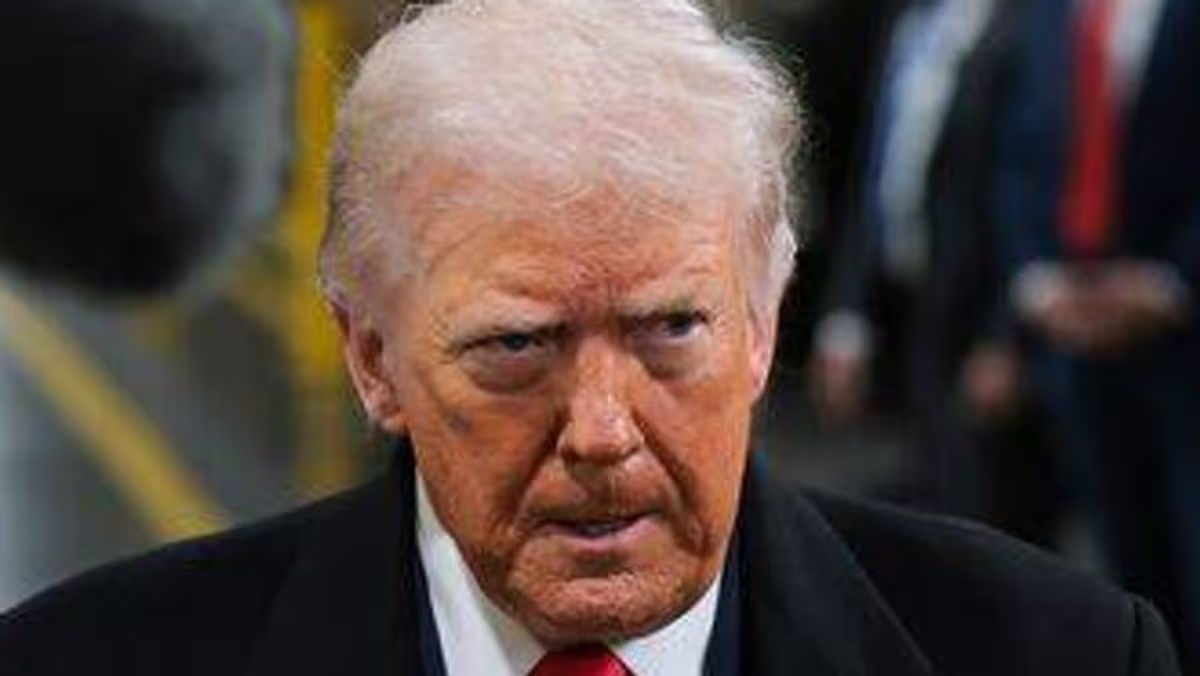
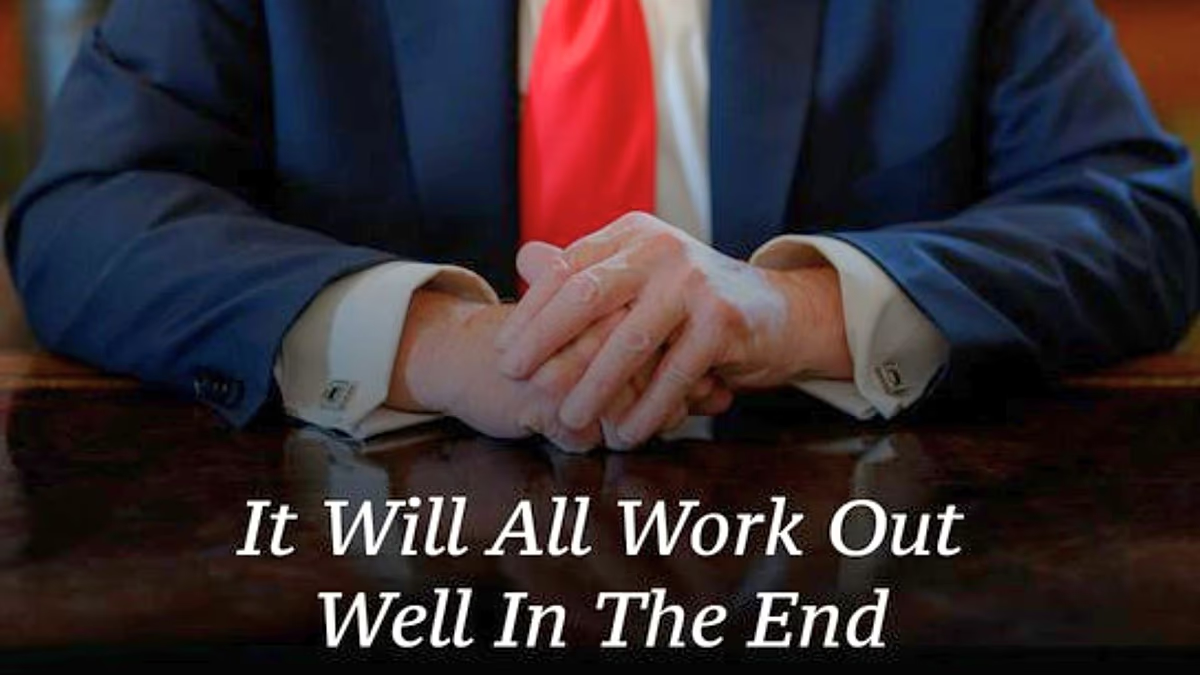


In the early days of June 2026, a message from the official White House social media account sought to project an image of calm assurance. The post, featuring a quote from President Donald Trump, advised the public to “Just sit back and relax. It will all work out well in the end – It always does!” This sentiment was framed as echoing a well-known adage about things being okay in the end, a saying often misattributed to various celebrities but originating from Brazilian writer Fernando Sabino. However, the context of this hopeful platitude was anything but tranquil. It was issued against the backdrop of a protracted and costly conflict with Iran, a situation contributing to soaring global fuel prices and a punishing cost-of-living crisis affecting families not only in the United States but around the world. The simple directive to “TRUST IN TRUMP,” appended to the post, transformed a general piece of optimism into a politically charged statement, one that many found deeply dissonant with their daily struggles to afford groceries and gasoline.
The public reaction to this messaging was swift and largely critical, reflecting a palpable frustration with the administration’s tone. For countless individuals navigating financial strain, the exhortation to “sit back and relax” felt not like reassurance, but like a dismissal of their very real anxieties. Critics online lambasted the post as “insane messaging,” characterizing it as a callous “Hallmark card” approach to grave geopolitical and economic policy. The disconnect was stark: while the White House account promoted passive confidence, citizens were actively grappling with the material consequences of international tensions, namely prices at the pump nearing four-and-a-half dollars a gallon. This gap between presidential proclamation and public experience turned the viral post into a focal point for broader discontent, highlighting a perceived indifference to the tangible hardships wrought by ongoing global instability.
Complicating this perception further was President Trump’s repeated sharing of a separate, highly sarcastic and bellicose statement regarding Iran on his personal Truth Social platform. First posted in mid-May and then republished verbatim twice more in late May and early June, this lengthy post painted an absurdist picture of an Iranian surrender, complete with theatrical details of dropped weapons and shouted admissions of defeat. It concluded with a familiar attack, alleging that even such a fantastical capitulation would be framed as an Iranian victory by the “Fake News Media” and “Dumacrats,” whom he described as having “gone absolutely CRAZY!!!” The repetitive, aggressive nature of this communication stood in sharp contrast to the placid “relax” message, creating a confusing dual narrative. Observers, including the critical Republican group “Republicans Against Trump,” quipped that “Grandpa is out of material,” suggesting the repetition signaled a lack of substantive new policy or diplomatic progress to report.
This juxtaposition of messages—one passively soothing, the other actively antagonistic—revealed a strategic communication challenge. On one hand, the administration sought to project an image of unflappable control, assuring the public that the commander-in-chief had matters well in hand. On the other, the President’s own repeated rhetoric leaned into confrontational mockery and grievance, themes that energized his political base but did little to foster a national sense of unified resolve or to clarify the administration’s actual strategic objectives in the conflict. The “sit back and relax” directive, therefore, rang hollow for many because it was not paired with concrete evidence of a resolution. Instead, it was shadowed by cyclical, inflammatory social media posts that seemed more focused on domestic political foes than on diplomatic pathways to end a war that was exacting a heavy economic toll.
The episode underscores the profound weight of presidential communication during times of crisis. Words from the White House are never just words; they are analyzed as signals of intent, temperament, and priority. In this instance, the chosen phrase, however benign in isolation, was interpreted through the prisms of economic pain and a seemingly stagnant military engagement. The public’s refusal to “relax” was not merely a rejection of a slogan but a response to a perceived absence of actionable strategy. The hope embedded in the saying “it will all work out” is universal, but its credibility hinges entirely on the trust in the leadership articulating it. For a significant portion of the audience, that trust had been eroded by a combination of economic pressure and a narrative that vacillated between vague comfort and repetitive hostility.
Ultimately, the viral White House post of June 2026 became a cultural snapshot of a nation at a crossroads of confidence and anxiety. It highlighted how a leader’s attempt to instill calm can backfire when it feels disconnected from the lived reality of the citizenry. The wisdom of “sitting back” only holds if there is a widespread belief that competent hands are diligently at work steering the ship. When that faith is lacking, and when public communication appears inconsistent or politically performative, such calls for patience can instead amplify feelings of uncertainty and frustration. The story of this moment, therefore, is less about a specific quote and more about the delicate, essential bridge between presidential rhetoric and public trust—a bridge that requires both empathetic connection and demonstrative action to remain intact.