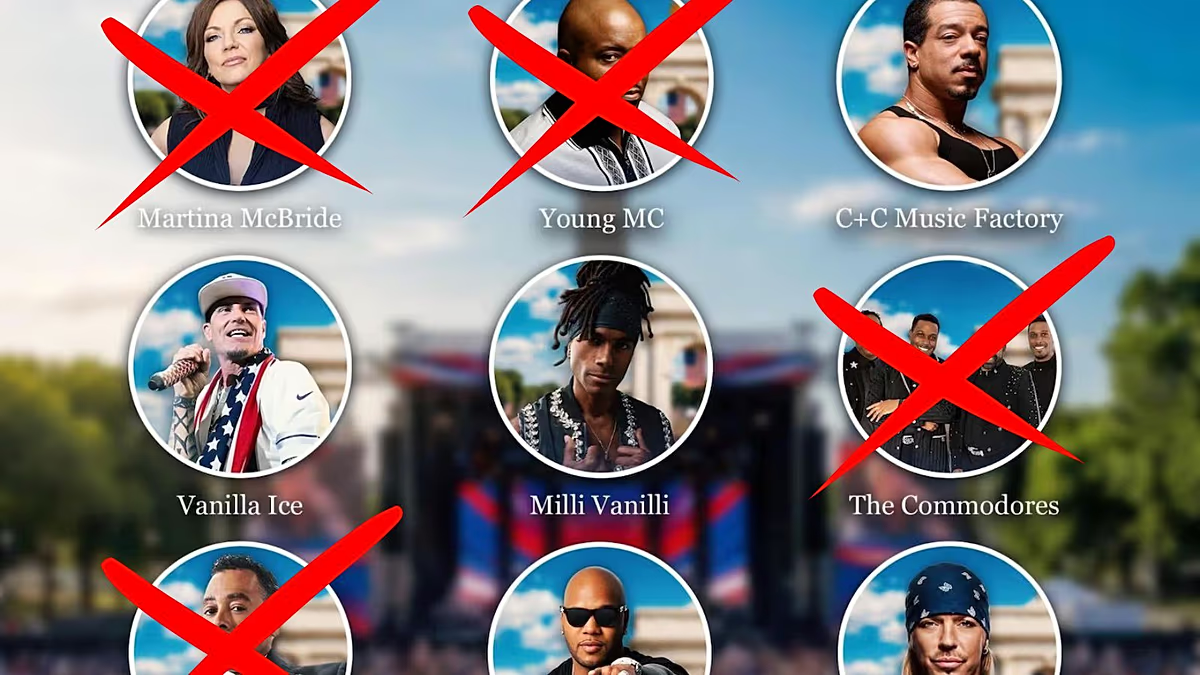



In early June 2026, a peculiar drama unfolded around a major event meant to celebrate the United States’ 250th birthday. The “Freedom 250” celebration, scheduled from June 25th to July 10th at the National Mall in Washington D.C. and touted as a “once-in-a-generation” event, found itself in chaos as its musical lineup rapidly disintegrated. Originally, the roster was a nostalgic, if critically panned, collection of acts from the 80s and 90s, including Vanilla Ice, Martina McBride, The Commodores, and Flo Rida, among others. However, the initial online reaction was brutal, with one commentator declaring it “the worst lineup of musical acts I have ever seen.” This criticism soon escalated into a full-blown crisis as artists began to publicly flee the event.
The mass exodus began when artists claimed they had been misled. Morris Day of The Time and rapper Young MC were among the first to drop out, stating they had never agreed to perform at a politically affiliated event. This pointed to a central controversy: while organizers maintained that “Freedom 250” was a nonpartisan celebration, its funding structure and public branding suggested otherwise. The event was funded through a public-private partnership involving Trump-aligned tech firms like Palantir and Oracle, as well as federal contractors such as Lockheed Martin. This triggered scrutiny from watchdog groups and Congress over the use of federal dollars, and for the performers, it created a clear association with the MAGA movement. Following the initial withdrawals, more significant acts, including soul legends The Commodores and country star Martina McBride, canceled, each echoing the sentiment that they had been promised a non-political platform and were blindsided by the event’s Trump-aligned identity.
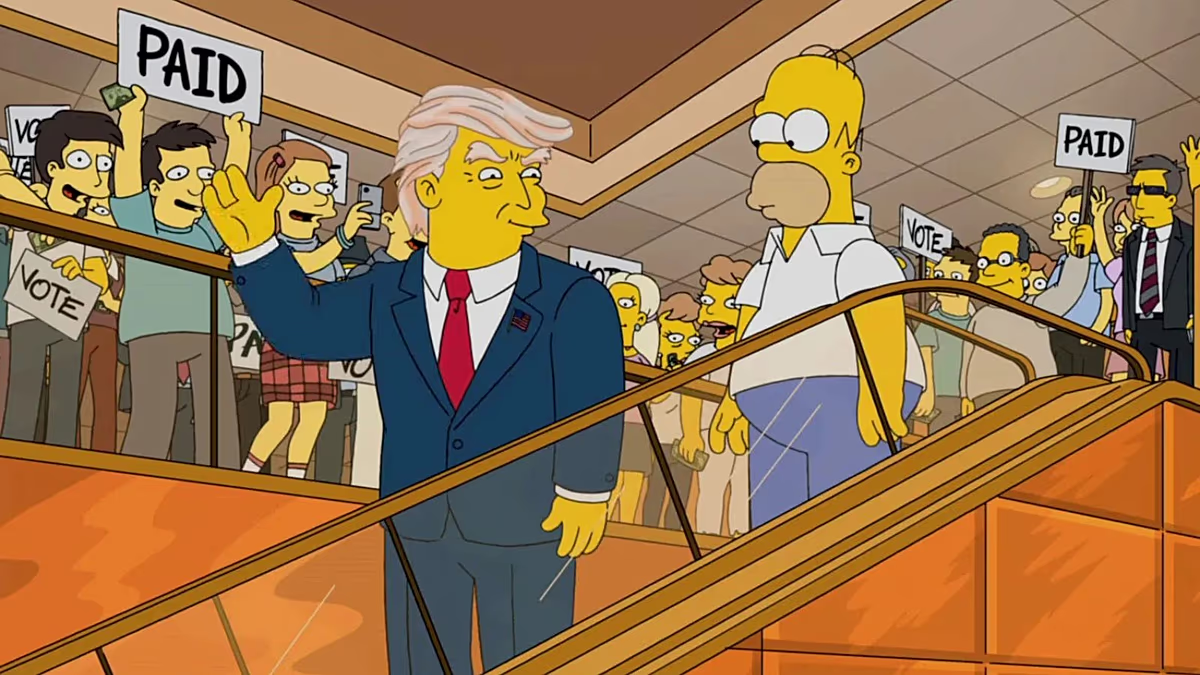
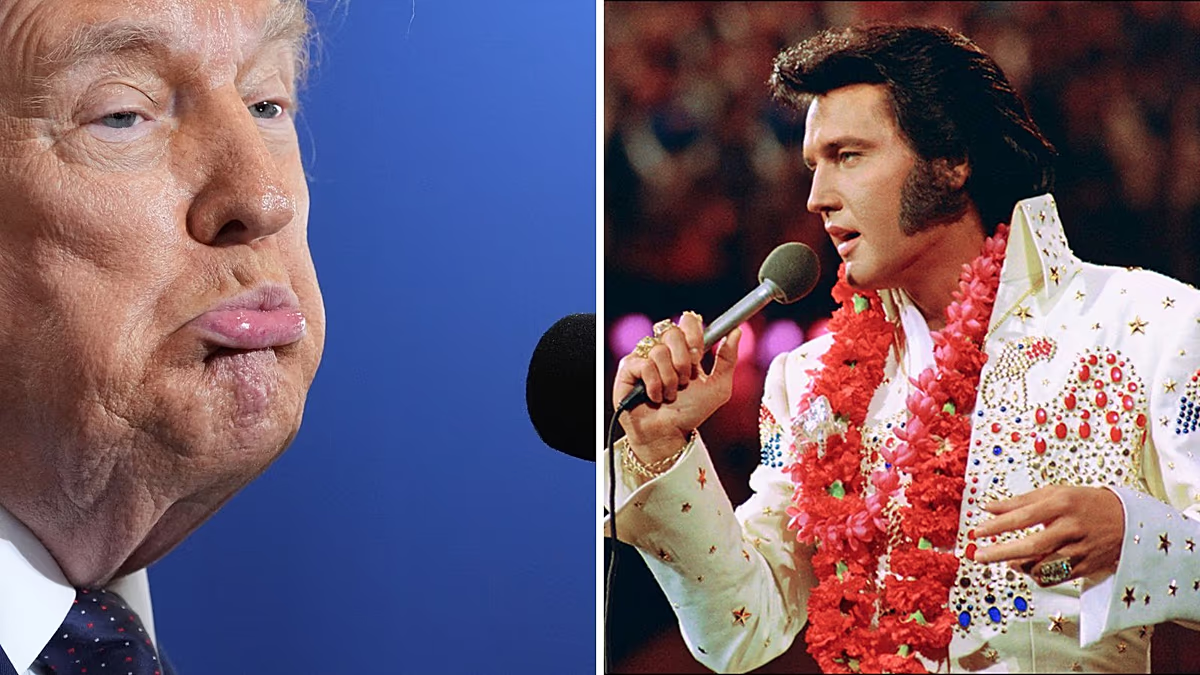
Faced with a nearly empty schedule, the event’s presumed benefactor, Donald Trump, took to his Truth Social platform with a characteristically grandiloquent response. In a lengthy post, he declared that he would himself become the replacement act. He framed the departing artists as getting “the yips” and offered to substitute “the Number One Attraction anywhere in the World,” a man who “gets much larger audiences than Elvis in his prime.” He proclaimed himself the patriot who “loves our Country more than anyone else” and “some say is the Greatest President in History (THE GOAT!).” This self-proclaimed replacement—a “major speech” instead of a musical performance—was his solution for the cratering lineup. The claim of surpassing Elvis, however, ignited a furious response from music fans and cultural commentators online, leading to a flood of memes and sarcastic critiques.
The online reaction to Trump’s intervention was swift and merciless. Social media users mocked the comparison to Elvis, with one particularly pointed comment noting, “The only thing Trump and Elvis have in common is their proclivity for underage girls,” a reference that intertwined historical gossip about Elvis Presley with contemporary allegations against Trump. Beyond that, the broader internet sentiment reveled in the event’s apparent failure. Commentators enjoyed the “crash” of the Freedom 250 concerts, sharing memes that highlighted the absurdity of the situation—a patriotic festival now headlined by a political speech after its entire roster of entertainers had abandoned it. The spectacle became less about the nation’s anniversary and more about a public relations debacle, illustrating the deep cultural divisions that the event had inadvertently, or perhaps intentionally, activated.
This “Freedom 250” episode was part of a broader slate of official and semi-official events marking the nation’s semiquincentennial. The White House backed various celebrations, including a UFC fight on the South Lawn and a Grand Prix race in Washington D.C. The U.S. also planned to issue commemorative passports featuring a portrait of Donald Trump. However, the Great American State Fair’s troubles stood out as a case study in the blurred lines between national celebration and political mobilization. Despite organizers’ continued claims of nonpartisanship, the funding, the branding, and the forceful, politically charged intervention by a former president revealed a different reality. The event had become a magnet for controversy, exposing the challenges of staging a unified national moment in a profoundly polarized political climate.
In conclusion, the saga of the Freedom 250 concert lineup is a microcosm of America’s cultural and political state in 2026. What began as an ambitious, if musically questionable, celebration of national heritage quickly devolved into a public withdrawal of support from artists unwilling to be associated with a perceived political rally. The subsequent entry of Donald Trump as the headline “act,” coupled with his provocative self-mythologizing, transformed the event into a different kind of spectacle—one of partisan assertion and online ridicule. The ongoing congressional and watchdog scrutiny over its funding underscores the serious governance questions beneath the surface. Ultimately, the empty stage and the promised political speech symbolize a celebration that, far from unifying the nation, instead highlighted its deep fissures, making it a strangely fitting, if contentious, chapter in the story of America’s 250th year.