


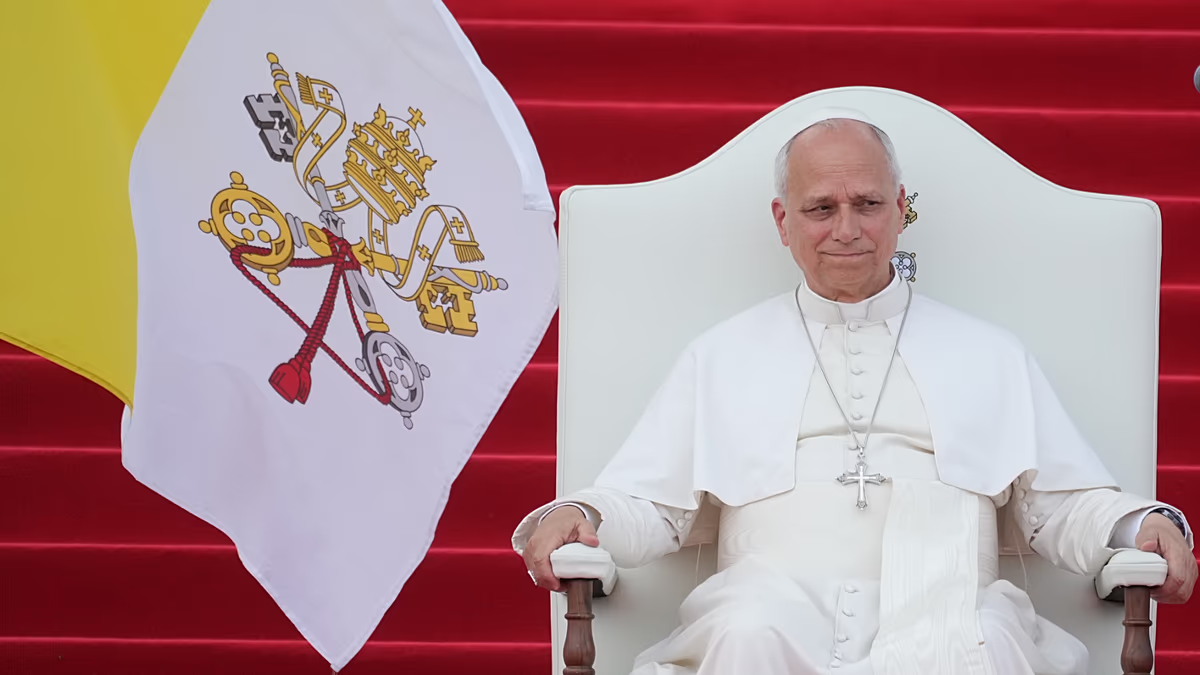
His Holiness Pope Leo XIV embarks on a historic and sweeping apostolic journey to Spain in the first week of June, a pilgrimage spanning over 2,500 kilometers and six densely packed days. This visit, comprising 12 major addresses, five homilies, and numerous greetings, represents far more than a ceremonial tour. It is a profound pastoral mission designed to encounter the Spanish people in all facets of their society—from the halls of power to the margins of the city, from ancient monasteries to modern stadiums. The itinerary reveals a Pontiff intent on weaving together the nation’s rich Catholic heritage with the urgent contemporary questions facing its culture, offering a message of faith, hope, and unity.
The journey commences in Madrid, where the blend of state protocol and popular fervor immediately sets the tone. Following his arrival and a formal welcome at the Royal Palace, Pope Leo XIV will address the nation’s political and diplomatic leaders, framing the moral context for his visit. Yet the heart of his first day lies not in palaces, but in the Lucero neighbourhood’s social centre, a gesture underscoring the Church’s preferential option for the poor. The day culminates in a massive prayer vigil with young people at Plaza de Lima, a dynamic event promising dialogue on life’s meaning amidst societal polarisation. Notably, this gathering coincides with a concert by global superstar Bad Bunny, hinting at a Pontiff keen to engage with modern culture, a theme further amplified by Madrid’s “White and Yellow Night,” where museums and churches will open their doors late into the evening.
Sunday and Monday deepen the Pope’s engagement with Spain’s spiritual and institutional life. A Corpus Christi Mass and procession at the iconic Plaza de Cibeles will be a powerful public reaffirmation of faith. Subsequently, the “Weaving Networks” meeting at the Movistar Arena brings together figures from arts, culture, sport, and the economy, symbolising a desire to bridge faith with the creative forces of society. The following day shifts focus to the structures of governance, with a private meeting with Prime Minister Pedro Sánchez and a landmark address to the Spanish Congress—the first by any Pope. This parliamentary speech will be a historic moment, offering the Church’s perspective on the common good directly to the nation’s lawmakers. The day concludes with a joyous, festival-like gathering of the diocesan community at the Santiago Bernabéu Stadium, blending faith with music and spectacle.
The Pontiff then travels to Barcelona, where the spiritual and the architectural sublime converge. His schedule here is contemplative yet grand, beginning with Midday Prayer in the ancient Cathedral and culminating in a prayer vigil at the Olympic Stadium. The heart of his Catalan visit, however, unfolds on Wednesday. A morning encounter with inmates at Brians 1 prison embodies the Gospel call to visit the imprisoned, listening to their testimonies with pastoral compassion. This is followed by a pilgrimage to the sacred mountain of Montserrat, a spiritual heartland for Catalonia, for the recitation of the Rosary. The day reaches its zenith at the Basilica of the Sagrada Familia, where Pope Leo XIV will consecrate the newly completed Tower of Jesus Christ, forever linking his pontificate to Gaudí’s monumental testament of faith.
The final leg of the journey carries profound symbolic weight, as Pope Leo XIV flies to the Canary Islands. This destination realises a long-held desire of his predecessor, Pope Francis, to spotlight Europe’s southern frontier and the urgent issue of migration. In Gran Canaria, his first act is not with dignitaries but at the port of Arguineguín, listening to the harrowing stories of migrants from Africa and Latin America and laying a floral offering—a silent, powerful prayer for those lost at sea. A subsequent Mass for tens of thousands at the island’s stadium offers a counterpoint: a celebration of community and welcome. His final day on Spanish soil continues this mission at the Las Raíces migrant centre in Tenerife, ensuring the plight of the displaced remains the enduring final image of his visit before his farewell.
Pope Leo XIV’s apostolic journey across Spain is a mosaic of encounters, each piece reflecting a different facet of the nation and the Church’s mission within it. From affirming tradition in processions and ancient abbeys to engaging modernity in stadiums and with artists, from addressing power in parliament to embracing vulnerability in prisons and migrant centres, this visit paints a comprehensive portrait of a faith in dialogue with the world. As his plane departs Tenerife for Rome, he leaves behind a country invited to reflect on its soul, its responsibilities, and its future, having been challenged and comforted by a voice urging unity, compassion, and hope.