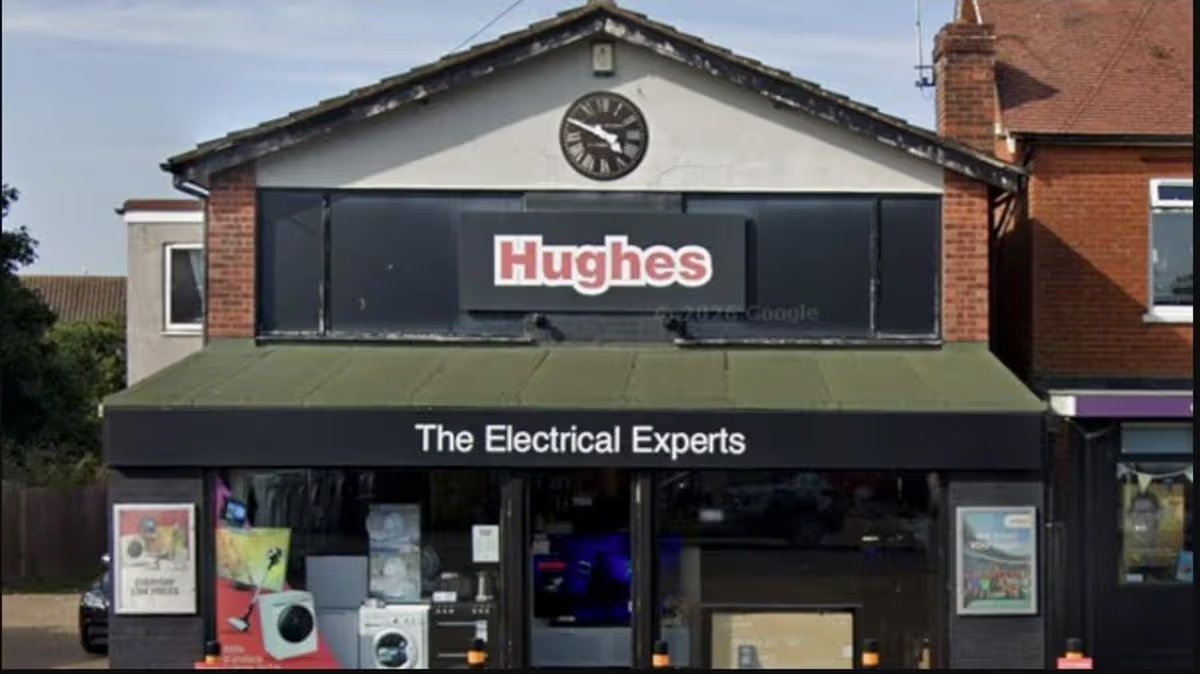


For over a century, the name Hughes has been a familiar and trusted fixture across the towns and villages of East Anglia. Its story began in 1921, founded by Frank Hughes, and truly took root in the community with the opening of its first shop in Lowestoft in 1928. From that single storefront, the electrical appliances business grew into a regional institution, a place where generations of families turned for their washing machines, televisions, and refrigerators, built on a foundation of personal service and local expertise. The journey from a single entrepreneurial vision to a beloved high street chain spanned decades of technological change, making its presence a constant in the evolving landscape of eastern England. This deep history makes the company’s recent announcement not merely a business update, but a poignant moment for the region, signalling the end of an era for several communities that have long relied on its physical stores.
This weekend, as Saturday’s closing time arrives on June 6th, the lights will go out for the final time at eight Hughes branches. The affected stores in Clacton-on-Sea, Dereham, Diss, Hunstanton, North Walsham, Norwich Mason Road, Thetford, and Wisbech will fall silent. This difficult decision, directly impacting 35 dedicated staff members, stems from the profound and relentless shifts reshaping the retail world. In an official statement, Hughes cited the potent combination of rising operating costs, the soaring popularity of online shopping, and fundamentally changing customer expectations for a modern in-store experience. These forces have compelled the family-founded business to make painful choices to ensure its survival and future relevance in a market that no longer resembles the one of 1921 or even 1991.
The human cost of this strategic pivot is deeply felt within the company. Chief Executive Mark Wardell has emphasised that this was not a decision made lightly, acknowledging that many of the affected employees have been with Hughes for a long time and have “played a huge part” in the business. The company has pledged to support these valued team members through the “difficult process ahead” with “honesty, respect and support.” Furthermore, a proposed closure of the delivery depot on Mason Road in Norwich places an additional 25 roles at risk of redundancy. This aspect underscores the wider ripple effects of such a consolidation, extending beyond the shop floor to logistics and support functions, painting a sombre picture of the real-world impact behind the headline of another retailer adjusting its estate.
However, this moment is framed not as a retreat, but as a necessary realignment for the future. Hughes is choosing to channel its resources and energy into its online space and its remaining ten physical stores. This strategy acknowledges the irreversible trend of digital commerce while betting on the enduring value of a curated, stronger in-person presence elsewhere. The stores that will continue to operate—in Lowestoft, Great Yarmouth, Beccles, Norwich Hall Road, Bury St Edmunds, Fakenham, King’s Lynn, Ipswich Felixstowe Road, Martlesham, and Colchester—are presumably those with the best prospects for hosting the “modern in-store experience” customers now seek. The goal is to transform these locations from mere transaction points into destination showrooms and service hubs, thus securing the long-term viability of the Hughes brand.
The closure of these eight outlets is a microcosm of a much larger story continuing to unfold across the United Kingdom: the slow, painful transformation of the traditional high street. Each shuttered shopfront, from a national chain to a local stalwart like Hughes, leaves a tangible void in its community—a loss of convenient access, local jobs, and the human interaction that defines physical retail. The announcement that “another major retailer is set to vanish” resonates with a now-familiar echo of change, adaptation, and often, loss. For the towns of Dereham, Diss, Hunstanton, and the others, the departure of Hughes represents more than just a vacant property; it is the removal of a longstanding commercial anchor and a touchstone of daily life.
Yet, the full Hughes story is not yet one of farewell. With its century-long legacy, the business is demonstrating a resilience that many other brands have failed to muster. By making these arduous choices now, it seeks to forge a path that honours its past while squarely facing the future. The investment into online operations and the remaining flagship stores is a bid to keep the Hughes name alive and relevant for a new generation of customers. As the doors close on eight chapters this Saturday, the company’s hope is that this consolidation will allow it to write many more, preserving its identity and service for East Anglia in a form that the 21st-century market will sustain. The challenge will be to balance the efficiency of digital commerce with the cherished personal touch that built its reputation over a hundred years.