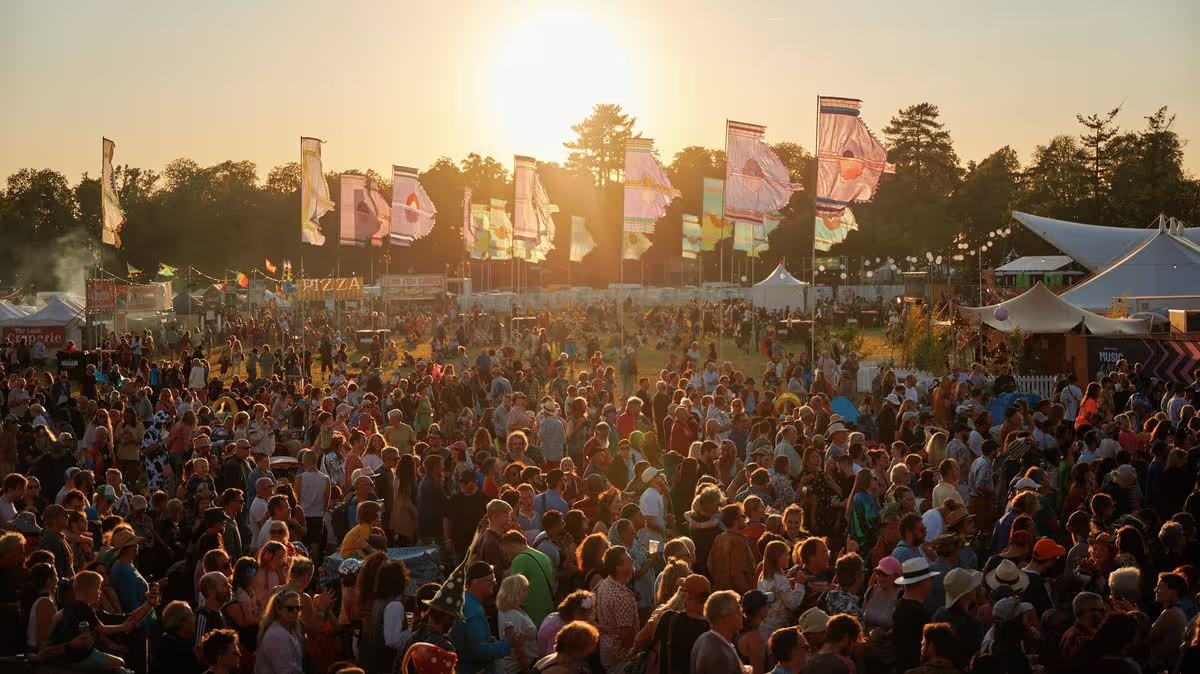


The vibrant pulse of a new cultural heartbeat for Glasgow has, with regret, been stilled. Organisers have made the difficult announcement that the inaugural World of Music, Arts and Dance (WOMAD) festival, scheduled for Kelvingrove Park on the 3rd and 4th of July, has been cancelled. This decision, confirmed by Glasgow Life, stems from ticket sales that failed to reach the necessary threshold to ensure the event’s financial viability and sustainability. It marks a poignant conclusion to the much-anticipated plans to bring this globally renowned festival, founded by the iconic musician Peter Gabriel, to Scotland for the very first time. The news brings profound disappointment, not only to the team behind the ambitious project but, most keenly, to the music lovers who had eagerly awaited a weekend of eclectic global sounds in the heart of the city.
The vision for WOMAD Glasgow was a rich and compelling one, promising to translate the festival’s storied international spirit into a local context. For over three decades, WOMAD has carved a unique niche across the globe, from the sun-soaked landscapes of Fuerteventura and Chile to the green hills of New Zealand, celebrated for its commitment to cultural exchange through music, arts, and dance. The Glasgow edition was poised to continue this legacy, offering a programme that beautifully balanced established names with thrilling new discoveries. The line-up promised a journey from the London-based reggae soul of Hollie Cook to the haunting traditional instrumentals of Pakistan’s Ustad Noor Bakhsh, and the grassroots folk-rock energy of Stornoway’s own Peat and Diesel. It was a testament to the festival’s core ethos: a boundary-less celebration of artistic expression.
This cancellation, however, underscores the significant and often harsh challenges inherent in launching a large-scale cultural event in today’s climate. In their statement, organisers pointed to the “competitive and crowded market” as a key factor, acknowledging that while the artistic programme was met with enthusiasm, the financial commitment from the public did not match that positive response. The economics of staging a first-year festival—with its substantial upfront costs for infrastructure, artist bookings, and production—are precarious. Without a guaranteed audience of a certain scale, the financial risk becomes untenable, a reality that has forced the hand of many event organisers in recent years. The dream of establishing a new summer staple in Glasgow’s bustling events calendar has, for now, been deferred.
The ripple effect of such a decision extends far beyond disappointed ticket-holders. A festival is a complex ecosystem, and its cancellation impacts a wide network of people whose work and passion make these events possible. Artists and their crews, often booking tours around such anchor dates, are left with a sudden gap in their schedules. Local contractors, suppliers, staging companies, food vendors, and security staff lose anticipated income. The cultural partners and stakeholders who lent their support to the vision are also left to recalibrate. Glasgow Life and the WOMAD organisation expressed sincere gratitude to all these parties, recognising the collective effort that had already been invested in bringing the festival to the brink of reality.
For those who had secured their passes, the immediate path forward is clear, if unsatisfactory. Organisers have moved swiftly to assure all ticket-holders that they will receive a full refund automatically within seven working days. In a gesture of goodwill, they are also offering access to discounted tickets for the flagship WOMAD UK event at Neston Park in North Wiltshire, scheduled for later in July. This provides a tangible alternative for those whose summer plans were centred on the WOMAD experience, allowing them to still engage with the festival’s unique community, albeit in a different location. It is a responsible and customer-focused response to an undoubtedly frustrating situation.
Ultimately, the story of WOMAD Glasgow is one of ambition meeting reality—a reminder of the fragile alchemy required to birth a successful new festival. It speaks to the enduring strength of the WOMAD brand that its expansion to a city as culturally vibrant as Glasgow was attempted, and to the ongoing challenges of cultivating public support for new ventures in a saturated marketplace. While the stages in Kelvingrove Park will remain silent this July, the conversation about bringing world music and arts to Glasgow in such a dedicated format has been powerfully ignited. The hope remains that the groundwork laid, the partnerships forged, and the audience interest demonstrated might one day provide a foundation for a future revival, when conditions align to transform this year’s disappointment into a future celebration.