


The urgent, clipped tones of an official emergency announcement often leave us with more questions than answers. We are given the bare facts—a location, a hazard, a directive—but the human reality behind those facts remains obscured. So, when a fire service spokesperson states, “Firefighters are currently in attendance at a fire on Garden Street, Sheffield,” we must pause and expand that simple sentence into the vivid, challenging scene it represents. This is not merely an “attendance”; it is a profound interruption of the ordinary. Imagine the moment: perhaps a wisp of unusual scent in the air, then the distant, piercing wall of sirens growing louder, cutting through the familiar hum of the city. For the residents of Garden Street, their day has just been violently redefined. For the crews arriving, a well-rehearsed but never-routine transformation begins. These individuals, our neighbors and community members, shift instantly from quiet preparedness to focused action, pulling on layers of protective gear that mark them as a separate entity—the barrier between danger and safety. Their “attendance” is an act of running toward what everyone else is instructed to avoid.
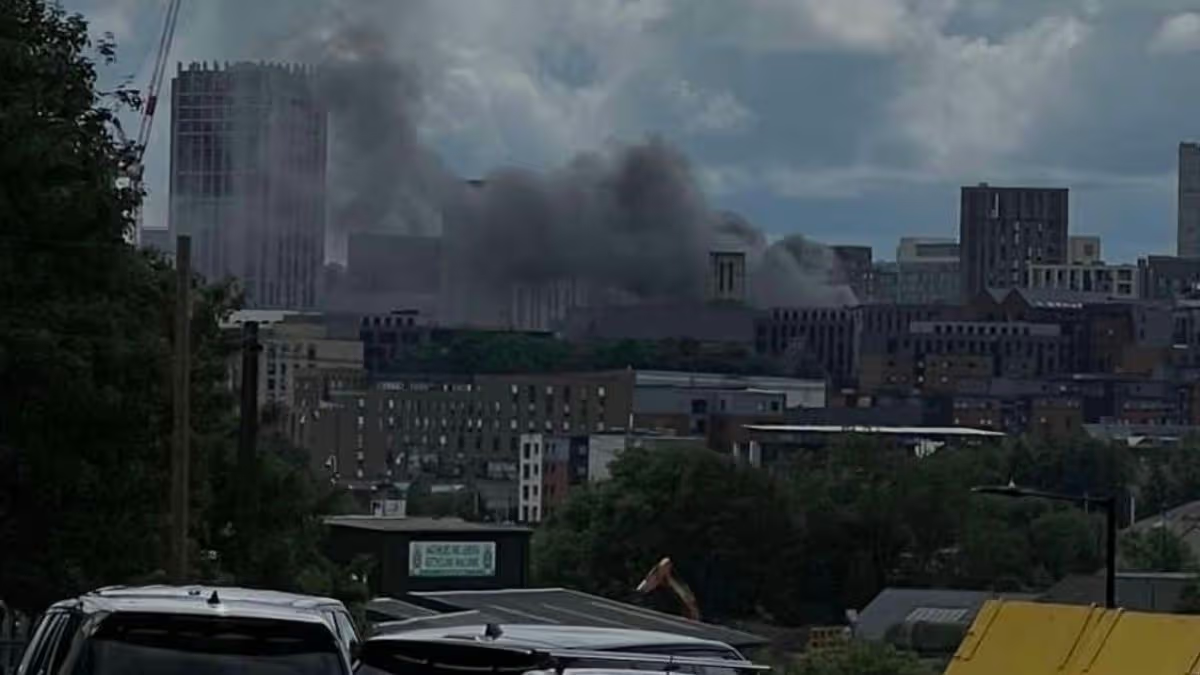
The spokesperson’s next instruction—“Anyone living or working nearby should keep their windows and doors closed due to smoke in the area”—translates to a lockdown of daily life for an entire neighborhood. This is a plea for communal cooperation born from hard-earned knowledge. Smoke is the silent, insidious accomplice to flame; it does not respect property lines or personal boundaries. That acrid plume, visible as a grim column against the sky, carries within it more than just the smell of burning. It is a complex, toxic mixture that can seep into homes, shortening breath and clouding vision, turning the supposed safety of one’s living room into a secondary zone of hazard. For the elderly, the very young, or those with pre-existing health conditions, this advice is not a mild suggestion but a critical health measure. Behind closed windows, people are now spectators to a crisis in their own community, watching the urgent ballet of emergency vehicles, feeling a knot of anxiety tighten with each passing minute, and helplessly trusting in the expertise of those outside.
The final, direct request—“Please avoid the area while crews work to bring this incident to a safe conclusion”—is a cornerstone of public safety, yet its human impact is multifaceted. For those unrelated to the event, it is an inconvenience, a detour that disrupts a commute, delays a delivery, or reroutes an afternoon stroll. The mundane rhythm of the city stutters. But for those with loved ones, homes, or businesses in the cordoned zone, this instruction is profoundly distressing. It is a barrier, both physical and emotional, that separates them from what they hold dear. They are left to wait, relying on snippets of information from news reports or social media, their imaginations often conjuring scenarios far worse than reality. This collective act of avoidance, however, is what grants the firefighters the space they need—not just physical space to maneuver their appliances and hoses, but operational space to think, to strategize, and to act without the added complication of civilian traffic or onlookers putting themselves at risk.
What does it mean for these crews to “work to bring this incident to a safe conclusion”? The spokesperson’s formal language belies a world of intense, gritty, and courageous effort. It is not simply about dousing flames. It is a complex operation involving assessment, containment, and protection. Firefighters must rapidly decode the fire’s behavior: Is it feeding on residential kitchens or workshop chemicals? Is it threatening to spread to adjacent buildings? Their work is as much about tactical ventilation, salvage, and search as it is about applying water. Every movement is weighed against risk. They operate in an environment of extreme heat where visibility can vanish in an instant, guided by touch, training, and the sound of their colleagues’ voices. To “bring to a safe conclusion” means to leave not just extinguished embers, but a scene where the structural danger is neutralized, utilities are secured, and the immediate threat to human life and property is unequivocally over.
When the last hose is coiled and the final thermal imaging camera scan confirms no hidden hotspots, the incident is concluded, but the community’s journey is far from over. The all-clear signal reopens the streets, but it does not erase the experience. For business owners on Garden Street, the reality of damage assessment and insurance claims begins. For residents, returning home might mean confronting the smell of smoke embedded in curtains or the unsettling memory of the event. For the firefighters, it means returning to the station, servicing equipment, and preparing for the next call, carrying with them the physical exhaustion and the mental weight of what they have witnessed and endured. The spokesperson’s brief statement is the first page of a much longer story of recovery, resilience, and repair that will unfold in the days and weeks to follow.
Therefore, this concise public announcement is far more than a set of instructions; it is a vital thread in the social fabric that holds a community together during a crisis. It represents the voice of collective experience and authority, cutting through panic with clear direction. It acknowledges the interdependence between the public and its emergency services—a covenant of trust. We, the public, are asked to play our part by stepping back and securing our homes, thereby empowering the professionals to play theirs. In humanizing these words, we recognize the shared vulnerability and the collective strength they invoke. Behind the formal update lies a narrative of neighbors looking out for one another, of professionals dedicating themselves to a dangerous task, and of a city pausing, holding its breath, and hoping together for that safe conclusion. It is a reminder that community is not just a geographical location, but a network of mutual aid, especially when the scent of smoke is on the wind.