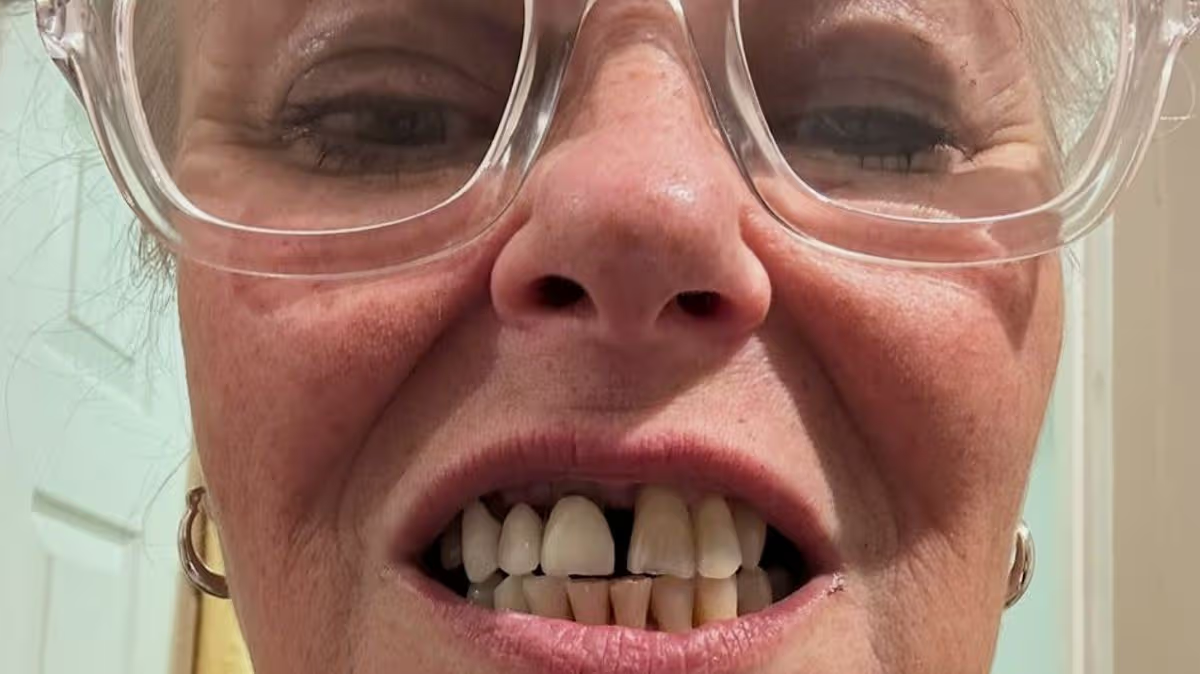


Alison Thompson’s story is a powerful testament to how deeply our dental health is woven into our daily confidence and quality of life. For years, the 57-year-old wedding event planner and mother of four from Essex watched helplessly as her smile, and with it her sense of self, unraveled. Despite a steadfast commitment to oral hygiene—brushing diligently every day—her teeth began a gradual but relentless decline. What started with losing teeth at the back escalated into a mouth full of wobbly, uneven teeth, leaving Alison feeling “in a bit of a mess.” The deterioration, driven by underlying gum issues and a failing bridge, seemed both inexplicable and unstoppable. “Once it started going there was no turning back,” she recalls, describing a vicious cycle where the problem only became “harder and harder to manage.” This wasn’t just a cosmetic concern; it was a fundamental erosion of her ability to engage normally with the world around her.
The physical and social impact of this deterioration was profound and isolating. Alison’s diet shrunk to a limited repertoire of soups and soft foods, as anything crunchy or challenging, like nuts, was off the table. The simple, shared joy of a meal became a source of anxiety. “I really was in a mess with it and just wouldn’t eat in public because I felt too aware of my teeth,” she admits. This self-consciousness extended beyond the dinner table, making her hesitant to smile or speak freely in her people-facing career. Her dental struggles had erected a barrier between her and the vibrant social interactions her work and life demanded. Seeking a solution, Alison initially traveled to Turkey seven years ago hoping for veneers, only to learn through X-rays that the damage was too severe. The diagnosis of advanced gum disease meant she needed full implants—a realization that began a long search for the right place and the right team to trust with such a transformative procedure.
That search was fraught with the anxiety familiar to anyone considering major dental work abroad. Alison was acutely aware of the “odd horror story” circulating about overseas dental tourism, tales dramatic enough to “put you off straight away.” Her desire wasn’t for an artificially perfect, Hollywood-style smile, but for something authentically her own: “I just wanted something that looked like real teeth and felt right for me.” The turning point came through a trusted personal connection—seeing the successful, natural-looking results on a family member who had been treated at Dentum, a private clinic in Croatia. This firsthand testimony provided the reassurance she needed to move forward, shifting her journey from one of fear to one of hope.
The treatment itself was an intense physical and emotional ordeal, demanding a level of resilience Alison hadn’t fully anticipated. In a single procedure, all her remaining teeth were removed to make way for implants on both the top and bottom jaws. “I’m not going to lie, it was quite traumatic having them all taken out in one go,” she confesses. The reality of the process was far more significant than she had mentally prepared for, having simply held onto the image of “coming out with a nice new smile.” In the immediate aftermath, swollen and in recovery, she consciously avoided looking in the mirror, choosing instead to place her faith in the clinical process. “I trusted the process,” she says, a mantra that carried her through the discomfort. The efficiency and care of the Dentum team, from airport pickup to immediate checks and a swift start to treatment, provided a structured support system that helped her navigate this challenging phase.
The financial aspect of her transformation was a crucial part of the equation. The entire implant procedure cost Alison approximately £12,000. She estimates that receiving comparable private treatment in the UK would have cost around £25,000—a price tag that felt prohibitive. “It just wouldn’t have been realistic for me,” she states, highlighting a common and pressing reason many Brits look abroad for complex dental care. This substantial saving allowed her to access a life-changing treatment that would otherwise have remained out of reach, a practical consideration that underscores the broader accessibility issues within dental healthcare systems.
Today, Alison’s life has been fundamentally rewired by her new smile. The results have delivered not just aesthetic improvement, but a profound restoration of function and confidence. She jokes, “I can eat anything now—I always say I could eat a brick if I wanted to,” celebrating the return of dietary freedom. More importantly, the constant, gnawing self-consciousness has vanished. “I’m so much more confident talking to people and I don’t feel like I have to cover my mouth anymore,” she says, noting that compliments on her smile are now a regular occurrence. Reflecting on her journey, Alison’s only regret is one of timing: “I wish I’d have done it sooner. It’s made such a difference to how I feel every day.” Dr. Andrej Bozic, the oral surgeon at Dentum, contextualizes Alison’s experience as a cautionary tale about the silent progression of conditions like gum disease, where early intervention is critical. For Alison, however, the story is ultimately one of reclaiming her joy, her confidence, and her ability to smile without a second thought—a transformation she considers worth every step of the challenging journey.