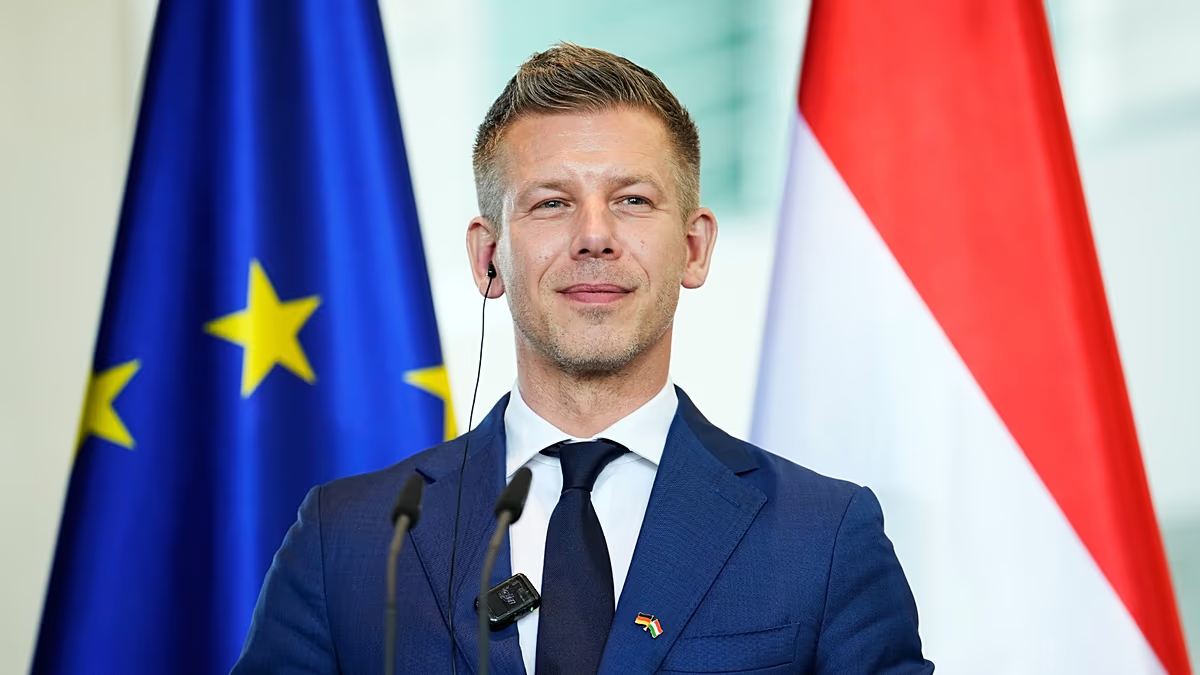


A significant and hopeful shift is occurring in European diplomacy, as Hungarian Prime Minister Peter Magyar signals that a resolution to the long-standing dispute over the rights of the Hungarian minority in Ukraine is within reach. This breakthrough has the potential to finally unlock European Union accession talks for Ukraine, ending a two-year political deadlock imposed by Budapest under its previous administration. Speaking optimistically in Berlin after meeting German Chancellor Friedrich Merz, Magyar indicated that a technical-level agreement could be secured within days, paving the way for a potential meeting with Ukrainian President Volodymyr Zelenskyy. The issue is deeply delicate, touching on core principles of human rights and national identity, but the newfound momentum suggests both sides are now earnestly seeking a pragmatic path forward.
This diplomatic progress carries immense weight, extending far beyond bilateral relations. According to multiple diplomats briefed on the matter, a deal could allow Hungary to lift its veto, enabling the formal launch of Ukraine’s EU membership negotiations as soon as mid-June. Crucially, this would also advance Moldova’s parallel membership bid, as the two candidacies are widely viewed as a package within EU circles. A draft document for an upcoming EU leaders’ summit, seen by journalists, explicitly references Ukraine’s accession path, indicating a strong belief that a breakthrough is imminent. The text also notes President Zelenskyy’s expected attendance at the summit, with Ukrainian sources clarifying his physical presence would be contingent on a solid deal being secured.
Behind the scenes, a concerted effort is underway to translate this optimism into legal and procedural reality. European Council President António Costa has been deeply involved in the talks, working alongside EU Enlargement Commissioner Marta Kos, who expresses confidence that the first formal cluster of negotiations can be opened in June. This initial cluster covers the fundamental pillars of EU membership, such as the rule of law and human rights. The process is complex and requires swift action; once Hungary lifts its veto, the Council must formally initiate proceedings, leading to a detailed assessment by European ambassadors. As one senior diplomat put it, “Everybody needs to move fast,” underscoring the delicate and time-sensitive nature of the next steps.
The context of this shift is as important as the details. Prime Minister Magyar’s approach marks a distinct departure from the previous Hungarian stance under Viktor Orbán, offering a more conciliatory and EU-cooperative tone. This change was further underscored by Magyar’s recent success in securing the release of over €16 billion in previously frozen EU funds for Hungary, following a meeting with European Commission President Ursula von der Leyen. While Magyar firmly rejected any direct linkage between this funding and the veto, the simultaneous resolution of these two major blockages has undoubtedly created a new atmosphere of political goodwill and forward momentum within European institutions.
However, cautious realism tempers the prevailing hope. Officials acknowledge that while technical work has progressed encouragingly, the final and most critical step will be a direct political agreement between Magyar and Zelenskyy. The core demand from Budapest centers on concrete guarantees for the education and cultural rights of the Hungarian minority in Ukraine’s Transcarpathia region. Magyar has suggested that such guarantees, potentially through specific legislation, might suffice without requiring arduous constitutional changes in Ukraine. Finding wording that satisfies both Kyiv’s sovereignty and Budapest’s concerns for its ethnic kin is the final hurdle. The upcoming EU summit therefore looms as a decisive moment, where leaders hope to present a united front on Ukraine’s European future.
In conclusion, Europe stands on the cusp of a historic diplomatic achievement. Resolving the minority rights issue would not only mend a strained bilateral relationship but would also catalyze Ukraine’s and Moldova’s transformative journeys toward the European Union. It would represent a powerful signal of the EU’s geopolitical resolve and its capacity to overcome internal disagreements in support of a nation defending its sovereignty and European identity. The coming days will be decisive, testing the political will in Budapest, Kyiv, and Brussels to finalize a deal that has eluded them for years, ultimately aiming to open a new and irreversible chapter in Europe’s post-war landscape.