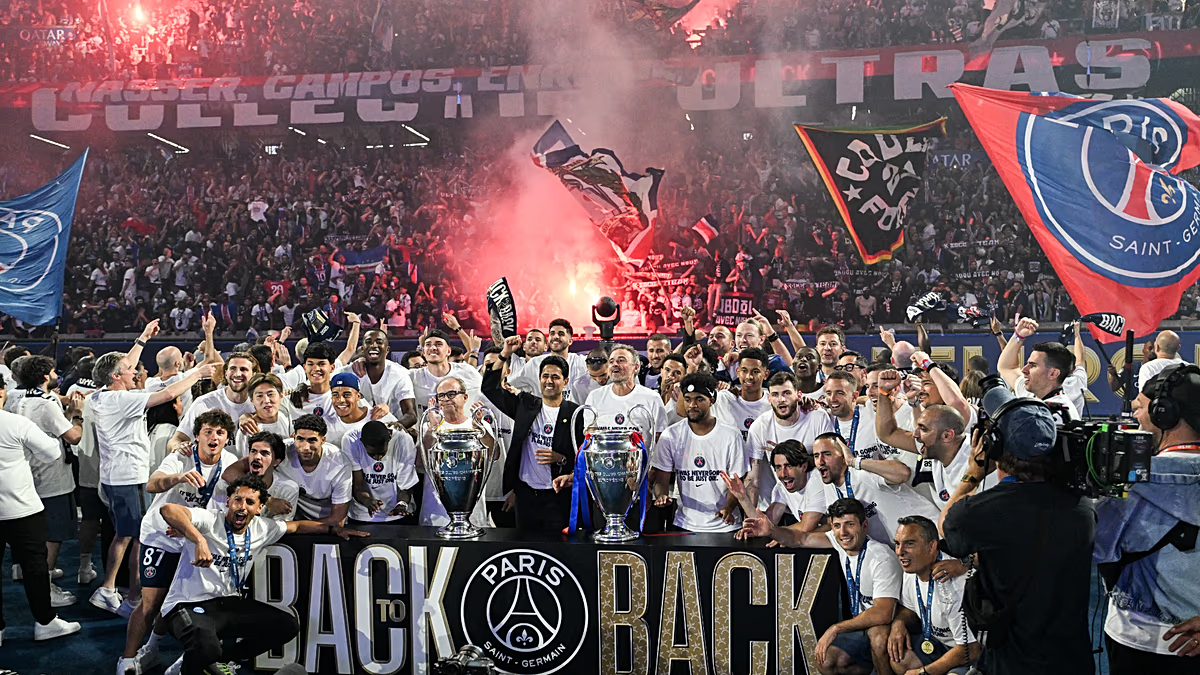



For the second consecutive year, Paris Saint-Germain has lifted the Champions League trophy, a historic achievement that sent waves of euphoria through the French capital. The morning after their victory in Budapest, the club returned home to a hero’s welcome at the Parc des Princes, their spiritual fortress in Paris. The atmosphere was one of pure, unadulterated joy, a collective release for a club and a fanbase long yearning for consistent dominance on Europe’s biggest stage. Supporters draped in the club’s red and blue colors flooded the streets, their chants echoing a deep-seated pride. This wasn’t just another win; it was the solidification of a dynasty. As one fan perfectly captured, the journey from a first historic title to a second legendary one was complete, marking PSG’s arrival as a true European powerhouse.
The sentiment among the fans was a beautiful tapestry of passion and analysis. For Tarek, a 42-year-old supporter, the victory was the literal fulfillment of a prophetic fan slogan: “The first is for history and the second is for the legend.” This poignant phrase summed up the emotional arc from breakthrough to mastery. Younger fans, like 14-year-old Marius, displayed a sophisticated understanding of the tactical battle, passionately crediting coach Luis Enrique for his strategic genius, his adaptability, and his ability to guide the team through pressure. Meanwhile, 23-year-old Flore focused on the intangible spirit, describing the squad as a true family. Her words highlighted how the team’s visible unity and camaraderie translated into resilience on the pitch, making their success feel personal and deeply moving for every supporter.
However, the golden night was tragically tarnished by outbreaks of violence and chaos, casting a long shadow over the celebrations. As fireworks and smoke bombs illuminated the sky around the stadium, a darker reality unfolded in the streets. Despite a significant police presence, numerous clashes broke out between revelers and law enforcement across France. The statistics were sobering: over 890 arrests, 220 civilians injured, and 178 police officers and gendarmes hurt. Most devastatingly, a man lost his life in a motocross accident on the Paris ring road, a stark reminder of how communal joy can spiral into dangerous recklessness. These incidents stood in stark, painful contrast to the unity and pride felt inside the stadium, revealing a fracture in how such monumental public events are experienced.
The national response to this duality was swift. French President Emmanuel Macron, while hosting the triumphant team at the Élysée Palace, made a point to address both halves of the narrative. He forcefully condemned the “unacceptable scenes of violence,” acknowledging the strain on public safety and order. Yet, in the same breath, he championed the team’s accomplishment as an “immense pride for the whole country.” This balancing act underscored a complex reality: a sporting achievement of this magnitude belongs to the nation and fuels national pride, but it cannot excuse the breakdown of civil responsibility. The team’s glory and the night’s disorder became intertwined in the public discourse, a reminder that collective emotion must be channeled responsibly.
Despite the troubling aftermath, the prevailing spirit among the PSG faithful is one of forward-looking ambition, not dwelled-upon regret. The phrase “all good things come in threes” is now the new mantra echoing through the fanbase. The dream of a third consecutive Champions League title—a feat so rare it borders on mythology—is already taking hold. This relentless hunger showcases the transformative effect of success; victory is no longer a hope but an expectation. The pressure will now be on the players, the coach, and the club’s leadership to sustain this incredible momentum. The quest for a “third star” is more than a goal; it’s the next chapter in a story they are determined to write, aiming to cement a legacy that would be remembered for generations.
In the end, the story of PSG’s second consecutive Champions League victory is a human story of contrasts. It is the profound joy of loyal supporters seeing their faith rewarded, mixed with the sobering consequences of celebration turning destructive. It is the intellectual appreciation for a coach’s strategy existing alongside the emotional connection to a team that feels like family. It is national pride standing side-by-side with national concern. As the smoke from both the fireworks and the clashes clears, what remains is a club at the pinnacle of European football, its community united in triumph yet challenged to celebrate with the same grace and unity their heroes display on the pitch. The journey for the third star begins now, carrying with it the hopes of a city and the lessons from a complicated, unforgettable night.