


Paragraph 1: A Day at Ferraz
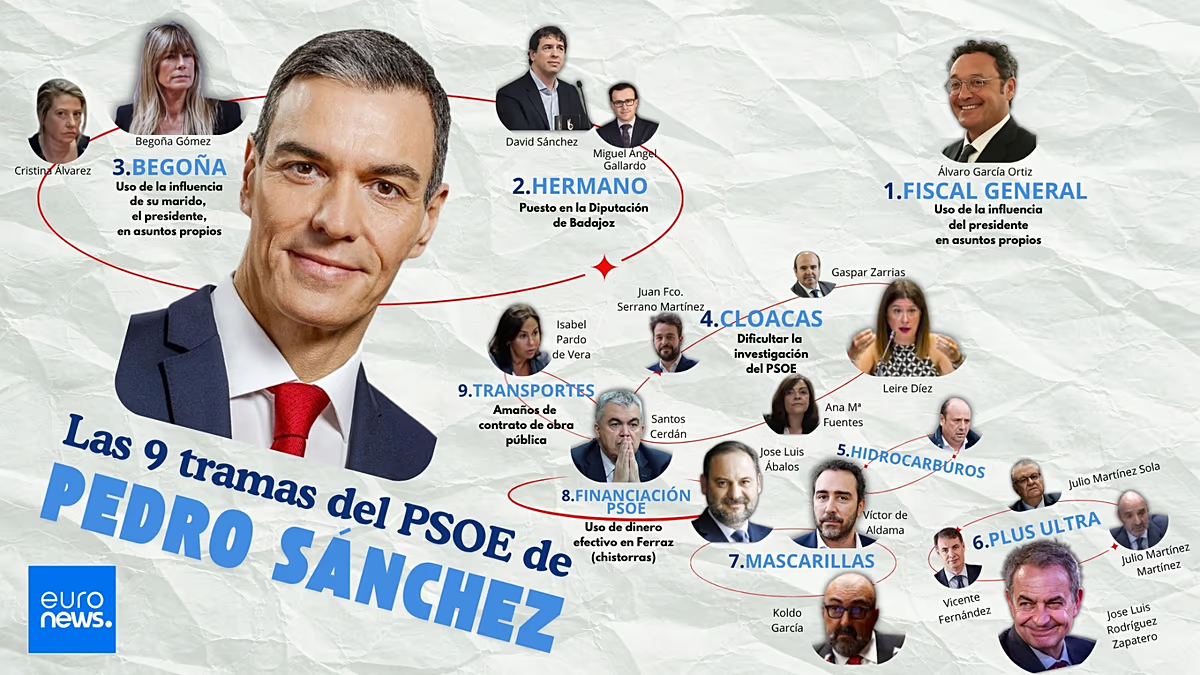
In a significant escalation of judicial scrutiny surrounding Spain’s ruling Socialist Party (PSOE), officers from the Civil Guard’s elite Central Operative Unit conducted a 12-hour search at the party’s national headquarters on Madrid’s Calle Ferraz. This operation, authorized by National Court judge Santiago Pedraz, is part of the investigation into the “Leire Díez case.” The core allegation is that the PSOE orchestrated payments totaling 178,000 euros to a network designed to obstruct judicial investigations targeting individuals close to Prime Minister Pedro Sánchez. Judge Pedraz considers a specific meeting held at Ferraz on April 26, 2024—during Sánchez’s famous “reflection period” when he publicly contemplated resigning—as a key event. The alleged aim was to discredit judges including Beatriz Biedma, Mercedes Ayala, and Juan Carlos Peinado. Already facing charges in this matter are former PSOE Organization Secretary Santos Cerdán, former Andalusian deputy premier Gaspar Zarrías, and party manager Ana María Fuentes.
Paragraph 2: A Widening Circle of Scrutiny
The search at Ferraz was not an isolated event but part of a concentrated wave of judicial activity targeting high-profile figures associated with the Socialist Party. In the same week, former Prime Minister José Luis Rodríguez Zapatero was formally named as a suspect in a separate case involving the airline Plus Ultra, accused of influence peddling and belonging to a criminal organization related to its public bailout. Simultaneously, the trial of Prime Minister Sánchez’s brother, David Sánchez, began in Badajoz, examining whether a public sector job created for him in 2017 constituted fraud. Furthermore, the legal system has already seen the historic conviction and resignation of Sánchez’s own appointed Attorney General, Álvaro García Ortiz, for disclosing confidential information. This pattern illustrates a judicial landscape where probes are increasingly focusing on the present and past leadership of the PSOE and their immediate circles.
Paragraph 3: The Case That Prompted a Prime Minister’s Reflection
Perhaps the most politically resonant case directly involves the Prime Minister’s family. In April, Judge Juan Carlos Peinado indicted Sánchez’s wife, Begoña Gómez, on charges of influence peddling and corruption related to her business activities. This indictment, which also affects her adviser and a businessman, was the direct catalyst for Sánchez’s emotional public letter in 2024, where he expressed deep distress over the judicial attacks and paused his duties to consider his future. Gómez is scheduled for a preliminary hearing in June, ensuring this deeply personal case will remain a focal point of public and political attention. It symbolizes the personal toll these cascading investigations are taking on the nation’s leadership.
Paragraph 4: The “Koldo Case” and Its Many Branches
At the heart of much of this judicial activity is the so-called “Koldo case,” stemming from the irregular procurement of face masks during the COVID-19 pandemic. This sprawling investigation has branched out into several directions, implicating a wide array of Socialist figures. One branch involves former Minister José Luis Ábalos and is being handled by the Supreme Court due to his legal immunity status. Another continues at the National Court, examining former secretary Santos Cerdán and businessmen like Víctor de Aldama. Offshoots from this main case include an investigation into potential illegal party financing through cash movements at Ferraz, and another into rigged public works contracts at the Transport Ministry. Legal sources caution that the National Court’s congestion could mean these intricate investigations drag on for years, creating a prolonged shadow over the party.
Paragraph 5: A Complex Web of Interlinked Scandals
The web of scandals is further complicated by their interconnectivity. The “Hydrocarbons case,” investigating large-scale VAT fraud, is linked back to the Koldo network through the same businessman, Víctor de Aldama. Meanwhile, the Plus Ultra case involving Zapatero concerns a separate alleged scheme of illicit commissions. These interconnections suggest a pattern of multiple, overlapping allegations of improper conduct spanning different sectors—from pandemic procurement to airline bailouts and party financing. For the opposition and the public, it paints a picture of systemic issues rather than isolated incidents.
Paragraph 6: The Political Repercussions
The cumulative weight of these ongoing and emerging cases is now precipitating a major political confrontation. With legal proceedings mounting against his party, his family, and his predecessors, Prime Minister Pedro Sánchez has formally requested to address a full session of Congress to report on the political situation. In response, the opposition People’s Party (PP) is gauging support for a potential motion of no confidence. The nation finds itself at a juncture where the judicial system’s meticulous, slow-moving processes are colliding with the urgent tempo of political life, threatening not just individual reputations but the stability of the government itself. The coming weeks, with key hearings and testimonies scheduled, will determine whether this judicial pressure translates into immediate political consequences.