


Paragraph 1
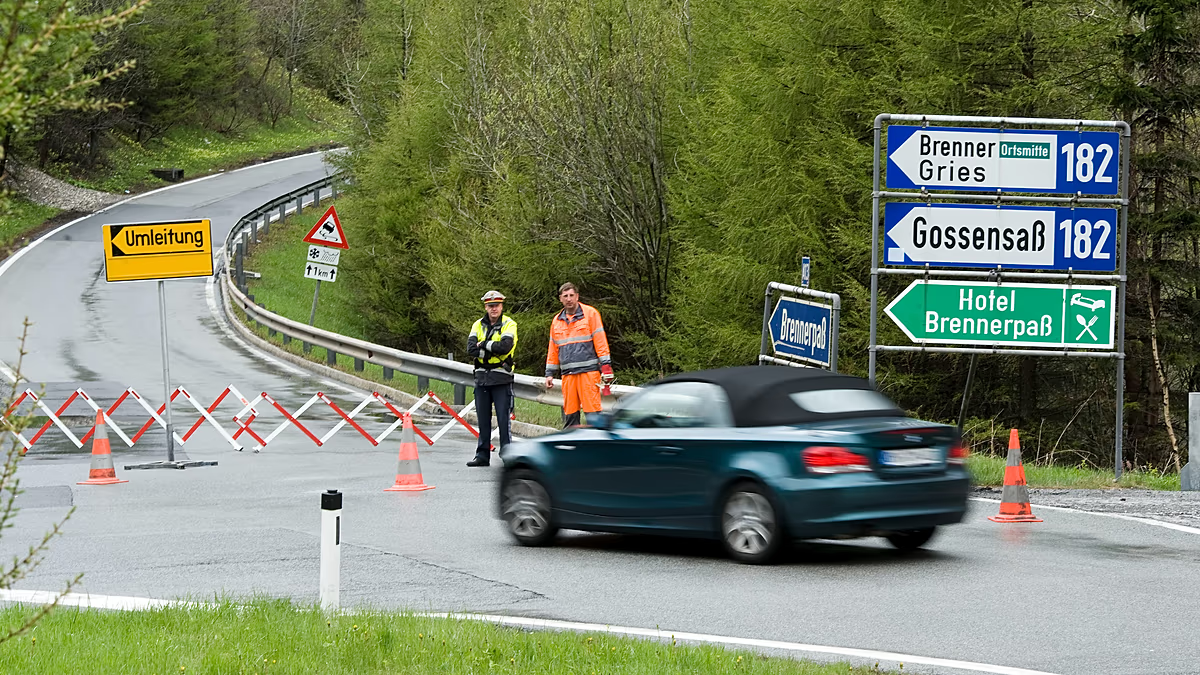
On a recent Saturday in the Austrian Alps, several thousand residents took a dramatic stand against the relentless tide of traffic flowing through their communities. They gathered on the A13 highway at Matrei am Brenner, effectively blocking one of Europe’s most critical transport arteries—the Brenner Pass, a vital conduit connecting Germany and Italy. This was not a spontaneous act but a meticulously planned, permitted demonstration, with authorities closing sections of the road from late morning until evening to accommodate the protest. The action targeted the immense strain placed on the Tyrol region by trans-Alpine freight and tourism traffic, a long-simmering issue that locals feel has been ignored for too long. While fears of catastrophic continent-wide gridlock loomed large in the days leading up to the event, initial reports suggested that widespread advance warnings and strategic diversions had prevented the worst of the disruptions, though the symbolic message of the blockade was delivered loud and clear.
Paragraph 2
For the people living in the picturesque valleys of Tyrol, the Brenner Pass is not just a geographic feature or an economic asset; it is a source of daily distress. As explained by protest organizer and local mayor Karl Muehlsteiger, the situation has become “no longer manageable for the population, no longer bearable.” The statistics are staggering: according to Austria’s motorway operator, truck traffic on the route has more than doubled since 2000, with nearly 2.5 million lorries joining millions of cars in traversing the pass last year alone. This translates into a constant barrage of noise, deteriorating air quality, and frequent traffic jams that choke local towns. The protest was a desperate cry for help, aimed directly at the federal government in Vienna and the European Union in Brussels. “Things absolutely cannot and must not continue like this,” Muehlsteiger stated, capturing the collective exhaustion of communities that feel sacrificed on the altar of international trade and transit.
Paragraph 3
The blockade powerfully highlighted the deep-seated political and logistical complexities of managing Alpine freight. The core of the solution, agreed upon by many, is to shift goods from wheels to rails. A key project in this endeavor is the proposed “Brenner north access route,” an underground rail line intended to efficiently move cargo from Munich in Germany to Innsbruck in Austria, bypassing the congested highway. However, this vision has languished for years, caught in bureaucratic delays as the German parliament debates the final routing. This stagnation fuels local frustration. Bavarian Transport Minister Christian Bernreiter supports the rail project and has also proposed a flexible toll system to incentivize off-peak truck travel. Yet, from the Austrian perspective, the onus is on Bavaria to act. Muehlsteiger emphasized that the Bavarian government must finally take responsibility, properly engage its own citizens in towns like Rosenheim affected by the plans, and push the essential infrastructure forward.
Paragraph 4
The protesters chose their date deliberately, setting the demonstration for what is traditionally one of the busiest travel weekends of the year in southern Germany, ensuring maximum visibility for their cause. In anticipation, authorities prepared for unprecedented disruptions. Germany’s Foreign Office warned its citizens to avoid the Brenner Pass, while Austrian motoring clubs forecasted “extensive traffic jams.” The Upper Bavaria South police mobilized several hundred officers for what they termed the largest traffic operation in their history. To prevent complete paralysis, a complex web of closures and restrictions was enacted. Not only was the A13 highway shut down, but also key parallel and feeder roads. Crucially, to stop trucks from spilling onto and clogging tiny mountain villages, strict “destination controls” were enforced; drivers could only exit onto local roads if they could prove a booking or residence in that specific area.
Paragraph 5
Faced with a closed Brenner Pass, the continent’s traffic had to find other paths across the Alps. Logistics companies and holidaymakers were urged well in advance to seek wide detours. The most significant alternatives lay to the west, with Switzerland’s Gotthard and San Bernardino tunnels absorbing much of the redirected flow. To the east, the Reschen Pass also served as a key bypass. This massive, coordinated rerouting effort is credited with preventing the total transport collapse that had been feared. It demonstrated the interconnectedness of Europe’s Alpine crossings—when one key node is blocked, immense pressure is immediately transferred to others. While the protest aimed to showcase the unbearable volume of traffic on the Brenner, the successful diversion also inadvertently showcased the resilience and capacity of the broader European transport network, albeit at the cost of lengthening journeys and shifting environmental impacts to other regions.
Paragraph 6
Ultimately, the protest on the Brenner Pass was a vivid, physical manifestation of a growing conflict between local quality of life and the demands of globalized commerce. The residents of Tyrol are not simply opposed to progress or connectivity; they are pleading for a sustainable solution that has been promised but not delivered. The slow progress on the critical rail infrastructure, combined with ever-increasing traffic numbers, has bred a deep sense of betrayal and urgency. By peacefully occupying the asphalt ribbon that symbolizes their burden, they forced the issue back into the headlines and onto political agendas. The event underscored that while traffic can be temporarily rerouted, the political and social friction cannot. The message from the mountains is unequivocal: the current trajectory is unsustainable, and the time for delays and empty promises is over. The future of trans-Alpine transit must balance economic necessity with the fundamental right of communities to breathe clean air, find peace, and thrive in their own homes.