


A New Era for a Legendary Route: The Return of the “Bus to Hell”
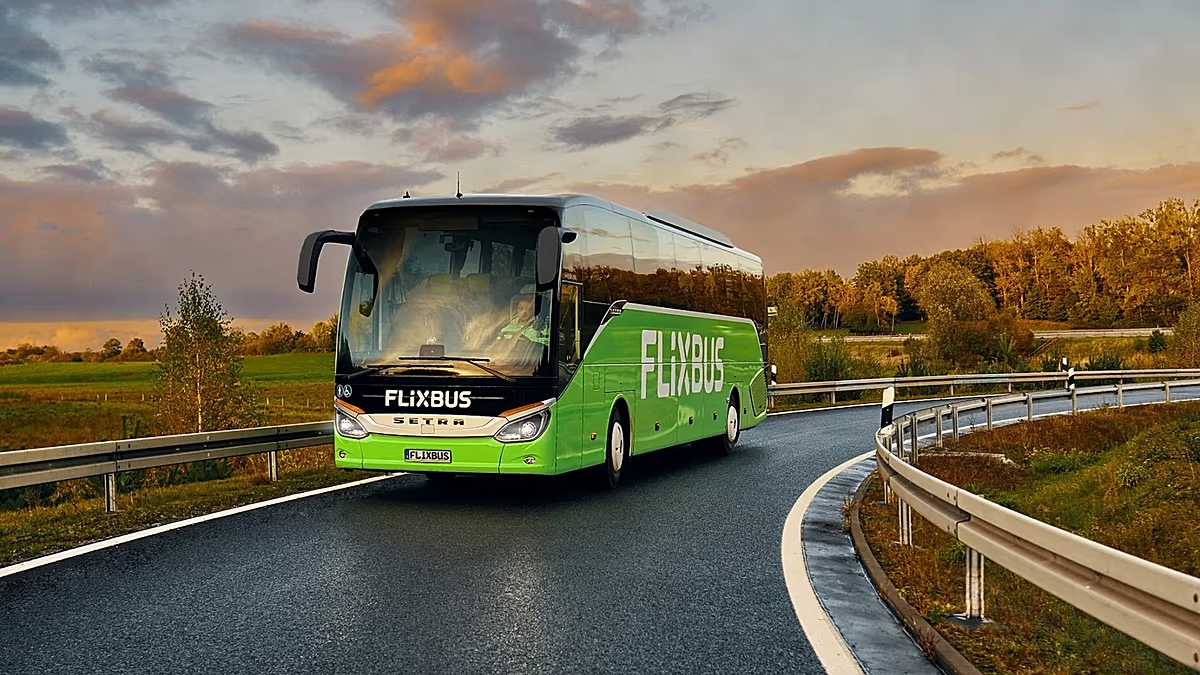
In a move blending nostalgia, clever marketing, and practical travel solutions, the long-distance coach company FlixBus has announced the triumphant return of one of Poland’s most famous bus numbers: the 666. Beginning in the 2026 summer season, the new FlixBus service 666 will connect the historic southern city of Kraków with the popular Baltic seaside resort of Hel, a journey of over 600 kilometers that will also include a major stop in the capital, Warsaw, and service to the most frequented towns along the Hel Peninsula. The announcement has ignited a wave of interest, not merely as the launch of a convenient holiday connection but as the revival of a cultural icon with a unique and playful history.
The legend of Route 666 is deeply rooted in Polish travel folklore. For decades, a local service operated by PKS Gdynia ferried passengers between the towns of Dębki and Hel. The route number itself became a star, thanks to a delightful linguistic coincidence. The name of the destination town, “Hel” (pronounced similarly to the English “hell”), paired with the number 666—widely recognized as the biblical “Number of the Beast”—created an irresistible narrative. This “bus to hell” captured public imagination far beyond the Pomerania region. Tourists would specifically seek out the buses to photograph them, sharing the images widely on social media and cementing the route’s cheeky reputation. However, in 2023, this chapter closed when the local operator, responding to petitions from some religious groups, renumbered the service to 669, a decision that even garnered attention from international media.
FlixBus has now decided to resurrect the legendary number, applying it to its new long-distance route. The company is candid about its intentional choice. Michał Leman, managing director of FlixBus in Eastern Europe, noted with a smile that “It’s better when a route explains by itself where it’s going. In this case, there’s really nothing more to say. Everyone will understand.” The new service will run daily through the summer, departing Kraków at 6:00 AM, reaching Warsaw around mid-morning, and winding its way through the peninsula’s charming resorts—Władysławowo, Chałupy, Kuźnica, Jastarnia, and Jurata—before arriving in Hel by 8:00 PM. The total journey is estimated at around thirteen hours, a significant trek designed to meet a clear demand.
Beyond the clever marketing, FlixBus emphasizes a genuine response to passenger needs. For several seasons, travelers from Poland’s major urban centers have sought direct, comfortable connections to the Hel Peninsula, a region where train and road traffic can reach saturation point during the summer holidays. The company states that its carefully planned schedule aims to mitigate the notorious traffic jams on the narrow land access to the peninsula, offering a relaxed alternative to driving. This practical focus ensures that the route is more than a novelty; it is a functional service for vacationers seeking the sun, sand, and sea of the Baltic coast without the stress of a long personal drive.
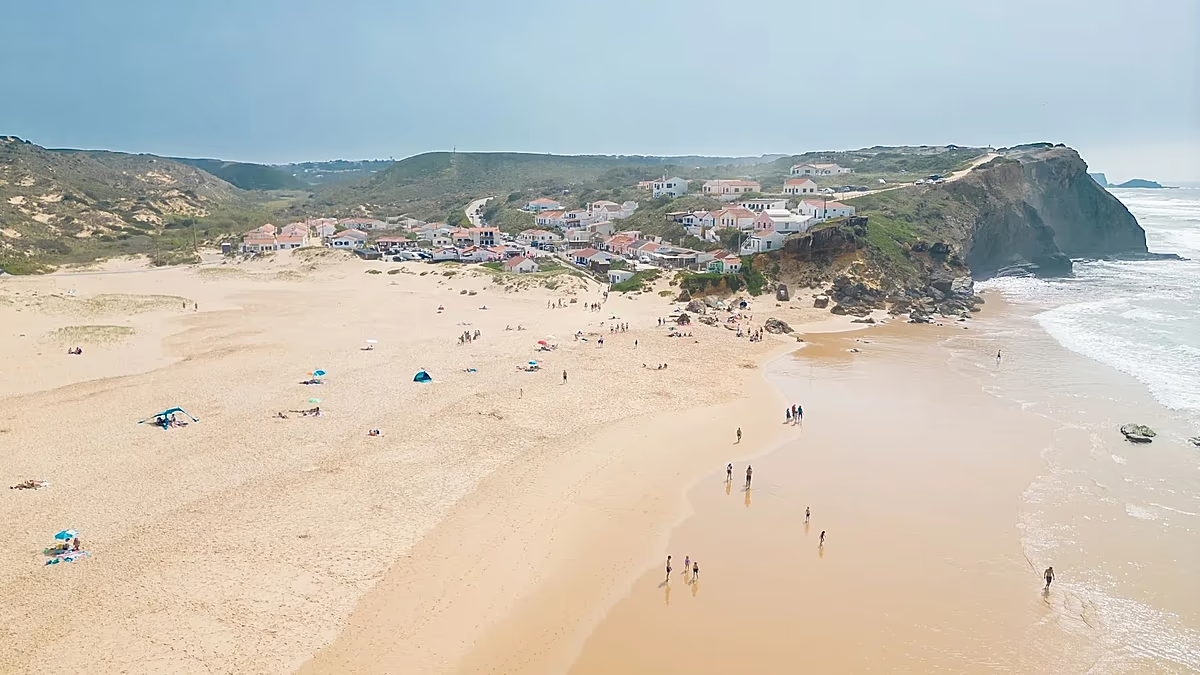
It is worth clarifying, amid all the infernal puns, that this bus does not lead to a realm of fire and brimstone. The destination is the peaceful town of Hel, spelled with a single ‘l’, nestled at the very tip of the eponymous Hel Peninsula. This 35-kilometer-long sandy spit, a beloved and picturesque natural feature, is one of Poland’s top tourist destinations. The town’s name has a much more grounded origin than its English homophone, deriving from Old Germanic languages where words like “hel” referred to a “dune” or coastal hill. Some historical Danish maps even labeled the peninsula “Heel,” possibly alluding to its distinctive shape. This etymological truth adds another layer of charm to the story, contrasting the playful modern mythology with ancient, tangible geography.
The reinstatement of the 666 route number is a fascinating case study in how travel, culture, and local identity can intertwine. It represents a reclamation of a piece of popular, lighthearted heritage, demonstrating how a simple bus line can become a shared reference point and a source of community amusement. For the upcoming summer season, passengers boarding the FlixBus 666 will be participating in a modern pilgrimage of sorts—not to a place of damnation, but to a celebrated holiday paradise, all while riding a coach that has already secured its place in the annals of Polish travel lore. It’s a journey steeped in stories, promising both a comfortable transit and a connection to a uniquely Polish tale of names, numbers, and the love of the seaside.