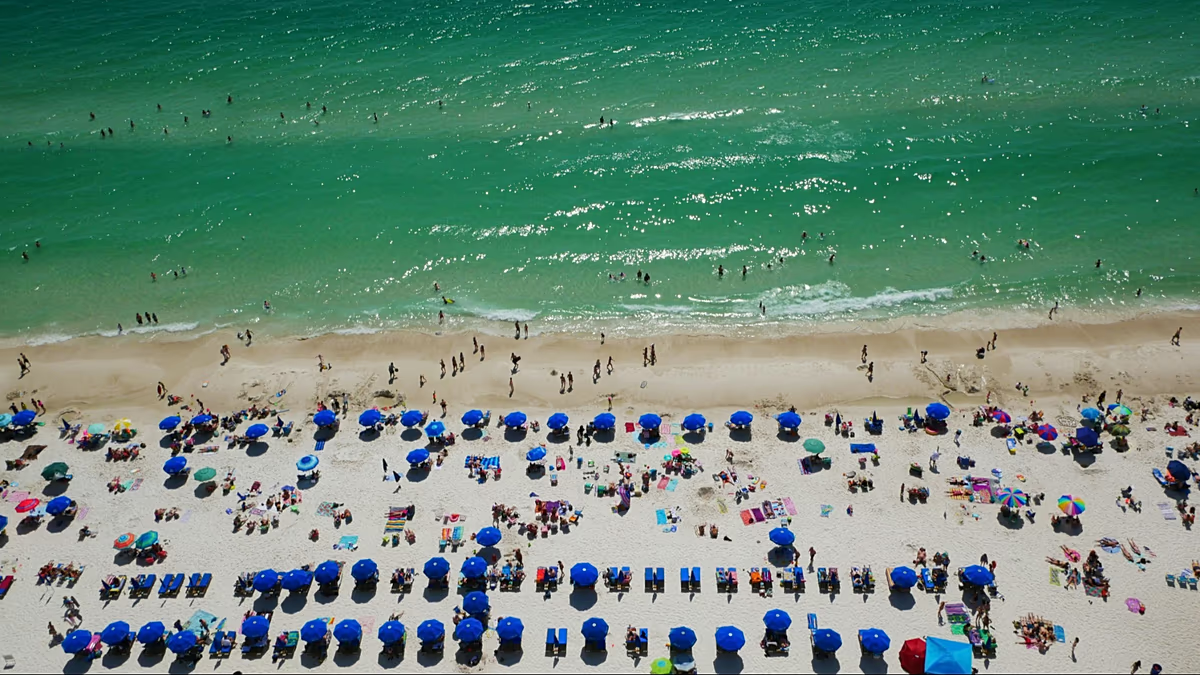



The timeless rivalry between Greece and Türkiye for the crown of Europe’s most affordable summer getaway is experiencing a fascinating shift as we look toward 2026. Historically, both nations have lured travellers with promises of sun-drenched coasts, rich history, and undeniable value, but recent economic currents are altering the landscape. While Türkiye continues to hold its position as a lower-cost option for many international visitors, rampant inflation has noticeably increased prices in its famed resorts, from Antalya to Bodrum. This economic pressure has sparked a surprising new trend: a growing wave of Turkish tourists themselves are now choosing to spend their holidays in neighbouring Greece. The competition between these two Mediterranean giants is no longer just about pristine beaches and ancient ruins; it has evolved into a complex dance of currency values, local inflation, and cross-border shopping habits, making the question of value more nuanced than ever.
This directional flow of tourism is particularly striking. Reports indicate that travel between the two countries has tripled, but predominantly in one direction. Greek travellers, facing steep price hikes in Türkiye, are increasingly opting for domestic holidays or other destinations. Conversely, Turkish visitors are streaming into Greece, with the Greek consulate in Istanbul issuing around 1,300 visas daily. Many of these are multi-entry visas, used not only for seasonal holidays but also for frequent shopping trips. The motivation is pragmatic: everyday goods, including groceries, are often cheaper in Greece than in Türkiye at present. This paints a picture of two populations responding smartly to economic realities, seeking value wherever it lies, even if that means crossing a historic cultural and political divide.
So, for the international traveller planning a 2026 escape, where does the best value truly lie? Recent family holiday cost reports provide a detailed snapshot. In overall rankings of European destinations, Türkiye’s Marmaris emerged as the cheapest, benefiting from not using the euro and from a particularly weak Turkish lira, which stretches foreign currency further. However, Greece, despite being a eurozone country, performed robustly. Crete, Kos, and Rhodes all placed within the top ten, with Crete seeing a notable price drop of nearly 8% compared to the previous year. This demonstrates that Greece is actively competing on affordability. The key insight is that both countries are vast, with prices varying dramatically from region to region. The headline “cheapest destination” title tells only part of the story; the real secret is in the careful selection of your specific locale.
Industry insights from travel agencies help illuminate this patchwork of value. Experts confirm that Greece can genuinely be one of Europe’s most affordable summer destinations, with package holidays to islands like Crete starting at remarkably low prices. Türkiye, however, often excels in the all-inclusive model, where the weak lira and lower operating costs translate into significant savings for hotels, meals, and excursions. It’s important to note, though, that Türkiye’s severe domestic inflation means it is not the ultra-bargain it was a few years ago. Similarly, in Greece, the iconic islands of Mykonos and Santorini remain premium, luxury-priced destinations. The savvy traveller must look beyond these famous names to discover the country’s affordable character.
Therefore, the pursuit of a budget-friendly Mediterranean holiday in 2026 requires a more strategic approach. Türkiye still generally wins on the raw economics of all-inclusive packages and daily spending in many resorts. Greece, however, is successfully proving that it offers a spectrum of prices, with many beautiful islands like Kefalonia, Rhodes, and Lefkada providing wonderful, more affordable alternatives to their glitzy siblings. The choice is no longer a simple binary; it’s about matching your travel style to the financial sweet spots in each country.
Ultimately, both Greece and Türkiye remain capable of delivering a memorable and budget-conscious summer escape in 2026. The paradigm has shifted from one country uniformly being cheaper than the other to a more localized and situational calculation of value. The winning strategy is twofold: first, avoid the automatic gravitation toward the most famous (and often most expensive) hotspots in either nation. Second, research deeply to understand where your specific budget—whether allocated for an all-inclusive resort or for independent exploration—will stretch the furthest upon arrival. In this refined competition, the true victor is the informed traveller who finds their perfect blend of culture, sunshine, and value.