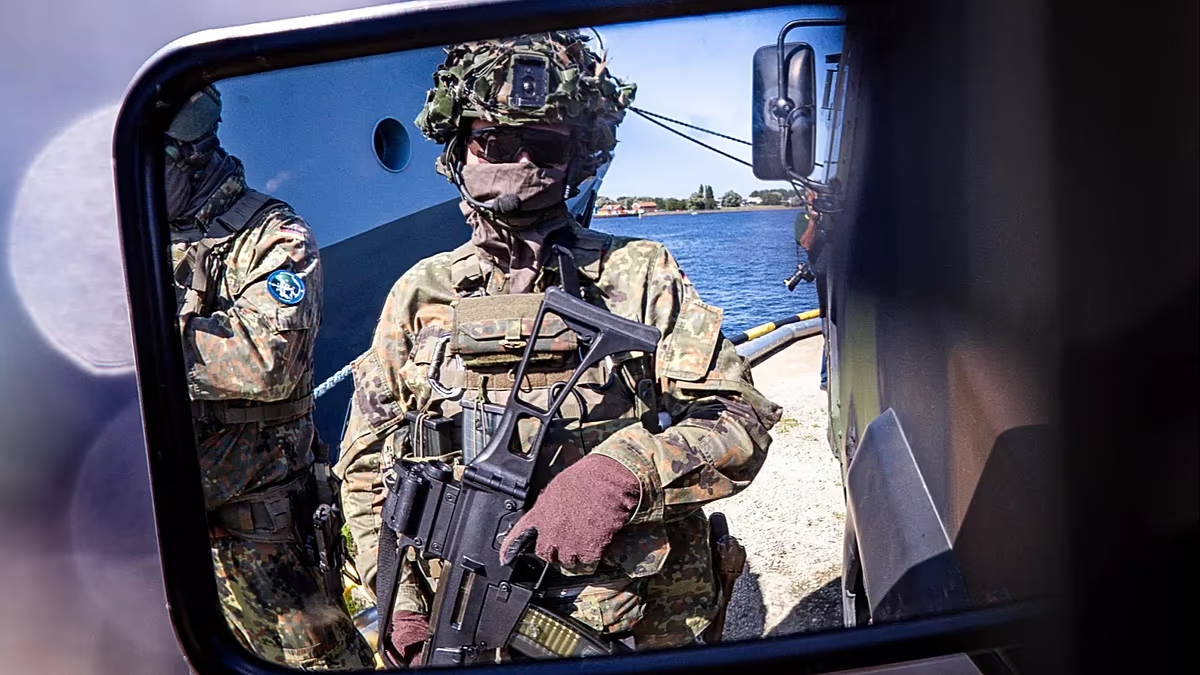


In a significant move to bolster NATO’s eastern defenses, Germany and the Netherlands announced the establishment of a joint tactical headquarters in the Baltics this year. The unit, known as the 1GNC (German-Netherlands Corps), will command forces in Estonia and Latvia, marking a concrete step to strengthen the alliance’s deterrence against Russia. This deployment underscores a deepening commitment by key European nations to assume direct responsibility for the security of the vulnerable Baltic region.
The 1GNC is a formidable command center, headquartered in Münster, Germany, with the capability to control up to 50,000 troops. Its primary functions will include planning and executing military exercises, preparing for potential conflicts, and leading forces should a crisis erupt. This new command structure is designed to provide NATO with greater operational capacity and faster response times on its eastern flank, complementing the existing headquarters in Szczecin, Poland.
The establishment of this joint headquarters is a powerful symbol of NATO cohesion and resolve. The German defence ministry explicitly stated that the deployment “strengthens the cohesion of NATO and supports the deterrence of Russia.” The partnership, with Germany and the Netherlands rotating command of the unit, also involves staff contributions from fourteen other NATO countries, reflecting a broad multinational effort.
This strategic enhancement comes amid a period of heightened tension and hybrid threats in the region. NATO’s Baltic Sentry programme, launched last year, aims to protect critical undersea infrastructure following suspected sabotage incidents. Furthermore, European leaders, including Commission President Ursula von der Leyen, have warned that recent drone incursions and other provocations are not isolated events, but part of a pattern of intensifying threats along Europe’s eastern border.
The decision signals a proactive shift in European defense posture. By physically placing a high-level command center in the Baltics, Germany and the Netherlands are translating political assurances of support into tangible military readiness. This move is intended to reassure Baltic allies and send a clear message of capability and commitment to any potential aggressors.
Ultimately, the creation of the joint German-Dutch headquarters represents a critical evolution in NATO’s eastern flank defense architecture. It is a direct response to a more unstable security environment, providing not just additional command capacity but also a visible demonstration of allied solidarity and deterrence. As hybrid threats continue to evolve, this concrete initiative forms a key part of a broader strategy to safeguard stability in the region.