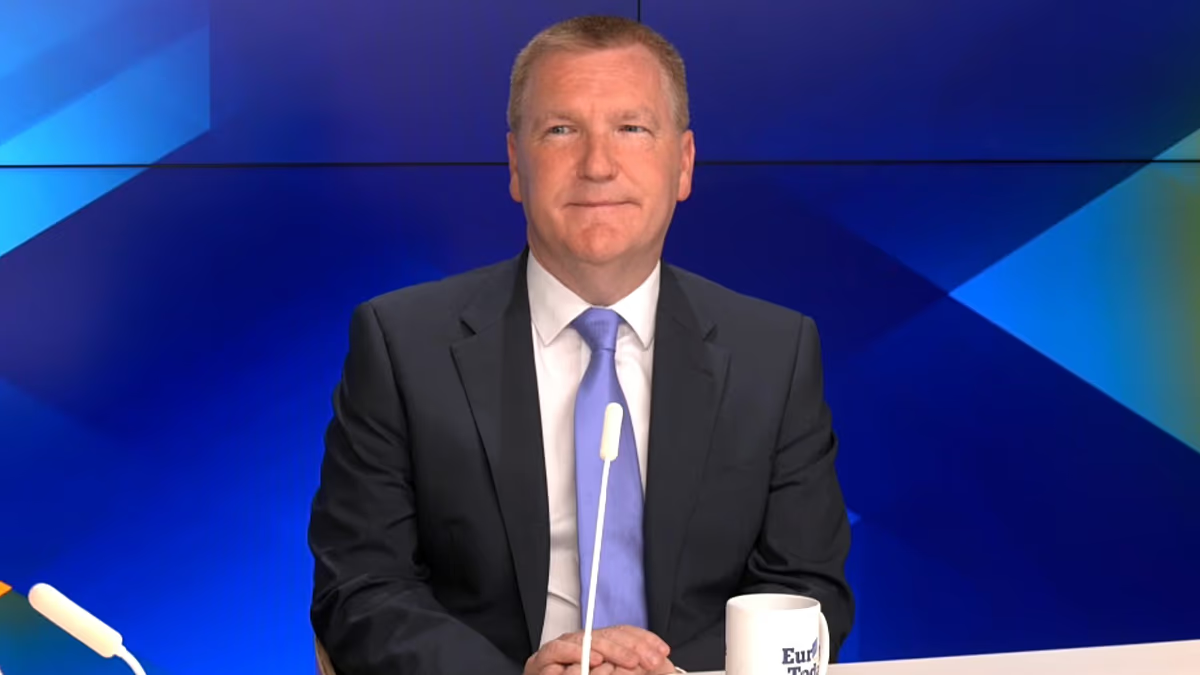



The European Union maintains an unwavering policy of zero tolerance for corruption, a principle underscored by European Commissioner for Justice, Michael McGrath, in recent comments. He emphasized that while he cannot address individual cases, the Union’s stance is absolute. Corruption is viewed as an insidious force that steals valuable public resources and, perhaps more damagingly, erodes the essential trust citizens place in their democratic institutions. This foundational trust is what allows democracies to function and thrive, and its degradation strikes at the very heart of governance. Therefore, the EU’s position is not merely procedural but a core component of its commitment to upholding democratic integrity and the rule of law across all member states.
Central to this principle is the necessity for independent judicial processes. Commissioner McGrath stressed that in any investigation, it is paramount that national authorities are permitted to conduct their work without interference. They must be free to follow evidence wherever it leads and bring each case to its proper conclusion. This autonomy is the bedrock of a just legal system and ensures that the fight against corruption is conducted fairly and effectively, based on facts rather than political influence. It is through these unimpeded national processes that the EU’s zero-tolerance policy is ultimately enacted and realized on the ground.
This discussion arises amidst a significant corruption scandal currently unfolding in Spain, involving the ruling Socialist Party. Recent events have seen the party’s Madrid headquarters raided, with three former members officially placed under investigation for allegedly attempting to influence police and legal cases. The scandal has sent shockwaves through the country’s political landscape. Notably, Spanish Prime Minister Pedro Sánchez has not been directly implicated in any investigation. The situation serves as a stark, real-time example of the challenges member states can face and underscores the critical importance of those independent judicial authorities McGrath highlighted, as they work to ascertain the facts transparently.
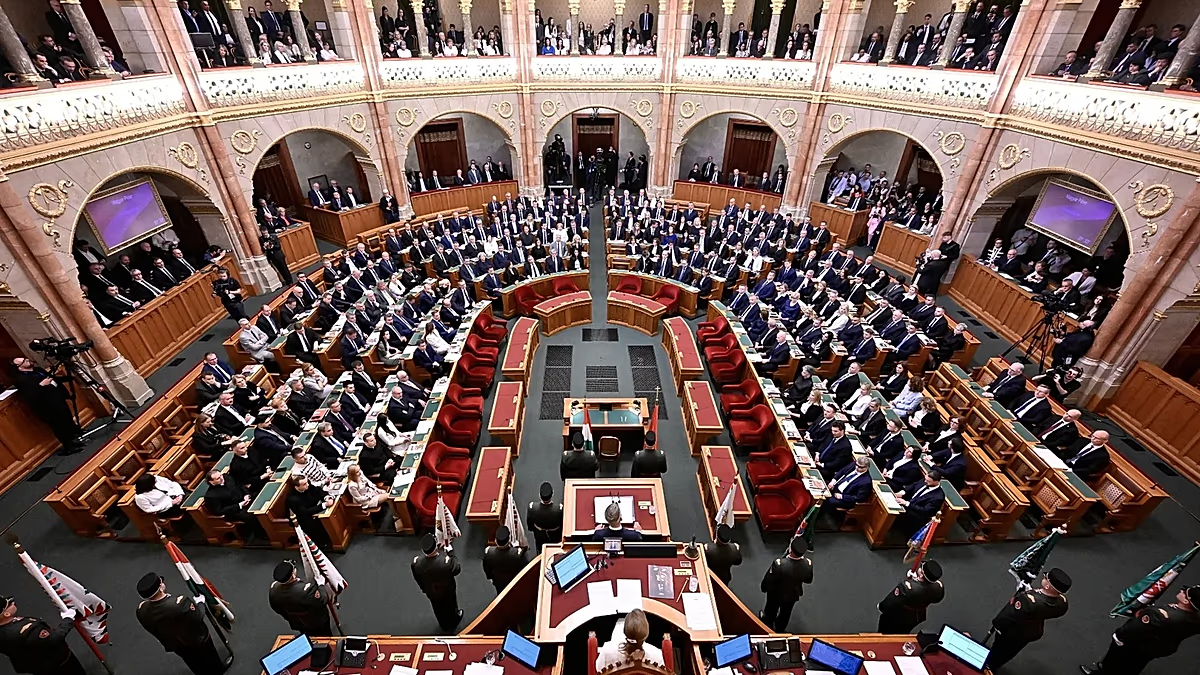
Simultaneously, the broader European context includes ongoing rule-of-law discussions with Hungary, illustrating the EU’s mechanisms for enforcing standards. The new Hungarian Prime Minister, Péter Magyar, is engaged in talks with Brussels to unlock approximately €10 billion in EU funds that were frozen due to concerns over democratic backsliding under the previous administration. For Magyar, securing this funding is a key domestic priority, but he faces a pressing deadline. This scenario highlights the tangible consequences of the EU’s principles, where financial support is conditional upon a demonstrable commitment to democratic norms and judicial independence.
Commissioner McGrath struck a collaborative tone regarding Hungary, noting a “good start in resetting relations” with the new government. He expressed the Commission’s readiness to support Budapest on a path toward restoring the rule of law and respecting the fundamental rights of all Hungarian citizens. This approach reflects a dual strategy: unwavering firmness on core values paired with a willingness to assist member states in meeting their obligations. The goal is not punitive but corrective, aiming to foster a uniform democratic resilience across the Union, though the process remains complex and fraught with political difficulty.
In conclusion, the EU’s zero-tolerance stance on corruption, as articulated by Commissioner McGrath, is a multifaceted endeavor. It is a declarative policy rooted in protecting democracy, operationalized through the shield of independent national judiciaries, and given teeth by conditional frameworks like the withholding of funds. From the unfolding investigations in Spain to the high-stakes negotiations with Hungary, these principles are continually tested and applied. The fundamental objective remains clear: to safeguard public resources, restore and maintain public trust, and ensure that the democratic foundations of the European project remain robust and credible for all its citizens.