


Summary and Humanized Account of the Rock City Fire Incident
Paragraph 1: Setting the Scene
On a seemingly ordinary day in Nottingham, a familiar landmark in the city’s vibrant nightlife, the iconic Rock City music venue and nightclub, became the unexpected center of attention. What began as a routine afternoon was abruptly punctuated by the arrival of emergency services, their flashing blue lights casting an unusual hue on the building’s familiar façade. At the heart of the developing story was Nottinghamshire Live reporter Louis Corbett, who found himself positioned directly at the scene, witnessing the unfolding events firsthand and communicating the initial, crucial details to the concerned public.
Paragraph 2: The Initial Report from the Ground
Amidst the controlled activity of the emergency responders, Louis Corbett sought clarity. Through direct conversation with the officers managing the scene, he was able to secure an early, authoritative account of what was happening. A police officer explicitly informed him that the situation involved a suspected small fire on the roof of Rock City. This initial confirmation was vital, moving the incident from the realm of rumor and speculation into a confirmed, though still developing, news event. It provided the public with a concrete, if preliminary, understanding of the potential danger.
Paragraph 3: A Visible and Cautious Response
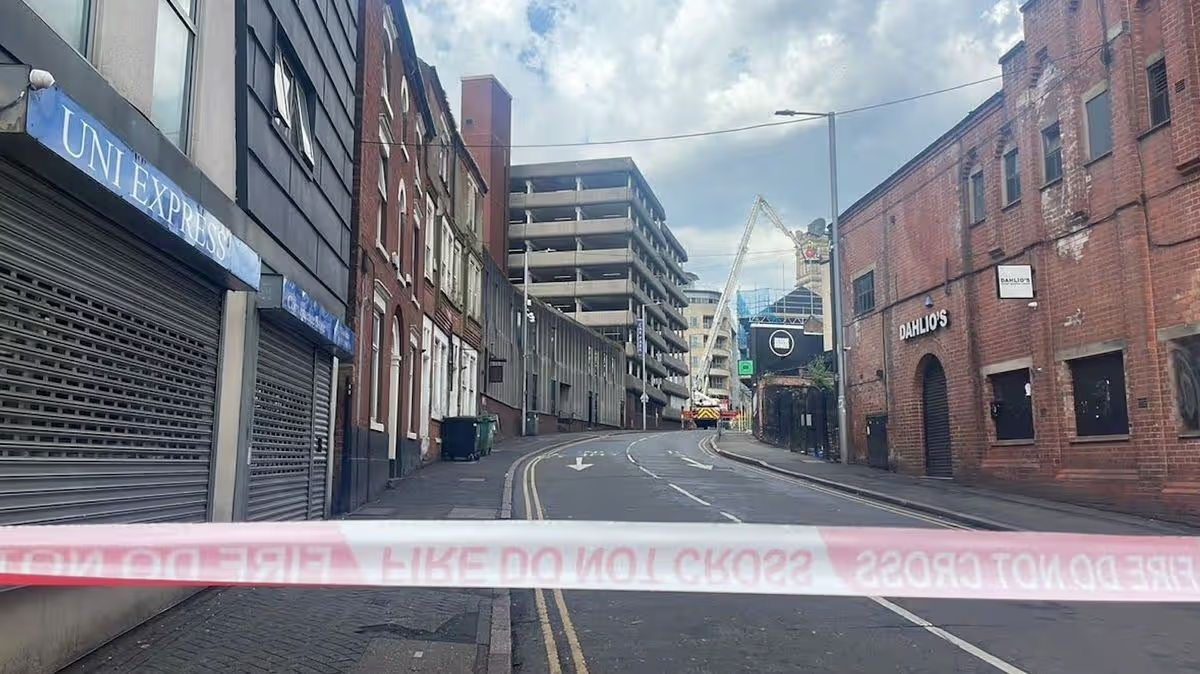
The scale of the emergency response painted a picture of serious caution. Most notably, the large, imposing silhouette of an aerial ladder platform—a common sight at significant fire incidents—had been extended high above the venue, its basket positioned near the roofline. This piece of equipment, often referred to as a “cherry picker,” is typically deployed to give firefighters direct, elevated access to a blaze. Its presence underscored that the authorities were treating the situation with the utmost seriousness, preparing for direct intervention to protect a beloved city institution.
Paragraph 4: A Moment of Assessment and Observation
However, as Louis Corbett keenly observed, the immediate action from that elevated vantage point was not one of suppression. From his ground-level perspective, he reported that the pair of firefighters on the ladder appeared to be pointing at the roof rather than actively dousing flames with water or equipment. This detail suggested a critical phase of the operation: assessment. The firefighters were likely evaluating the exact location, extent, and nature of the suspected fire, checking for hotspots, or determining the safest and most effective method of attack before committing to a full-scale extinguishing effort.
Paragraph 5: Humanizing the Incident
Beyond the procedural details, this moment was deeply human. It was a snapshot of experts at work, exercising precision and judgment under pressure. The pointed fingers of the firefighters were not signs of inaction but of focused communication and analysis. They represented a deliberate pause, ensuring that the response to the “suspected small fire” would be measured, effective, and would minimize damage to the historic venue. For the watching public and Louis Corbett relaying the scene, it was a tense yet reassuring display of professionalism aimed at safeguarding a place holding countless memories for generations of music fans.
Paragraph 6: Context and Community Impact
Rock City is not just any building; it is a cornerstone of Nottingham’s cultural identity, a legendary stage that has hosted countless artists and been the backdrop to innumerable nights out for locals and students alike. Therefore, news of any threat to its structure resonates deeply within the community. The report of a fire on its roof, however minor it was initially suspected to be, would naturally provoke concern and a flood of questions. Louis Corbett’s on-the-ground reporting, translating the observations of emergency services into clear, calm updates, played an essential role in managing public anxiety, providing reliable information, and documenting the protection of a shared civic treasure. The incident served as a reminder of the constant, often unseen, work of emergency services in preserving the places that form the heart of a city.