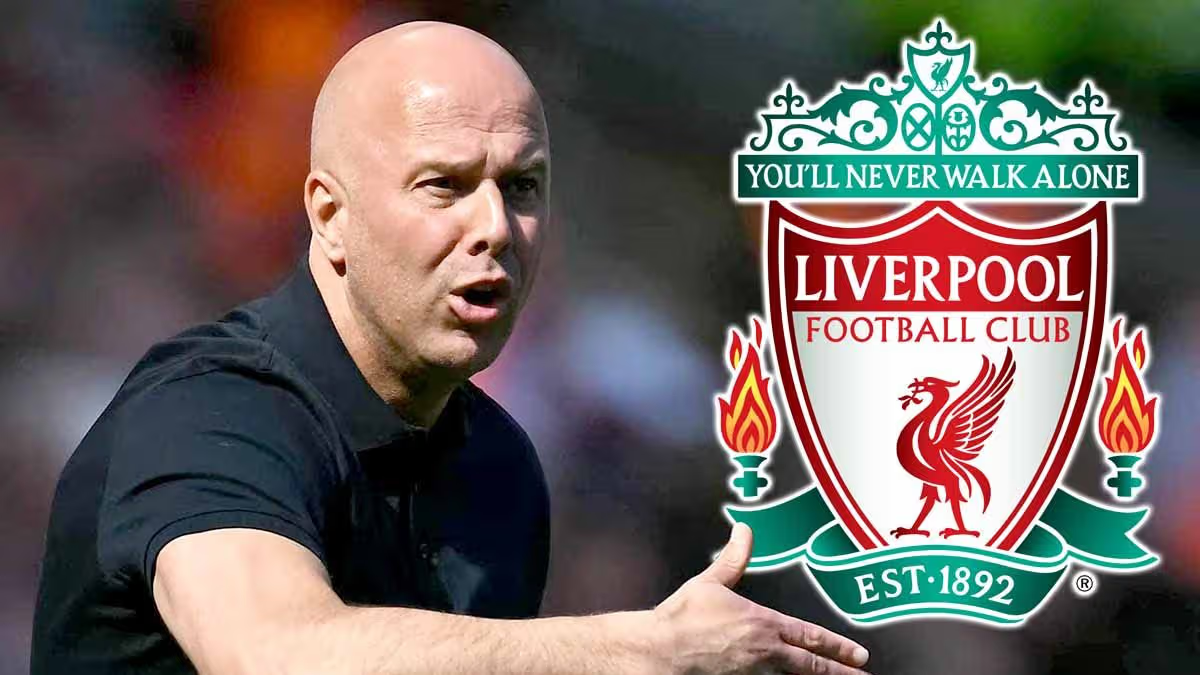
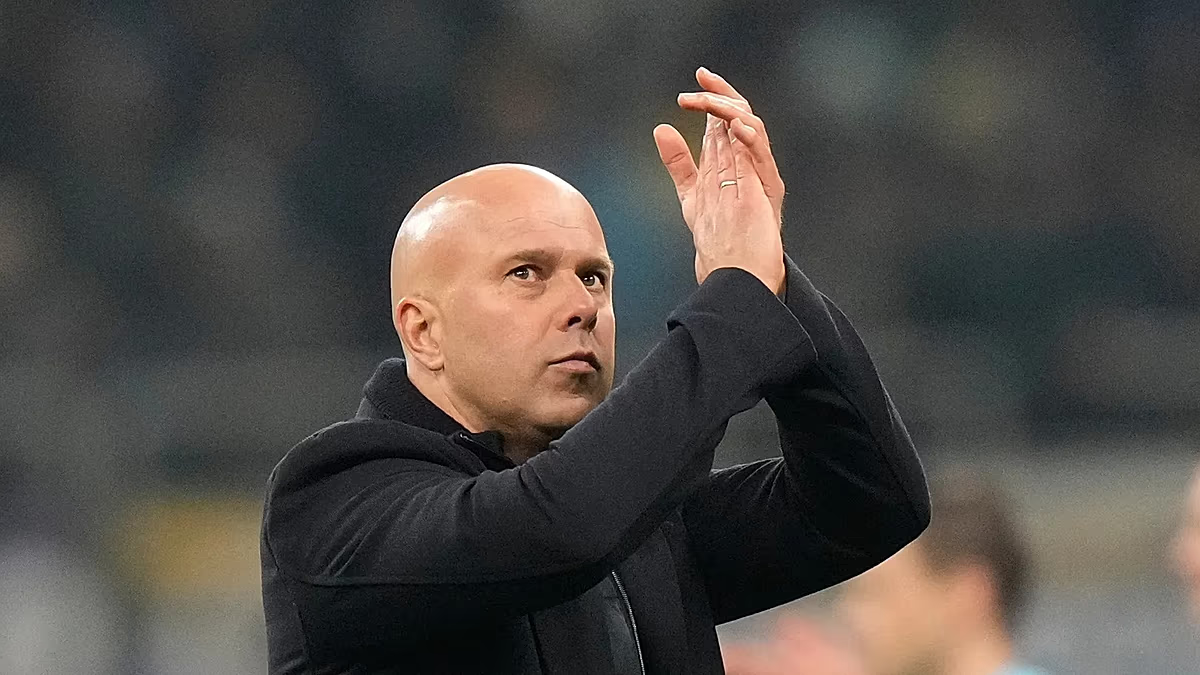



In a stunning announcement that has sent shockwaves through the world of football, Liverpool Football Club confirmed on Saturday that head coach Arne Slot has departed the club with immediate effect. The news, delivered with a sobering finality, marks a sudden and dramatic end to a tenure that began with the loftiest of ambitions but concluded under the weight of unmet expectations. Just two years into his reign, following the monumental challenge of succeeding the beloved Jürgen Klopp, Slot’s exit underscores the relentless pressures and sky-high standards at one of sport’s most iconic institutions. The decision, described by the club’s ownership as difficult but necessary, opens a profound new chapter of uncertainty at Anfield, leaving fans to ponder what might have been and what must now come next.
Arne Slot’s arrival in 2024 was met with a mixture of cautious optimism and profound nostalgia, as he stepped into the enormous void left by Jürgen Klopp’s emotional departure. His first season, however, seemed to justify the faith placed in him, culminating in the glorious achievement of Liverpool’s 20th league title. That triumph painted a picture of a seamless transition and a bright future. Emboldened by this success, the club backed Slot aggressively in the transfer market, most notably with the record-shattering signing of Swedish striker Alexander Isak. This move, alongside other key acquisitions, instantly anointed Liverpool as favourites to defend their crown, setting a stage seemingly perfect for a dynasty in the making. The atmosphere was one of confident anticipation, a belief that the Slot era was only just beginning to unfold.
Yet, the narrative of continued dominance rapidly unraveled during a frustrating and disjointed second campaign. The vision of a well-oiled, title-retaining machine splintered under a cascade of setbacks. A cruel injury to the marquee signing, Isak, robbed the team of its new focal point in attack. Simultaneously, a wider squad overhaul, intended to refresh the team, seemed to hinder rather than help cohesion on the pitch. Most symbolically, the club witnessed a major and prolonged dip in form from its talisman, Mohamed Salah. The Egyptian king, whose goals had so often been a guarantee, struggled to find his rhythm, and reports of a strained relationship with Slot began to surface. The result was a team that faltered, stumbling through periods of inconsistent form and ultimately scrambling to secure a fifth-place finish—a position deemed deeply unsatisfactory for a club of Liverpool’s stature and investment.
The fracture between coach and star player became a public subplot that encapsulated the season’s troubles. Salah, Liverpool’s third all-time top scorer and a figure synonymous with the club’s recent golden era, openly critiqued Slot’s tactical approach earlier this month, calling for a return to the “heavy metal attacking team that opponents fear”—a clear reference to the intense, high-pressing style hallmark of the Klopp years. This comment was more than just feedback; it was a powerful statement from a legend, highlighting a perceived philosophical divergence. With Salah also confirming his own departure this summer after nine trophy-laden years, the end of an epoch is now doubly felt. The concurrent exits of a modern icon and the coach tasked with building the next chapter create a poignant moment of closure and upheaval.
In their joint statement, the club’s ownership meticulously balanced respect for Slot’s achievements with a firm conviction about the path forward. They acknowledged his “significant, meaningful and… successful” contribution, a nod to that historic league title win. However, the crucial, decisive line followed: they had “come to the conclusion that change is necessary in order for the club to keep moving forward.” This language reveals the cold, strategic calculus of elite football. Sentimentality holds little sway; the trajectory is paramount. Despite the silverware delivered, the perceived regression, the stylistic concerns, and the failure to build on early promise led the decision-makers to a stark choice. They judged that the project under Slot had reached its limit, and a new direction was required to reignite the club’s pursuit of the game’s highest honours.
As the dust settles on this abrupt departure, Liverpool stands at a critical crossroads. The search for a new manager begins amidst a backdrop of significant squad transition, symbolized by Salah’s exit. The challenge for the owners is not merely to appoint a tactician, but to find a leader who can restore a clear identity, re-energize a disillusioned fanbase, and successfully integrate a new generation of players. The legacy of the Klopp era still casts a long shadow, and the Slot experiment demonstrates how difficult it is to carve a new path in its wake. The coming months will define the club’s trajectory for years to come, as Liverpool must now navigate the complex task of rebuilding not just a team, but a sense of belief and a unifying vision for the future.