

The recent Ebola outbreak in the Democratic Republic of Congo presents a profound challenge, not merely as a health crisis but as a human drama unfolding against a backdrop of longstanding adversity. In late May, this reality was brought directly into the classrooms of Goma, North Kivu’s largest city. There, medical teams undertook the vital task of educating students and teachers on fundamental hygiene practices, the recognition of Ebola’s early symptoms, and the critical importance of swift reporting. This outreach is a cornerstone of community defense, yet health officials accompanying these teams underscored a grim complicating factor. They warned that the very fabric of life in the region—marked by overcrowded living conditions and years of conflict-driven displacement—could serve as a potent accelerant for the virus’s spread. In a population already weary from instability, the fear of a rapidly moving epidemic adds a deep layer of anxiety, turning every crowded market and temporary shelter into a potential point of vulnerability.
The strain on the nation’s health system is now palpable and growing. The official figures paint a concerning picture: over 100 confirmed cases, a staggering 3,000 contacts under vigilant monitoring, nearly 1,000 suspected infections, and at least 220 suspected deaths. These numbers, however, are not just statistics; they represent thousands of individual stories of fear, loss, and uncertainty. Each “contact” is a person living with the dread of illness, each “suspected death” a family plunged into grief and confusion. The system tasked with caring for them is being pushed to its limits, requiring not just medical resources but immense human resilience from local health workers who operate on the frontlines of this dual battle against disease and logistical hardship.
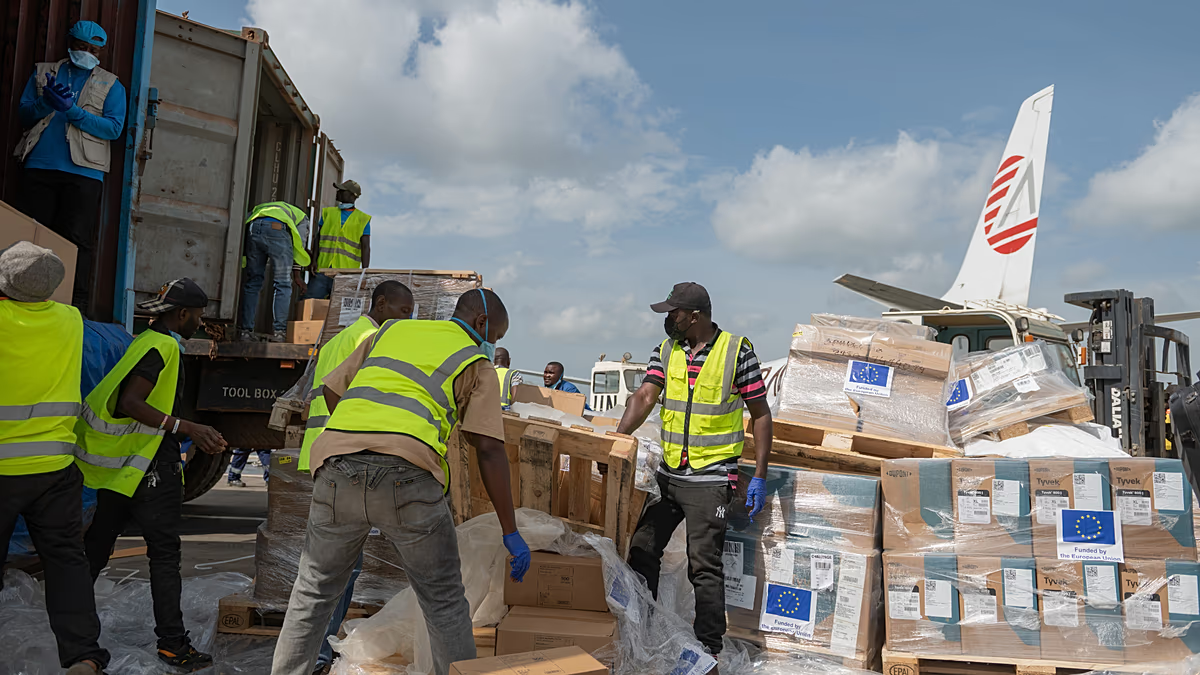
Recognizing this escalating need, the international community has begun to mobilize concrete support. Further north in Bunia, a significant delivery of 100 tonnes of medical supplies and protective equipment arrived via European Union humanitarian channels. This shipment is a tangible lifeline, intended to reinforce treatment centres and fortify the frontline health workers in Ituri province, the current epicentre of the epidemic. Such provisions—from gloves and gowns to essential medicines—are the physical armor and tools required to safely wage this fight. They symbolize a commitment to protecting those who protect the vulnerable, ensuring that caregivers do not themselves become casualties in the line of duty.
The response intensified further with the high-level visit of World Health Organization Director-General Dr. Tedros Adhanom Ghebreyesus. His journey from the outbreak zones in Ituri to the capital, Kinshasa, underscores the seriousness with which the global health community views this situation. The talks focused on strengthening the technical pillars of epidemic control: enhanced surveillance to detect every chain of transmission, meticulous contact tracing to isolate potential spread, and robust emergency health measures. This strategic coordination is essential to building a cohesive containment wall around the virus. Dr. Tedros’s presence also serves a deeper purpose: it is a gesture of solidarity, a message to the affected communities and overburdened local health systems that they are not alone in this struggle.
The confluence of these elements—community education in traumatized urban centers, a health system buckling under numerical pressure, the arrival of essential material aid, and high-level international coordination—defines the current phase of the outbreak. It is a multifaceted effort that attempts to address both the immediate biological threat and the underlying societal conditions that fuel it. The educational sessions in Goma’s schools are an investment in human capital, aiming to build a knowledgeable populace that can act as a first line of detection and prevention. Meanwhile, the logistical and strategic support seeks to bolster the official response architecture that must manage the cases that inevitably arise.
Ultimately, this crisis transcends pure virology. It is a test of human preparedness, solidarity, and endurance in a region already scarred by conflict and displacement. The path to containment will depend not only on the effectiveness of medical protocols and the sufficiency of supplies but also on the trust and cooperation of a population navigating daily life under the shadow of a deadly virus. The true measure of success will be whether the combined efforts of local heroes and global partners can outpace the virus’s ability to exploit hardship, turning the tide through a combination of knowledge, resources, and unwavering collective will.