

Here is a humanized and expanded summary of the reported event, structured into six paragraphs.
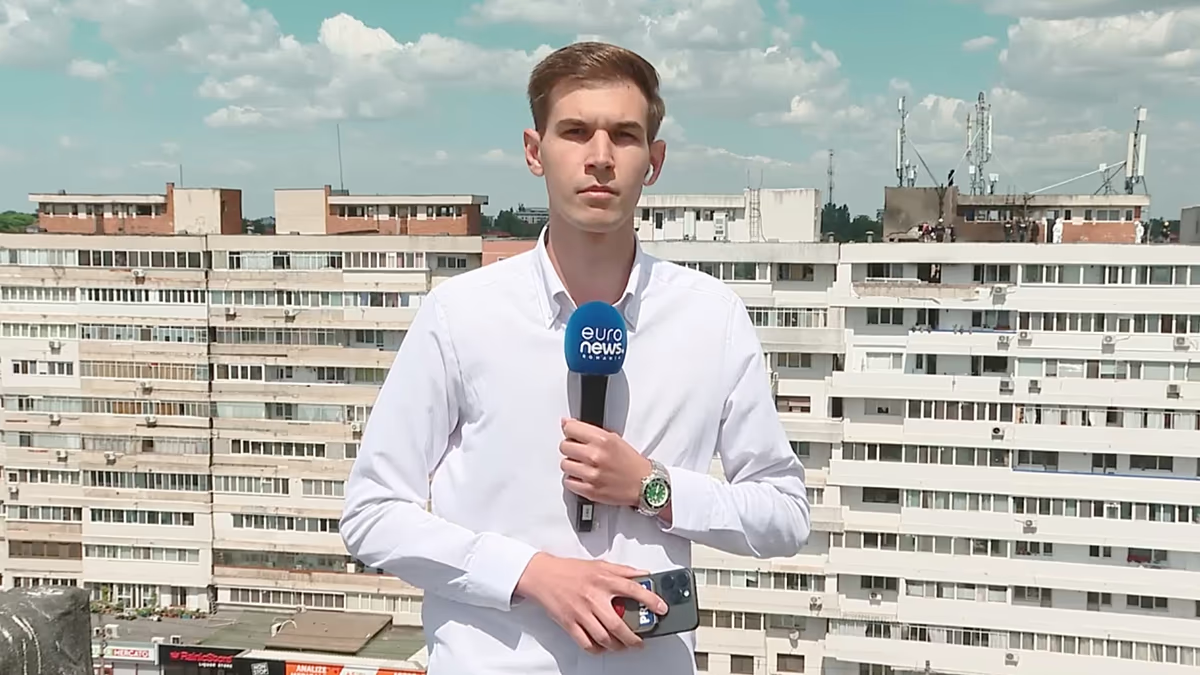
The news from the border city of Galați, Romania, on a late May morning, is a chilling reminder of how modern conflicts refuse to be contained by maps. According to reports from Euronews, the calm of the night was shattered when a Russian drone, likely involved in the ongoing war against neighboring Ukraine, crossed a geographical and symbolic line. It struck an apartment building not on a military base or strategic target, but in an ordinary residential area. In an instant, the theoretical concept of a war “next door” became a terrifying, tangible reality for the residents of that building and the wider community. The date, updated to May 29, 2026, underscores a grim and prolonged trajectory, suggesting that what was once an alarming anomaly is becoming a perilous feature of life along the border.
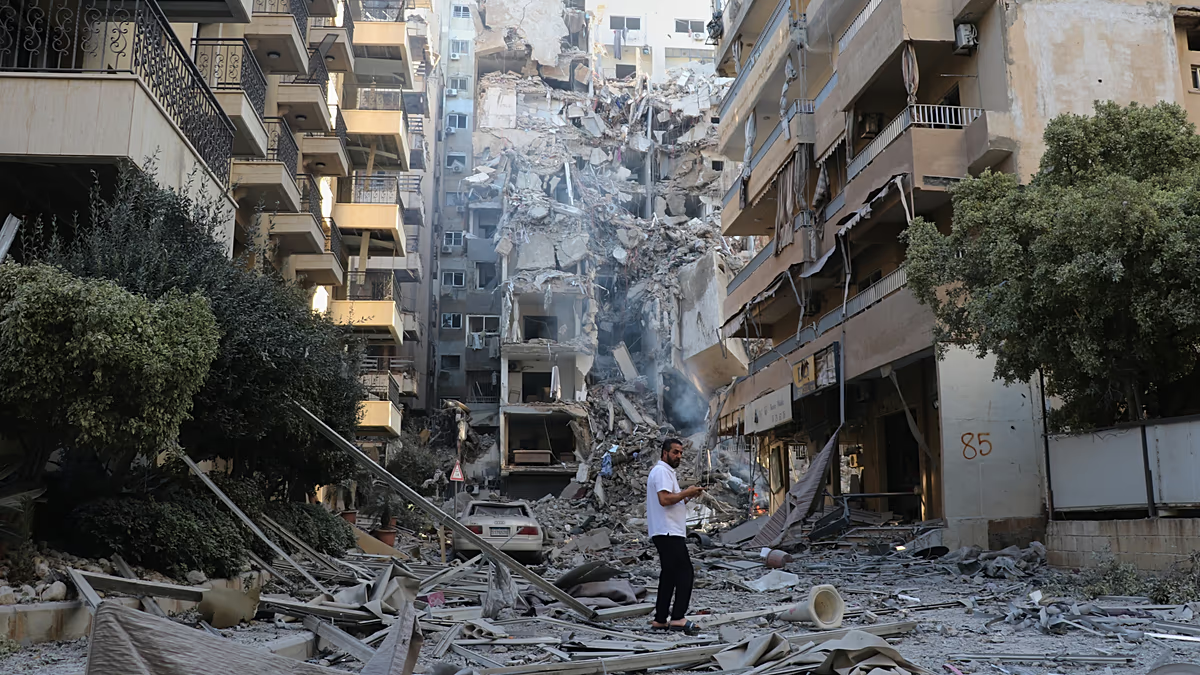
The immediate aftermath was one of chaos and courageous response. The impact of the drone ignited a fire, its flames cutting through the darkness and casting an ominous glow over the scene. For the families inside, it was a nightmare of sudden noise, structural damage, and the primal fear of fire. Two individuals, whose lives were irrevocably changed in that moment, sustained injuries. Their names and stories are not yet part of the public record, but they represent the most human cost of the attack—people who went to bed in the safety of their own homes and awoke to violence. Meanwhile, the city’s emergency services sprang into action, their blue and red lights painting the streets as firefighters, paramedics, and police raced to the scene in an overnight operation to control the blaze, treat the wounded, and secure the area.
Zooming out from the specific damage, this strike carries profound geopolitical weight. Romania is a full member of the North Atlantic Treaty Organization (NATO), founded on the principle of collective defense where an attack on one is considered an attack on all. While previous debris from the war has landed on NATO soil, a direct strike on a residential building escalates the situation significantly. It forces a tense examination of intent: was this a deliberate provocation, a reckless error in targeting, or the result of a drone that was simply lost or malfunctioning? Regardless of the answer, the incident creates a diplomatic minefield. It demands a robust response from the Romanian government and the NATO alliance, which must now calibrate a reaction that is strong enough to deter future occurrences and reassure its citizens, without precipitously escalating the wider war.
For the people of Galați and similar border regions, this event transforms abstract headlines into a visceral new reality. The psychological border has moved. The sound of distant explosions, once a worrying rumor from across the river, is now a potential prelude to danger in one’s own street. Parents may look at their children’s bedrooms with new anxiety, and the simple act of sleeping through the night has lost its innocence. This attack introduces a climate of vulnerability and hyper-vigilance, where the sky itself is no longer just a sky, but a domain from which threat can materialize without warning. The sense of security that defines a peaceful society has been punctured, replaced by the uneasy question of “what if it happens again?”
In the cold language of international relations, the response will involve emergency NATO meetings, analyses of debris to determine the drone’s origin and path, and stern diplomatic démarches to Moscow. There will be talks of bolstering air defense systems along the eastern flank and reaffirming Article 5 commitments. Yet, parallel to this official narrative, a more human story unfolds. It is found in the community of Galați rallying around the affected families, offering shelter, food, and support. It is in the exhausted faces of the firefighters who contained the blaze and the doctors who tended to the injured. This local resilience is the bedrock upon which nations stand. While leaders debate red lines and military postures, the citizens in border towns are left to rebuild not just walls, but their sense of normalcy, demonstrating a quiet fortitude in the face of distant political storms that have violently arrived at their doorstep.
Ultimately, the drone strike in Galați is a tragic symbol of 21st-century conflict’s blurred boundaries. War is no longer confined to trenches and declared battlefields; it spills over through cyber-attacks, economic disruption, and, as seen here, physical projectiles that ignore border posts. This event is a stark lesson in interconnection, showing that the suffering in Ukrainian cities like Kharkiv or Odesa can, literally, echo into the apartments of a Romanian city. It serves as a somber call to the international community about the escalating risks of a prolonged war and the absolute necessity of diplomatic solutions. Most of all, it is a story about two injured neighbors, a scared community, and a burning building—a painful testament that in today’s world, even when you are not at war, war can sometimes find you.