


In a pivotal legal decision with profound implications for American democracy, a federal judge has allowed a controversial executive order from President Donald Trump to proceed, setting the stage for potential nationwide changes to election administration just months before critical midterm votes. The ruling, delivered on May 28, 2026, by U.S. District Judge Carl Nichols—a Trump appointee in Washington, D.C.—declined a request from Democratic leaders and civil rights organizations to immediately halt the order. These groups had urgently argued that the President was overstepping his constitutional authority, as the power to set election rules fundamentally resides with individual states and Congress. However, Judge Nichols sided with the administration’s procedural argument, stating it was premature to block the order since its specific policies had not yet been implemented. This legal green light, though not a final judgment on the order’s merits, clears a significant hurdle for the administration and introduces substantial uncertainty into an election season already fraught with tension.
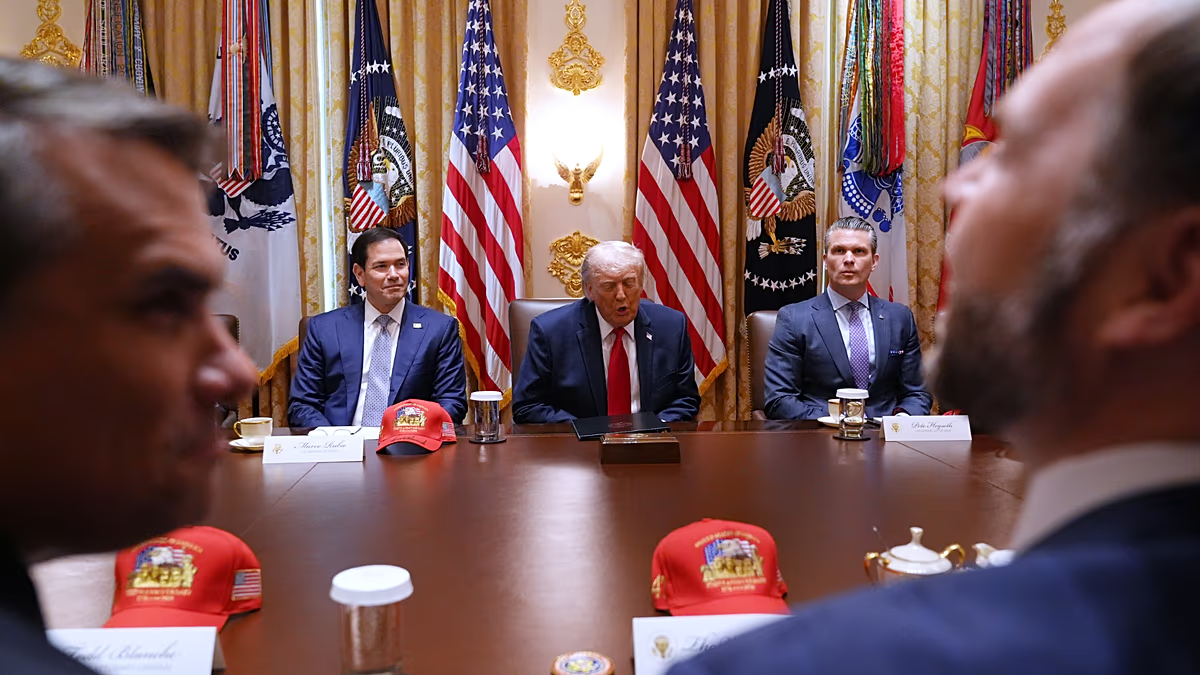
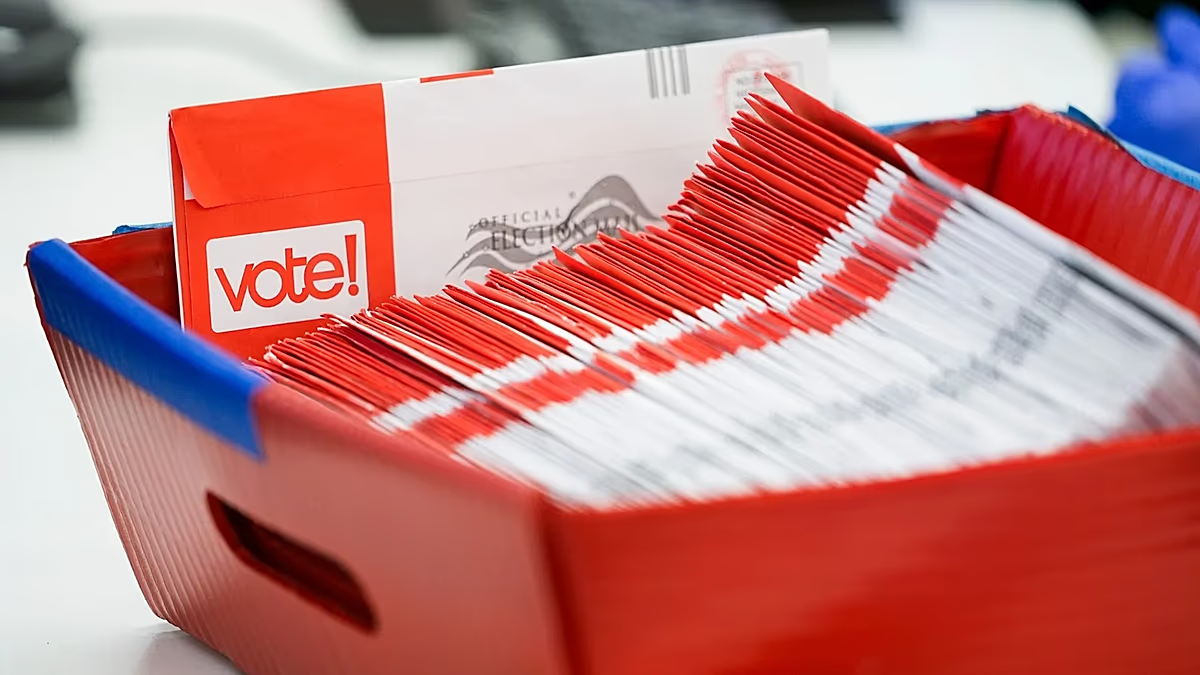
The executive order at the heart of this conflict, issued by President Trump in March 2026, proposes two sweeping changes to the electoral system. First, it directs the federal government to compile a centralized list of citizens deemed eligible to vote. Second, it instructs the U.S. Postal Service to deliver mail-in ballots exclusively to individuals whose names appear on that federal list. This initiative follows the stalling of a broader voting overhaul bill in Congress that the President supported. Proponents frame it as a necessary safeguard, but a coalition of election officials, civil rights advocates, and even the postal workers’ union has raised alarms. They argue the plan is ripe for abuse, could disenfranchise eligible voters through list errors, and inappropriately tasks mail carriers with policing ballot access. The order represents a concrete step in Trump’s sustained campaign, ongoing since his 2020 loss to Joe Biden, to tighten voting rules based on unsubstantiated claims of widespread mail-ballot fraud—claims repeatedly debunked by audits and investigations, including those led by Republicans.
The plaintiffs in this case, including prominent groups like the League of United Latin American Citizens (LULAC), sought an emergency injunction to prevent what they characterized as an imminent threat to free and fair elections. They emphasized the urgency of acting during the primary season, as states were already deep in preparations for the November midterms. In his ruling, Judge Nichols acknowledged the plaintiffs’ concerns but concluded they had not yet demonstrated the “irreparable harm” required for such an extraordinary judicial intervention. He noted that the potential for injury would only become concrete once the administration formalized the voter lists or the Postal Service issued final rules. “Plaintiffs may, of course, renew their motions if and when those future actions occur,” Nichols wrote, effectively putting the lawsuit on pause but keeping the courtroom door wide open for future legal battles as the administration takes further action.
This ruling is part of a broader and highly contentious legal landscape surrounding election administration. A separate lawsuit challenging the same executive order is simultaneously progressing in a Boston federal court. Furthermore, this represents President Trump’s second major attempt to reshape voting rules via executive action; his first order, issued early in his second term, sought to require documentary proof of citizenship for voter registration and has been blocked by multiple federal judges. The current strategy of advancing policy through executive orders, after legislative efforts failed, highlights a deep political divide and a shift toward administrative actions to achieve electoral changes. President Trump has amplified this divide with inflammatory rhetoric, including statements about wanting to “take over” election administration in Democratic-leaning areas, which critics condemn as a dangerous politicization of the democratic process.
The immediate practical effect of Judge Nichols’ decision is a political and procedural limbo. While the path is cleared for the Trump administration to begin implementing the order, no changes to voting procedures are expected during the ongoing primary elections. The administration has not yet issued the formal lists of eligible voters, which are the necessary trigger for the order’s most consequential mechanisms. Juan Proaño, CEO of LULAC, underscored the conditional nature of this outcome, stating, “We are ready to resume the fight if and when the administration takes those next steps.” This means voters, state election officials, and the Postal Service are left operating in a state of uncertainty, awaiting the administration’s next move and preparing for the almost inevitable wave of renewed litigation that will follow.
Ultimately, this legal skirmish is about more than a single policy; it is a profound struggle over the architecture of American democracy and the balance of power in administering elections. The judge’s ruling defers a definitive constitutional showdown but ensures that the debate will intensify as the midterms approach. Whether framed as a necessary measure for election integrity or a veiled tool for voter suppression, the executive order has become a flashpoint in the nation’s ongoing conflict over voting rights and presidential authority. The coming months will reveal whether the administration moves swiftly to enact these changes and how the judiciary will rule when presented with the tangible impacts of the policy, decisions that will resonate far beyond the 2026 election cycle.