


Of course, here is a humanized and expanded summary of the content, structured into six paragraphs.
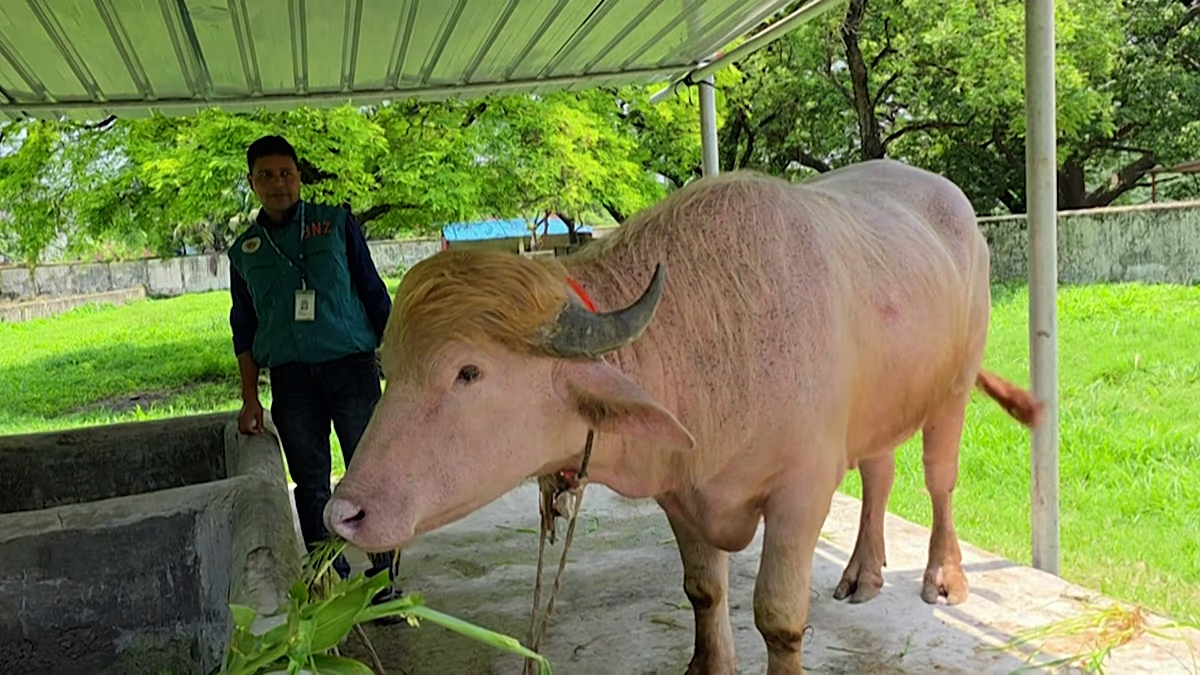
In the bustling heart of Dhaka, an unexpected celebrity has taken up residence at the Bangladesh National Zoo. This is no typical star, but a magnificent, 700-kilogram water buffalo whose most striking feature is a coat of pale, blond hair, so distinctive that it earned him the nickname “Donald Trump.” His arrival on May 28th was not a quiet affair; it marked the culmination of a nationwide conversation that transformed him from a potential sacrificial animal into a beloved symbol of rarity and a testament to public compassion. His unusual appearance, a stark contrast to the typical dark, muddy hides of his species, immediately captivated the imagination of the Bangladeshi public, drawing crowds eager to catch a glimpse of this living curiosity.
The buffalo’s journey to the zoo was, in fact, a rescue mission driven by his own growing fame. His story unfolds against the backdrop of Eid al-Adha, one of the most significant holidays in the Islamic calendar, which traditionally involves the ritual sacrifice of livestock such as goats, cattle, and buffaloes. As images of the strikingly blond animal circulated, a public sentiment began to swell. There was a collective, unspoken consensus that such an unusual creature was meant for a purpose beyond the sacrificial rite. His popularity became his shield, compelling authorities and his previous owner to secure a different future for him—one of preservation rather than sacrifice. This public intervention highlights a beautiful intersection of cultural tradition and evolving public sentiment toward animal conservation.
Now safely within the care of the zoo, the buffalo represents much more than a fleeting attraction. Zoo officials, led by Curator Dr. Md Atiqur Rahman, have emphasized that his transfer is a crucial step in a specialized conservation program. Albino or leucistic traits in large mammals like buffaloes are exceptionally uncommon, resulting from rare genetic mutations that affect pigmentation. These animals often face greater survival challenges in the wild due to increased sun sensitivity and a lack of natural camouflage. By bringing him into a controlled environment, the zoo has undertaken the responsibility of safeguarding these rare genetic traits, ensuring they are not lost. He is, in essence, a living genetic archive, and his well-being is now a matter of scientific and ecological importance.
To fulfill this duty, the zoo has initiated a meticulous care regimen. Dr. Rahman explains that a team will closely monitor the buffalo’s every detail—his daily health, his specialized diet tailored to his unique needs, and his overall adaptation to his new home. A key component of this long-term plan involves studying his reproductive potential. The hope is that, in time, he may contribute to a carefully managed breeding program. Such an initiative would aim to perpetuate his rare lineage, offering invaluable insights into genetics and providing a potential boost to the population of similarly unique animals. This transforms his enclosure from a mere exhibit into a center for active research and species stewardship.
The broader resonance of this single animal’s story is profound. It has sparked a national conversation in Bangladesh that stretches beyond the walls of the zoo, highlighting a growing public fascination with the unusual in nature and a deepening commitment to protecting it. The case demonstrates how a collective voice can directly influence animal welfare and conservation outcomes. Furthermore, it casts a spotlight on the vital, often unseen, work of breeding and conservation programs that operate globally to protect genetic diversity. These programs are bastions against the creeping tide of extinction, ensuring that rarity is not a death sentence but a call to action for preservation.
Ultimately, the blond buffalo of Dhaka stands as a powerful symbol of hope and change. His life was spared not by decree, but by the will of a people who saw in him something extraordinary worthy of protection. His story is a heartening reminder of our capacity for empathy and our evolving relationship with the animal kingdom. No longer just “Donald Trump,” the buffalo is now an ambassador for rarity, a focal point for scientific study, and a living lesson in how public interest can align with conservation goals to write a kinder, more preservative future for the planet’s most vulnerable creatures. His pale coat, once a simple quirk of genetics, now signifies a brighter future.