


Of course. Here is a summarized and humanized version of the content, structured into six paragraphs.
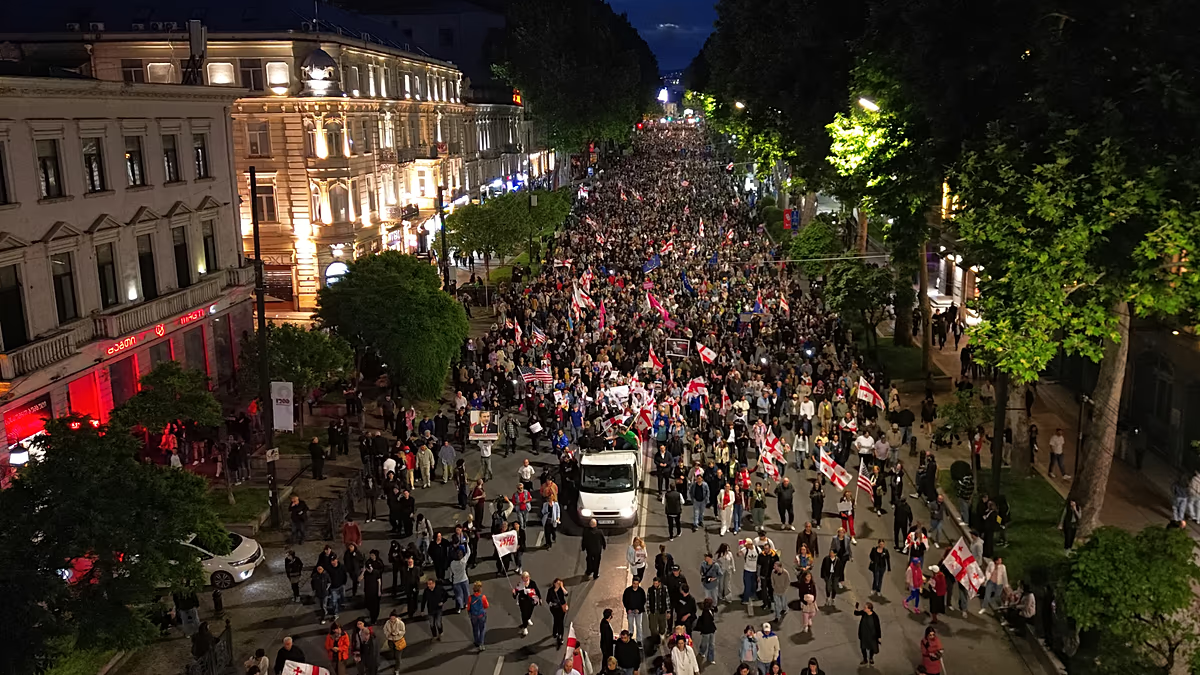
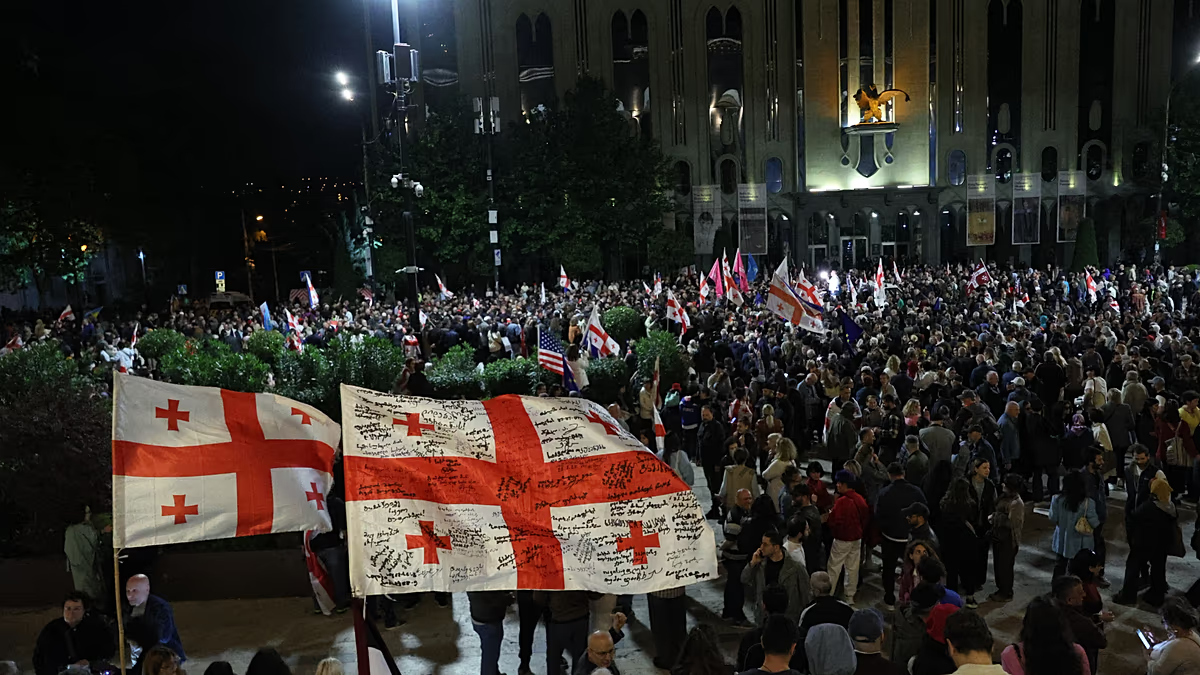
On a Tuesday in late May, Georgia celebrated its Independence Day with official ceremonies, including a parade and the swearing-in of new military recruits. However, the day’s true significance unfolded not in these state-organized events, but in the streets of the capital, Tbilisi. Thousands of citizens gathered for a massive pro-Europe rally, waving Georgian and European Union flags. Their placards carried messages like “We are Europe,” and many held portraits of the jailed former president, Mikheil Saakashvili, a symbol of Georgia’s earlier push for Western integration. This demonstration was a vivid expression of a deep societal divide, occurring amid what critics describe as a period of democratic backsliding and an anti-Western shift by the government.
The rally was organized by an alliance of opposition parties striving to unite against the current ruling party, Georgian Dream. Participants expressed a steadfast, long-term commitment to their cause. One protester declared, “We’ve been out in the streets for more than 500 days, and we’ll keep coming out for as long as it takes to defend Georgia’s European future.” Another, 59-year-old chemist Irakli Nanadze, voiced a conviction in collective power: “People will win in the end. No authoritarian government can stand up to a united people—and we are united.” Their sentiments highlight a profound conflict between a government accused of moving closer to Moscow and a citizenry overwhelmingly supportive, according to polls, of EU integration.
In contrast to the protesters’ vision, Prime Minister Irakli Kobakhidze marked the anniversary with a speech emphasizing national sovereignty. He stated that Georgia was “independent and sovereign as never before,” and argued that this strengthened independence allowed the country to preserve peace and progress toward national goals. While he affirmed last year that Georgia’s path to the EU was “steady and irreversible,” his rhetoric focuses on self-reliance and sovereignty, a stance that often aligns with skepticism of Western alignment. This creates a stark contrast with the protesters’ direct appeal for European unity.
The core tension lies in a fundamental disagreement over Georgia’s future direction. The government’s actions, including plans to ban main opposition rivals—a move condemned as a step toward authoritarianism—and its perceived tilt away from the West, have fueled public alarm. Critics see these policies as undermining the democratic principles essential for EU membership, which is actually inscribed in Georgia’s own constitution. The ruling party denies allegations of democratic backsliding and proximity to Moscow, but the protests signify a deep public distrust of this official narrative.
Thus, Independence Day in Georgia presented two competing realities: one of state-centric sovereignty championed by the government, and another of European aspiration championed by the people. The heavy police presence at the rally underscored the tension between these visions. The day was less a unified celebration than a public referendum on the nation’s identity, with the streets serving as the forum for this ongoing debate.
Ultimately, the events in Tbilisi reflect a nation at a crossroads. The government and a significant portion of its population are pulling in opposite directions—one toward a fortified, independent state and the other toward integration with a European community. With EU membership supported by over 80% of Georgians, the protest movement shows a determination to defend that constitutional ambition against any perceived backsliding. The outcome of this struggle will define whether Georgia’s future independence is shaped within a national framework or as part of a broader European alliance.