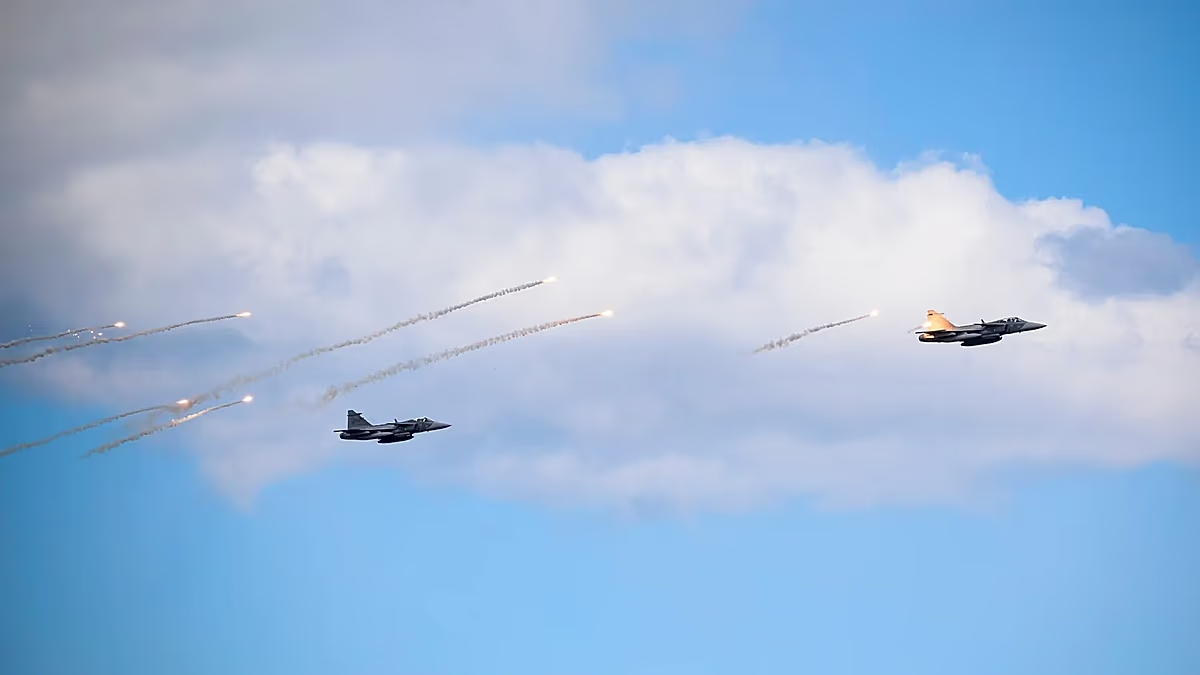


In a significant escalation of its military support, Sweden has announced a major new aviation package for Ukraine, combining immediate donations with plans for a substantial future purchase. During a surprise visit by President Volodymyr Zelenskyy to an air base in Uppsala, Swedish Prime Minister Ulf Kristersson detailed a two-tiered plan to bolster Ukraine’s beleaguered air force. The most immediate help will come in the form of 16 older model Gripen fighter jets, slated for delivery in early 2027. This donation alone marks a historic pivot for Sweden, a nation long known for its policy of military non-alignment, and represents a tangible leap in the quality of fighter aircraft committed to Ukraine’s defence. Concurrently, the two nations are advancing plans for Ukraine to acquire up to 20 of the very latest Gripen E model fighters, with an aim to finalize an agreement for deliveries starting in 2030. Ukraine intends to fund this €2.5 billion purchase through a loan from the European Union, signaling a coordinated, long-term European commitment to Ukraine’s security architecture far beyond the current conflict.
This announcement builds upon a broader, more ambitious vision for Ukraine’s future air power. The leaders referenced a letter of intent signed in October, which laid out a potential framework for Kyiv to ultimately purchase between 100 and 150 of the advanced Gripen E aircraft. President Zelenskyy affirmed this goal, stating, “We hope we will be able to secure financing for all of them.” This underscores a strategic understanding in Kyiv and its partner capitals that rebuilding Ukraine’s military requires not just surviving the present war, but building a modern, interoperable force capable of deterring future aggression for decades to come. The Gripen, known for its ability to operate from dispersed road bases and its lower maintenance demands compared to some other Western fighters, is seen as a particularly suitable platform for Ukraine’s needs. The move also follows a period of recalibration; in 2024, Sweden paused its Gripen plans to prioritize the coalition effort to supply U.S.-made F-16s, demonstrating a pragmatic, coordinated approach among Ukraine’s allies to avoid logistical bottlenecks and maximize effective support.
The fighter jet package is part of Sweden’s 22nd and largest military aid package to date, valued at 25.2 billion Swedish kronor. Since the beginning of Russia’s full-scale invasion in 2022, the Scandinavian nation has emerged as one of Ukraine’s most steadfast backers, providing total support exceeding 128 billion kronor (approximately €11 billion). This transformation from neutral observer to key security partner reflects a profound shift in the European geopolitical landscape, driven by a shared perception of the threat posed by Russian aggression. Prime Minister Kristersson’s statement that the decision “strengthens Ukraine’s air defence significantly” highlights the critical role air power plays. Control of the skies remains a contested and vital aspect of the war, and modern multi-role fighters like the Gripen would provide Ukraine with a potent tool for both defence against Russian missiles and aircraft, and for supporting ground forces.
While the long-term vision for a Gripen-equipped air force is taking shape, President Zelenskyy’s comments during the press conference pointed to a more immediate and pressing crisis: the desperate need for air defence ammunition now. He revealed that Kyiv is anxiously awaiting a formal response from the United States to a direct request for more interceptor missiles for its Patriot air defence systems. These systems are the only ones proven effective against the most deadly threats in Russia’s arsenal, particularly its ballistic missiles. In a letter dated May 26th to President Donald Trump and the U.S. Congress, Zelenskyy urgently asked Washington to either supply more complete Patriot systems or provide licenses allowing Ukraine to produce its own missiles domestically. “We are expecting a response,” Zelenskyy stated, emphasizing the brutal timeline imposed by warfare: “I believe they need to act faster. We are insisting, very insistently. Winter is ahead.”
This urgent appeal lays bare the continuous strain on Ukraine’s defensive resources. Despite remarkable ingenuity—such as pioneering cost-effective systems to intercept long-range drones that have drawn admiration from advanced militaries—Ukraine remains critically dependent on Western allies for the high-tech interceptors needed to shield its cities and infrastructure. Zelenskyy noted he had met with U.S. lawmakers who expressed support for his proposals, but the need is for swift, official action. The juxtaposition of the long-term Gripen deal and the urgent Patriot request paints a complete picture of Ukraine’s defence dilemma: it is simultaneously fighting a daily battle for survival while trying to architect a future force that can ensure lasting security. Each passing day without adequate air defence munitions risks catastrophic damage, making the American decision a matter of immediate life and death for Ukrainian civilians.
In conclusion, Sweden’s landmark commitment provides a powerful blend of immediate reinforcement and a pathway to a modern air force, symbolizing a deep investment in Ukraine’s future. However, the decisive factor for the coming months may well be the answer from Washington regarding Patriot missiles. The winter forecast is not just one of cold weather, but of renewed Russian campaigns to paralyze Ukraine’s energy grid and terrorize its population. The advanced Gripens promised for the years ahead represent a shield for tomorrow, but the munitions requested today are the shield required for the next sunrise. The international support for Ukraine thus operates on these two parallel tracks: building a durable foundation for victory and sovereignty, while tirelessly working to secure the tools needed to survive the relentless assault of the present.