


A Terrifying Morning Rush Hour
In the crisp morning air of Winterthur, Switzerland, a typically tranquil Thursday was shattered by an act of sudden, senseless violence. Shortly after 8:30 a.m., during the busy commute, a 31-year-old Swiss man erupted into a frenzied knife attack at the local train station, wounding three fellow citizens before being subdued. Eyewitnesses described scenes of panic and confusion as the routine of the day was violently upended. The swift intervention of security personnel prevented further tragedy, with one witness, a 65-year-old taxi driver named Turhan Muslu, later reflecting with palpable relief on their rapid response, stating that the outcome could have been far worse if they had not acted so quickly.
A Chilling Cry and a Clear Designation
The horror of the physical assault was compounded by the attacker’s shouted words. Images and videos circulated by media and on social media showed a man with long dark hair and a beard running through the station area, raising his right hand and repeatedly crying “Allahu akbar” — Arabic for “God is the greatest.” This chilling detail became a central piece of the investigation, leading regional security official Mario Fehr to explicitly label the assault a “terrorist act.” He stated it was clear the motive lay “in the realm of radicalisation and extremism,” marking a grave and rare official designation for such violence in the peaceful nation.
The Human Cost and Community Shock
The three victims, aged 28, 43, and 52, were all Swiss citizens going about their daily lives. They were rushed to the hospital, with police confirming one had sustained serious injuries. The attack sent a wave of shock through Winterthur, a city known for its safety and located just northeast of Zurich. Residents expressed disbelief and sorrow, struggling to reconcile the event with their perception of their community. Basharat Iqbal, another taxi driver at the station, voiced a simple, profound sentiment shared by many: “This is not OK. We want peace.” This reaction underscored the violation felt by a public unaccustomed to such random, targeted violence.
Coordinated Response and Unanswered Questions
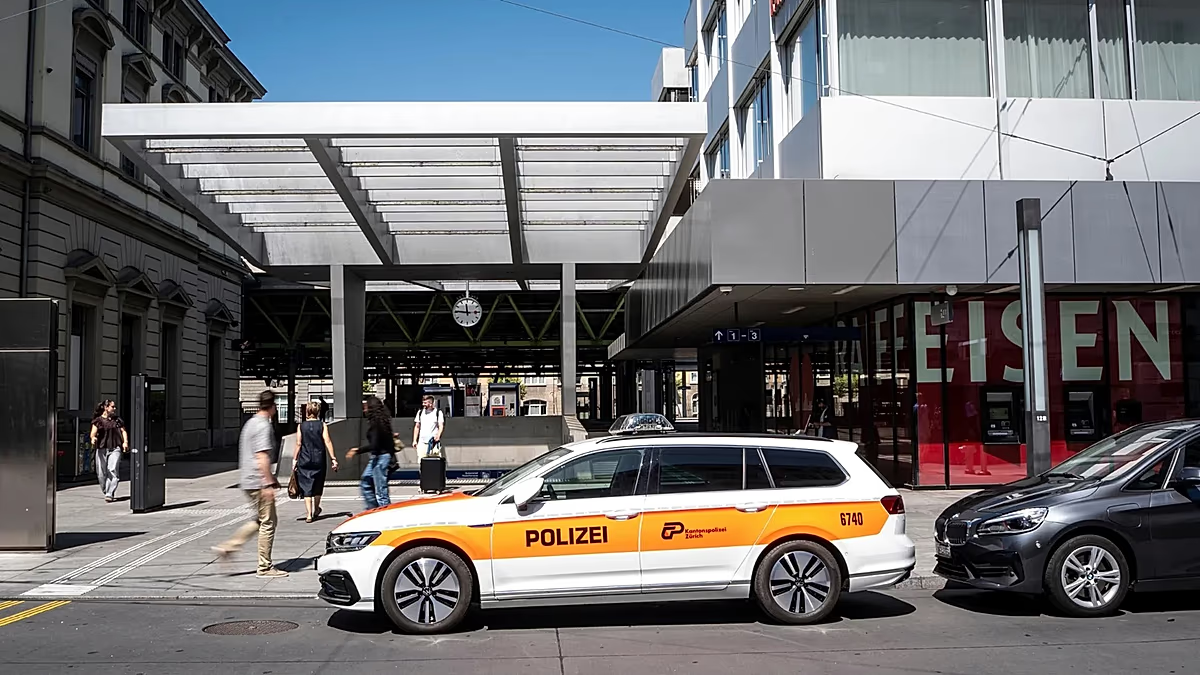
In the aftermath, a coordinated security operation unfolded seamlessly. Zurich cantonal police worked alongside local municipal police, federal transport police, and emergency medical services. Police cordons were established in and around the station, a jarring sight in the urban landscape, as authorities secured the scene and began their meticulous investigation. Despite the chaos, Swiss Federal Railways reported no disruption to train services, a testament to the efficiency of the response. The suspected perpetrator was promptly arrested, but officials emphasized that his precise motives remained under active investigation, a crucial process for understanding the full context of the attack.
Contrasting with Swiss Norms
The event stands in stark contrast to Switzerland’s long-standing record of security and low incidence of violent extremism. Attacks on random passers-by are exceptionally rare in the country, making the Winterthur incident particularly jarring to the national consciousness. It forced a moment of grim reflection on vulnerabilities that exist even within societies famed for their stability and order. The fact that the alleged attacker was a Swiss national, not a foreign national, added another layer of complexity to the public and official reckoning with the event, challenging preconceived notions about the origins of such radicalized violence.
A Search for Meaning and a Longing for Normalcy
As the initial shock subsides, the community of Winterthur and the nation of Switzerland are left to grapple with the aftermath. The investigation continues, seeking to unravel the pathway to radicalization that led to this terrorist act. Beyond the official inquiry, however, lies a human journey toward healing for the wounded and for a community whose sense of security has been bruised. The incident is a painful reminder of a global challenge, but it also highlighted the resilience of first responders and the public’s shared yearning, as simply put by a witness, for the return of peace and the quiet normalcy of an undisturbed morning commute.