


It was meant to be the ultimate underground experience: a secret, pop-up set from the acclaimed Dutch house duo ANOTR, hidden somewhere within Manchester’s urban fabric. For the lucky fans who secured one of the free tickets released online, the anticipation crackled with the promise of an exclusive, spontaneous party. The location, revealed only just before the event, was Projekts MCR Skatepark—a gritty, concrete space nestled beneath the roar of the Mancunian Way. On paper, it was a perfect match for the duo’s raw, energetic sound. But what unfolded on that Friday evening in May swiftly transformed from a celebration of music into a case study in how even the best intentions can unravel when crowd management fails.
The problems began as the venue started to fill. Early arrivals, like 20-year-old student Peter Gallagher who came 40 minutes before the start, flowed inside without issue. However, the space reached capacity remarkably quickly, and the gates were closed, leaving a growing crowd of disappointed but equally ticketholders stranded outside. A critical disconnect emerged: while the event was advertised as “first come, first served,” the sheer volume of people with tickets led to a widespread belief that the event had been significantly oversold. This sense of unfair exclusion simmered amongst the packed crowd outside the skatepark’s fences, their anticipation curdling into frustration.
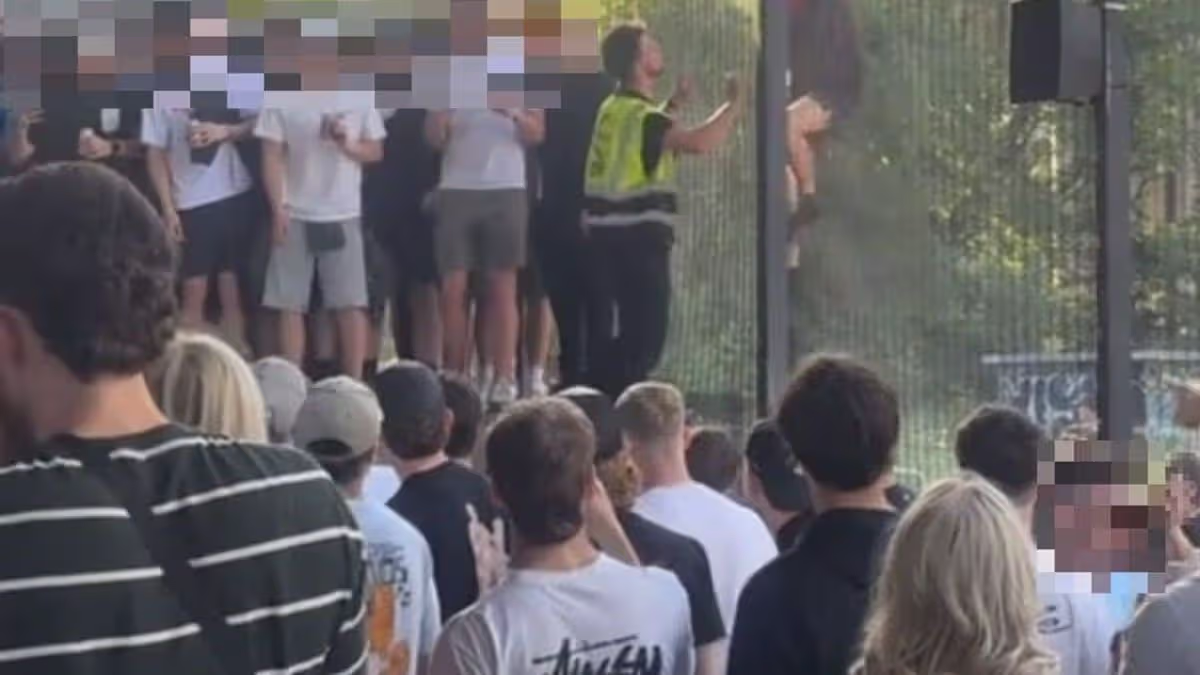
That frustration soon boiled over. With the beats from ANOTR’s set pulsating inside, those locked out began taking matters into their own hands. Social media footage captured the chaotic scene: individuals scaling the high fences in a determined, and dangerous, attempt to crash the party. Some even clambered onto the roofs of toilet cubicles to get a better vantage point for their illicit entry. The situation escalated quickly, creating a serious safety hazard. Inside, the vibe shifted from euphoric to tense as the security breach became impossible to ignore, forcing the DJs to make a difficult intervention.
In a moment captured on TikTok, Jesse van der Heijden of ANOTR took to the microphone, his voice cutting through the music with a plea tinged with desperation. He directly addressed the crowd outside the perimeter, urging them to move back and cease climbing. “Otherwise this party is gonna be shut down,” he warned, laying bare the imminent consequence. His appeal, however, was too late. The compromised security and escalating crowd dynamics had already drawn police attention. Following a tense, half-hour pause where hopeful attendees inside waited in a silent limbo, the inevitable announcement came: the event was cancelled. Crews began unplugging equipment, and the night’s promise was officially extinguished.
In the aftermath, a familiar blame game ensued. Attendees like Peter Gallagher expressed their annoyance, noting that while the event was free, the disappointment was no less real, especially given ANOTR’s successful track record with similar pop-ups globally. Others online debated the root cause; some insisted the venue could have held hundreds more and wasn’t truly oversold, while many pointed directly at the ticketing strategy as the critical failure. ANOTR addressed the controversy, refuting claims of overselling but standing by the “first come, first served” principle, suggesting that some simply couldn’t accept this condition. Yet, this defence overlooked the central issue: issuing an open-ended number of free tickets for a limited-capacity, secret location is a recipe for the exact chaos that ensued, creating an impossible scramble and setting the stage for conflict.
The story of ANOTR’s Manchester pop-up is ultimately a tale of lost connection. It was a disconnect between the number of invitations sent and the space available to host them, between the expectation of entry fostered by possessing a ticket and the harsh reality of capacity limits, and finally, between the artists and the very crowd they aimed to entertain. What began as a gift to fans—a free, intimate musical experience—ended in a malfunction of logistics that left everyone, from the DJs to the first arrivals to those scaling fences, disappointed. It serves as a stark reminder that in the world of live events, the most electric atmosphere can be short-circuited not by a lack of passion, but by a simple failure of planning, turning what should have been a night of unity on the dancefloor into one of division at the fence line.