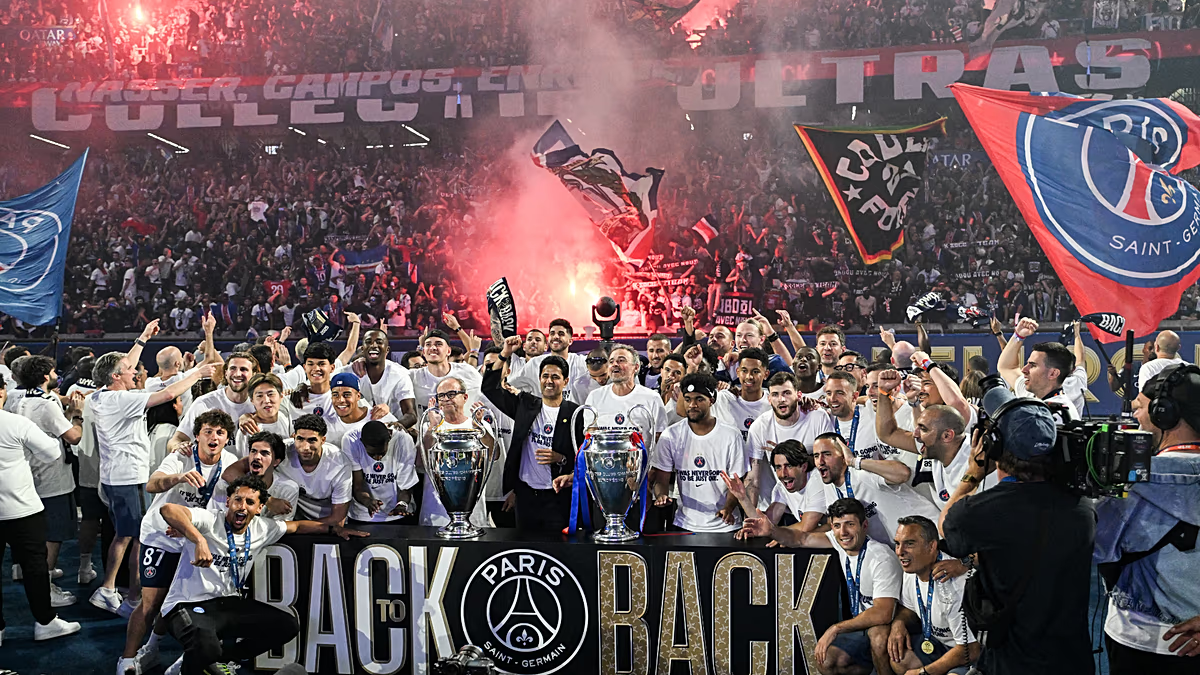

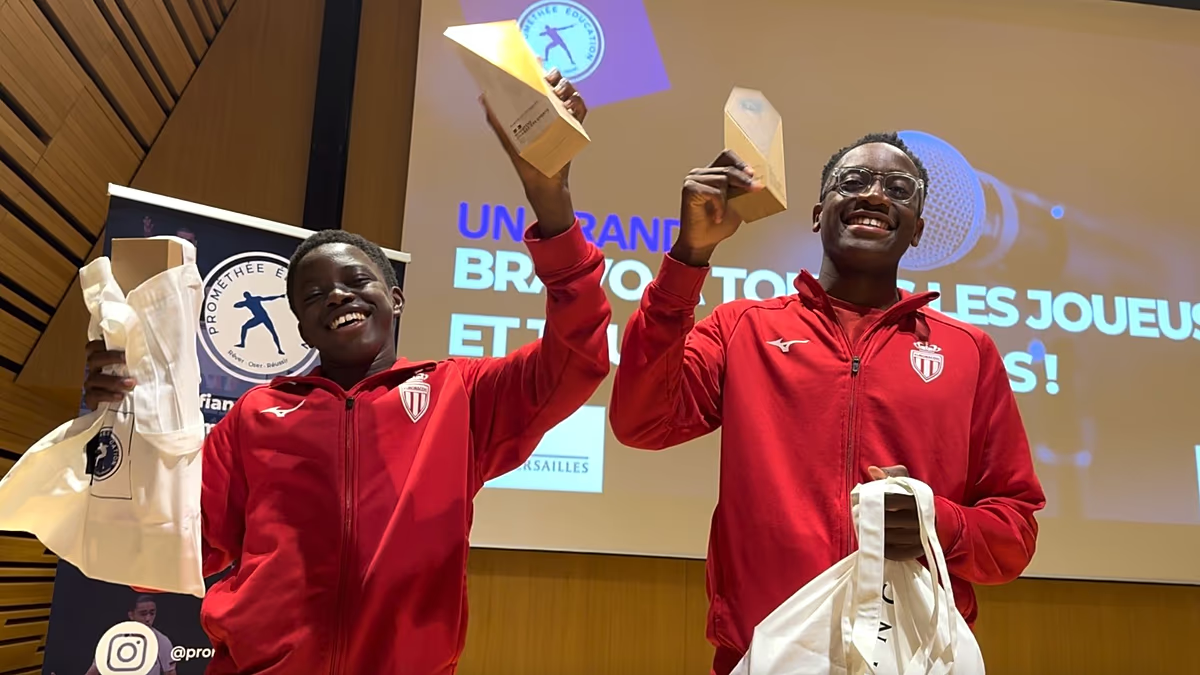


On the grand stage of European football, Paris Saint-Germain’s Champions League final victory over Arsenal on May 30th was more than a historic sporting triumph; it became a symbol of aspiration for countless young athletes across France. Yet, just two days before that glittering match, another, quieter kind of victory was being pursued not on a pitch, but within the opulent halls of the Château de Versailles. Here, twenty young footballers from elite French academies competed in the national public-speaking finals organized by the non-profit Prométhée Éducation. For many, stepping into the UNESCO World Heritage site was as awe-inspiring as walking onto a major stadium, marking a profound moment where the worlds of sport and eloquent expression beautifully converged.
Among these aspiring orators were 16-year-olds Arthur Bar and Zélie Merlaud, trainees at the very PSG academy that fuels the club’s first-team success. Hailing from Paris and Mont-de-Marsan, they delivered a thoughtful five-minute speech on children’s rights. While they didn’t claim the top trophy, they won something perhaps more lasting: the chance to defy stereotypes. “We each showed our talents, one by one, and proved that football doesn’t make us idiots. I think today we managed to break down stereotypes,” Arthur told Euronews. For Zélie, the experience was practical preparation for life’s future challenges, including crucial academic exams. Their participation highlights a growing recognition within French football that developing a player’s voice is as important as honing their footwork.
This transformative initiative is championed by Mohamed Slim, a graduate of Sciences Po Paris, who dedicates his spare time to coaching young footballers in the art of persuasion. He identifies a critical gap for many talents who rise from disadvantaged backgrounds. “They do not all have the tools they need to master the exercise of speaking about football or even life outside the game,” Slim explains. He passionately argues that athletes, as role models, must be equipped to carry messages effectively. His work, supported by clubs like PSG, AS Monaco, and Olympique Lyonnais, has guided future stars, including World Cup-bound Ayyoub Bouaddi and PSG’s Warren Zaïre-Emery, proving that communication is a key component of modern professional development.
The power of this training was embodied by Usuman Kebeh, a 16-year-old AS Monaco midfielder and one of this year’s winners. He captivated the jury with his speech exploring the illusion of luck, channeling deep personal conviction into his words. “I thought about where I come from – Africa. I was representing my country, Gambia, or even all Africans, all Black people… I really went against a stereotype,” he shared. His performance was a masterclass in delivery, impressing jurors like double Olympic taekwondo medallist Pascal Gentil, who praised Kebeh’s commanding use of tone, body language, and poignant silence to hold the room in thrall.
The jury, a distinguished panel from sport, culture, and politics, was uniformly moved by the competitors’ maturity and insight. Elisabeth Moreno, France’s former Minister for Gender Equality, was profoundly affected, noting, “Hearing a young man talk about inequality between men and women gave me goosebumps.” For her, the event was about more than technique; it was about empowering a generation to articulate their ideas with confidence. This sentiment was echoed by Karl Olive, a National Assembly member and former sports journalist, who sees a “revolution” in this integration of oratory into football academies, preparing young athletes for the public scrutiny and media interactions that define a professional career.
Ultimately, the competition at Versailles represents a significant cultural shift. It moves beyond the classic image of the athlete to nurture the whole person—the thinker, the advocate, and the communicator. As Karl Olive enthused, many of these young speakers displayed the poise to one day address the National Assembly itself. In a world where athletes are increasingly expected to be spokespeople on and off the field, France’s football academies, through programs like this, are not just building better players; they are building more articulate, confident, and empowered young citizens, ensuring their victories in the future will be measured in both goals and meaningful words.