


The Human Toll of Relentless Conflict
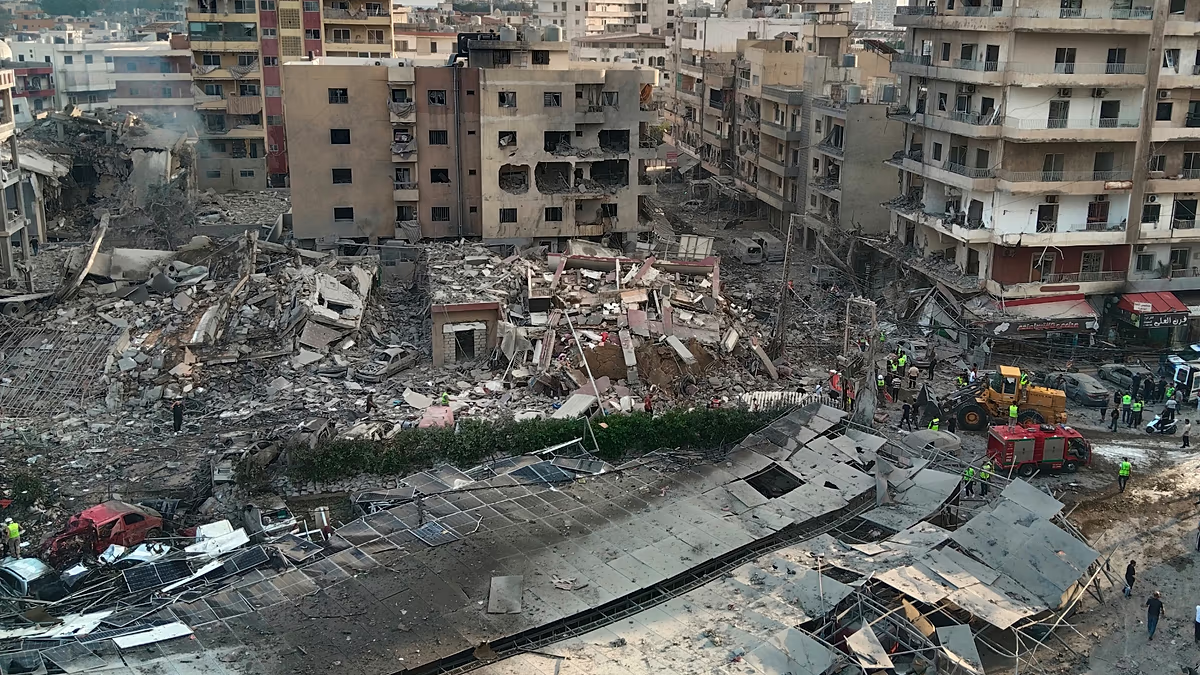
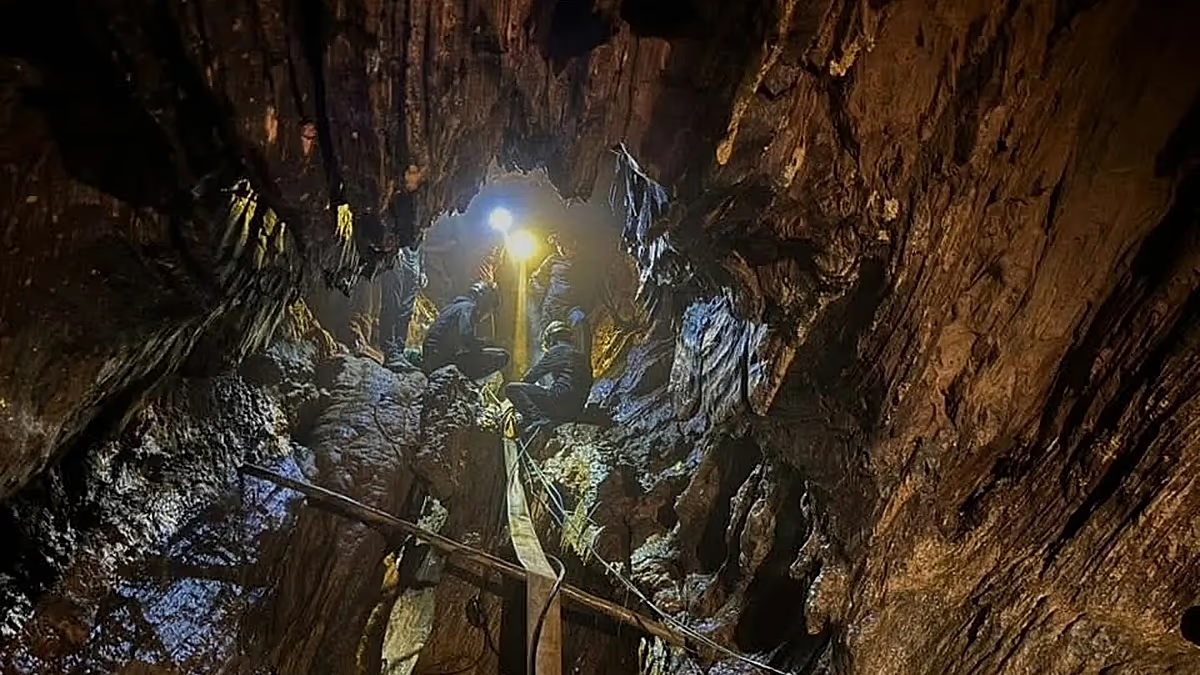
In the early hours of Tuesday, February 6, 2026, Ukraine endured yet another harrowing night of violence as Russian forces unleashed a widespread barrage of missiles and drones. This coordinated assault, one of many in a long and brutal conflict, struck multiple regions across the country, leaving at least nine people dead and dozens more wounded. As dawn broke, emergency crews scrambled through rubble and smoke, beginning the grim task of assessing the damage and searching for survivors. These attacks are not merely statistics on a military briefing; they represent shattered families, disrupted lives, and a nation forced to exist in a state of perpetual anxiety. The sounds of explosions and air raid sirens have become a tragically familiar backdrop for millions of Ukrainians, a daily reminder of a war that shows no signs of abating.
Kyiv Under Fire: Scenes of Chaos and Resilience
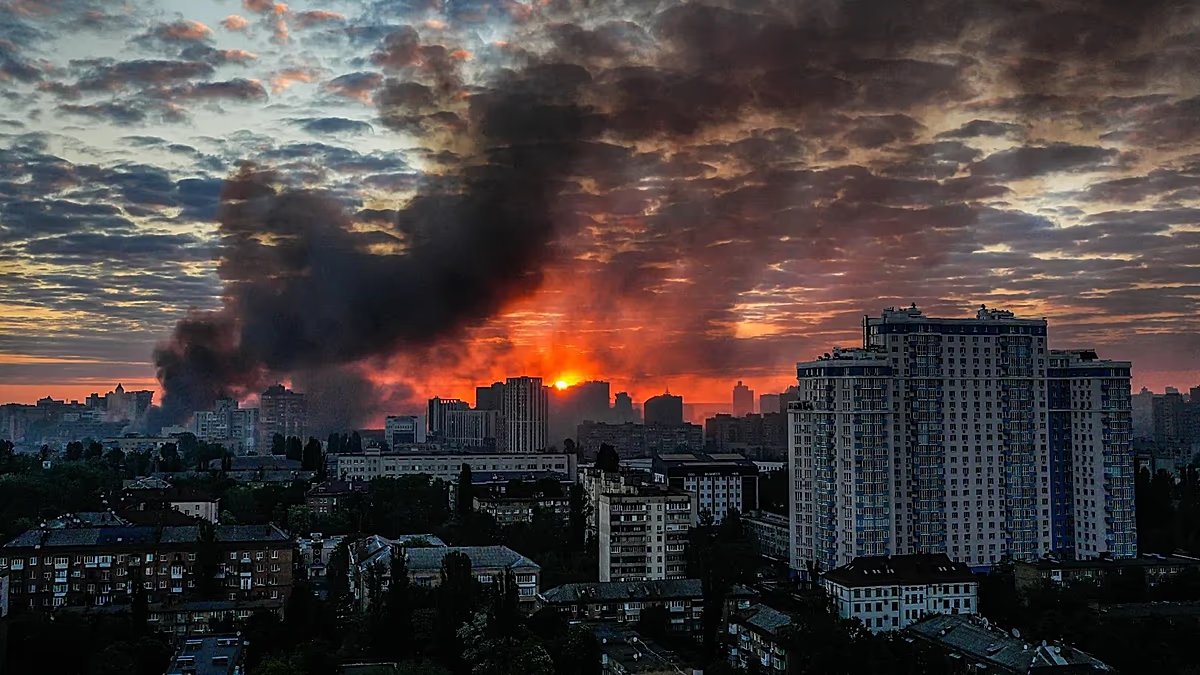
The capital city of Kyiv was rocked by multiple explosions, which ignited fires in several neighborhoods and plunged districts into darkness as power was cut. At least three lives were lost in the city. Head of the city’s military administration, Tymur Tkachenko, confirmed the fatalities and noted that the assault involved ballistic missiles. As air defenses engaged overhead, Mayor Vitali Klitschko urgently warned residents to stay in shelters. Local media described scenes of civilians, some clutching bags and blankets, hurrying to underground safety as a large plume of smoke rose from the city center. These moments of terror and displacement underscore the civilian reality of this war: ordinary people, from children to the elderly, are bearing the brunt of the violence, their daily routines perpetually interrupted by the threat of sudden death from the sky.
Tragedy Spreads Across the Nation
The devastation was not confined to the capital. In the central city of Dnipro, a Russian attack claimed four lives, including that of a 73-year-old woman, and wounded sixteen others, as reported by local governor Oleksandr Ganzha. Further east, in Kharkiv, eight people were injured in the Slobidsky district. Each of these cities represents a community in mourning, where local hospitals are overwhelmed and neighbors help dig through the wreckage of homes and businesses. The geographic spread of the attacks highlights the vast scale of the offensive and the limited safe havens within Ukraine. For the residents of Dnipro and Kharkiv, this night was a brutal repetition of past horrors, a cycle of destruction that erodes hope and exhausts resilience.
A Forewarned Yet Vulnerable Nation
This latest onslaught came just days after Ukrainian President Volodymyr Zelensky publicly warned that intelligence indicated Russia was preparing a new, massive strike. He appealed directly to citizens to heed air alerts and prioritize their safety, while praising the around-the-clock readiness of air defense crews and emergency services. Zelensky’s warning, born of painful experience, reflects the precarious position Ukraine finds itself in: possessing critical intelligence yet lacking sufficient resources to fully protect its skies and its people. His repeated calls to Western allies for more advanced air defense systems, particularly Patriot missiles capable of intercepting ballistic missiles, are a desperate plea to close this critical gap. The ability to warn of an attack, without the means to fully stop it, is a tormenting reality for the nation’s leadership and its citizens alike.
The Geopolitical Struggle for Support
President Zelensky’s diplomatic efforts to secure these lifesaving defenses underscore a broader, frustrating battle for sustained international attention. In the previous week, he had written to U.S. President Donald Trump and Congress, appealing for Patriot systems as Russian aerial attacks intensify. This request comes at a complex time, as U.S.-mediated peace efforts for Ukraine have stalled. Global focus and resources have been diverted by other crises, particularly the ongoing conflict in the Middle East, leaving Ukraine to fear being overshadowed on the world stage. The struggle for military aid is not just about weaponry; it is a fight for political priority and a test of the democratic world’s commitment to a nation under siege.
A Cycle of Strike and Counterstrike
Amidst the bombardment of its cities, Ukraine continues its own military actions in response. In a stark illustration of the war’s retaliatory cycle, a Ukrainian drone strike in Russia’s Kursk region, near the border, killed one person. This action, a direct consequence of the daily Russian bombardments, highlights how the conflict perpetuates a spiral of violence, with losses felt on both sides. The overnight attacks across Ukraine and the strike in Kursk together paint a picture of a grim, entrenched war of attrition. For every family grieving in Kyiv, Dnipro, or Kharkiv, there is now another in Russia, a reminder that the true cost of war is always measured in human suffering, regardless of borders. The path forward remains obscured by smoke and rubble, with the urgent cries for defense and diplomacy growing ever more desperate.