


As the calendar turned to June in 2026, a familiar and formidable seasonal threat began to approach the Japanese archipelago. On Monday, the islands of Okinawa, Japan’s southernmost and most exposed prefecture, found themselves bracing for the arrival of Typhoon Jangmi. The storm, churning across the Pacific, was forecast to deliver a punishing combination of severe rainfall and destructive winds, triggering the well-rehearsed but ever-serious protocols of disaster preparedness. For the communities scattered across this subtropical region, the news signaled the start of another tense vigil against nature’s power, a ritual deeply woven into the fabric of life in these vulnerable islands.
The Japan Meteorological Agency, the nation’s authoritative voice on such dangers, issued specific and grave warnings. Their focus was not just on the main Okinawa Islands, but also on the remote Sakishima and Daitō island groups, all of which faced acute risks. The primary threats identified were landslides, triggered by torrential rain saturating the terrain, and exceptionally high waves, which could batter coastal communities. The agency predicted wind gusts reaching speeds of up to 162 kilometers per hour—a force capable of tearing roofs from buildings and snapping trees. After lashing Okinawa, the typhoon’s path was projected to turn toward the Amami region, set for impact on Tuesday, extending the zone of concern.
In response to these forecasts, a series of urgent public advisories were activated. Authorities strongly urged all residents to avoid any non-essential travel, a standard measure to keep roads clear for emergencies and to prevent accidents. More critically, they called for the population to maintain a state of high alert. Special attention was directed toward elderly citizens and others who might require more time or assistance to move safely. In designated parts of both the Okinawa and Amami regions, preemptive evacuation warnings were issued for these vulnerable groups, emphasizing the philosophy of early and cautious action to save lives. The storm’s influence was expected to be far-reaching, with heavy rain predicted even for the coastal Kanto region, including Tokyo, by Wednesday.
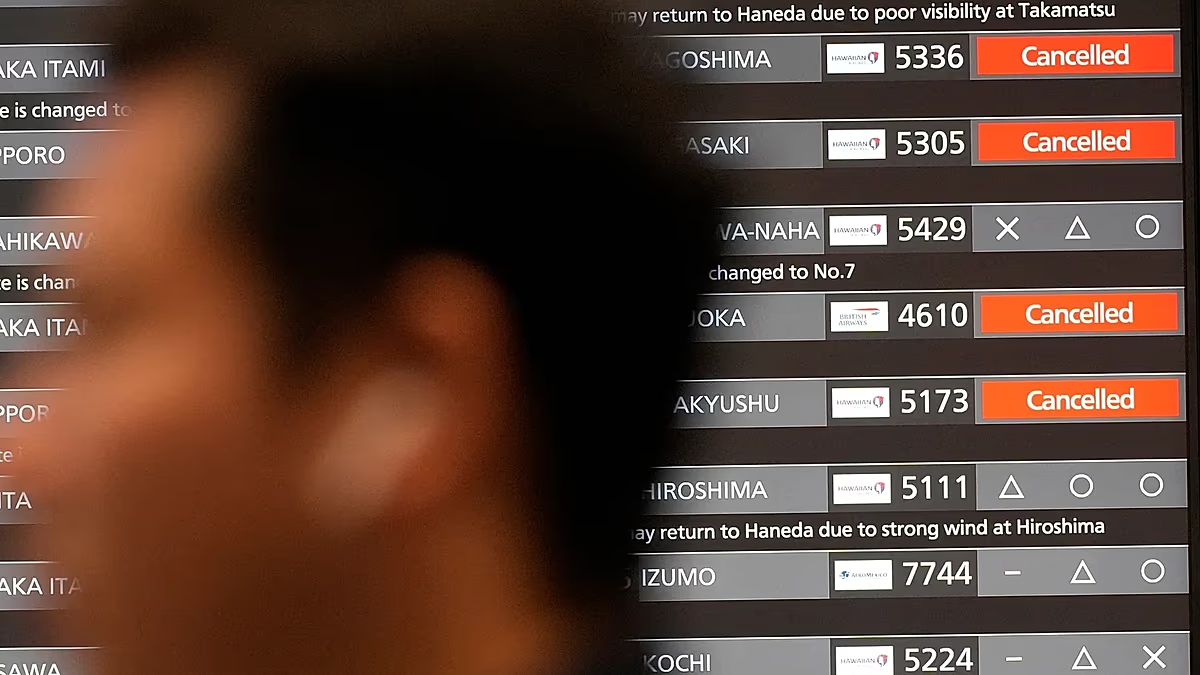
The typhoon’s impact began to materialize long before its core winds arrived, most visibly in the realm of transportation. The nation’s intricate air network, a symbol of modern connectivity, was swiftly disrupted. Over 400 flights, primarily operated by All Nippon Airways and scheduled to travel in and out of Okinawa, were canceled. This logistical shutdown, while disruptive to travel plans and economic activity, was a necessary precaution to protect passengers, crews, and aircraft from the extreme weather. These cancellations served as a stark, practical reminder to the public of the storm’s serious approach and its capacity to disrupt daily life on a national scale.
Typhoon Jangmi was identified by the meteorological agency as the sixth typhoon of the 2026 season. This announcement contextualized the event within a broader climatic pattern. The preceding year, 2025, had seen significant typhoon activity, with a total of 27 storms impacting Japan—a number higher than the annual average of 25. This data point invites reflection on the larger environmental trends affecting the region. While typhoons are a perennial feature of Japan’s summer and autumn, variations in their frequency and intensity raise important questions about long-term climatic changes and the ongoing need for resilient infrastructure and adaptive community planning.
Ultimately, the approach of Typhoon Jangmi to Okinawa encapsulates the enduring challenge faced by nations situated in the pathways of such powerful natural systems. It is a story of scientific monitoring, through the precise forecasts of the Meteorological Agency; of societal response, through public advisories and evacuations; and of economic adaptation, through the cancellation of flights and other services. For the residents of Okinawa, Amami, and beyond, it represents a period of anxious waiting, preparation, and hope for safety. As the storm moves through its cycle, it leaves behind not just immediate concerns of damage and recovery, but also deeper considerations about humanity’s relationship with an increasingly dynamic and potent natural world.