


The story of the humpback whale known as Timmy is a poignant and ultimately tragic saga that unfolded over several months in the Baltic Sea, capturing the hearts of many before ending on a quiet beach in Denmark. It began in March, when the whale, an unexpected visitor far from its usual deep-ocean migratory routes, was first sighted in the relatively shallow and enclosed waters of the Baltic. This gentle giant, quickly nicknamed Timmy by a concerned public, became an instant celebrity in Germany and beyond. His presence sparked a wave of fascination mixed with deep worry, as experts recognized the inherent danger of such a large marine mammal being trapped in an area with limited food sources and challenging navigation. The initial sighting ignited a collective hope for his survival and a determined mission to see him safely home.
This public concern swiftly translated into action, launching months of intensive and costly rescue efforts led by dedicated teams of marine biologists and volunteers. Understanding that Timmy’s chances diminished with each passing day in the nutrient-poor Baltic, rescuers employed various strategies to guide the disoriented whale westward toward the open North Sea and the Atlantic Ocean. These operations were complex and emotionally charged, involving boats that attempted to herd Timmy in the right direction using acoustic stimuli and physical presence. The commitment to saving him culminated in a dramatic, last-ditch operation in May, where rescuers successfully transported the ailing whale by barge in a final attempt to relocate him to more favorable waters. This bold move symbolized the extraordinary lengths to which humans were willing to go, fueled by a profound sense of responsibility for an individual creature in distress.
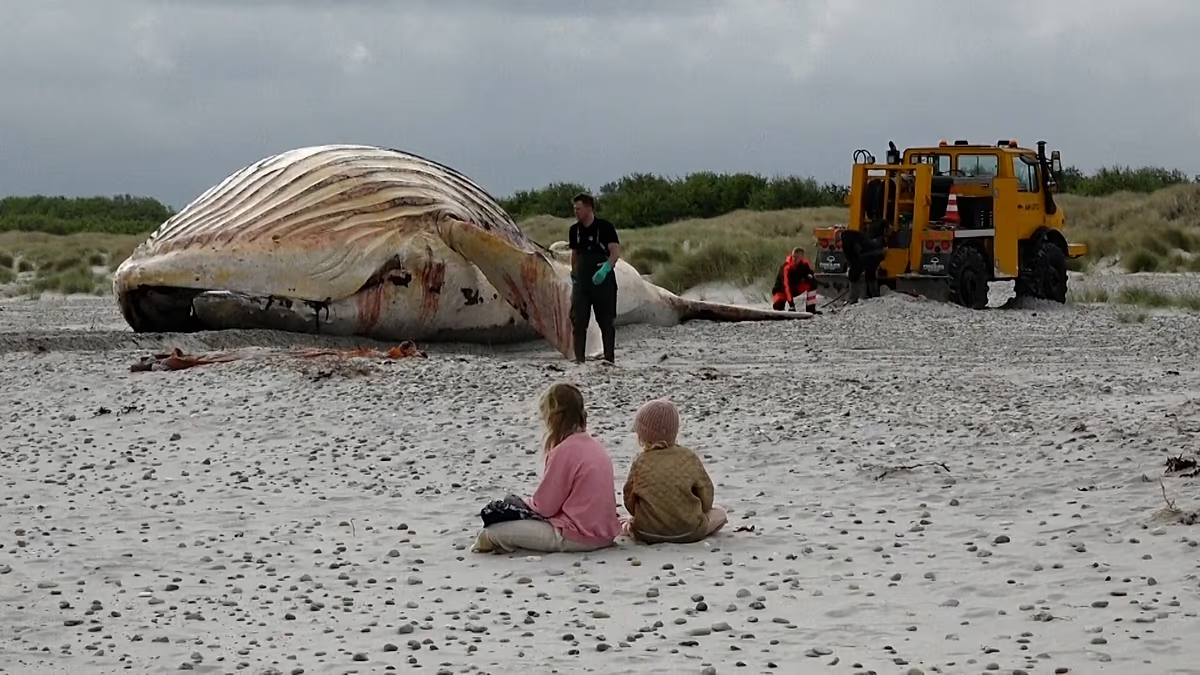
Despite these heroic endeavors, the story met a sorrowful conclusion in June. Timmy was discovered lifeless in the Kattegat strait, the body of water between Denmark and Sweden, not far from the island of Anholt. The initial spark of public hope was extinguished, replaced by a somber acceptance of nature’s unforgiving course. The shift from active rescue to recovery was visually documented in a solemn video that showed workers towing the massive, inert carcass ashore. The scene was quietly dramatic, with a small crowd of onlookers, including curious children, gathered on the beach to witness the final chapter. This moment underscored the powerful connection Timmy had forged with people; they came not to gawk, but to pay their respects, to witness the end of a journey they had all followed so closely.
Danish authorities subsequently took custody of the remains, announcing that a thorough necropsy would be performed to determine the precise cause of Timmy’s death. This scientific examination is a crucial, if clinical, postscript to the emotional narrative. Biologists will search for clues within the whale’s body—evidence of disease, starvation, or perhaps the lingering effects of injury or illness that initially led him astray. The findings will provide valuable data for marine conservation science, offering insights into the threats facing whale populations and the challenges of rescue operations. While the report will deliver factual answers, it cannot quantify the collective sigh of grief felt by those who rallied for Timmy. His story, therefore, exists in two realms: the biological facts of his demise and the human emotional investment in his fate.
The entire episode holds up a mirror to our complex relationship with the natural world. On one hand, it showcases an inspiring capacity for empathy and cross-border cooperation, with significant resources mobilized for a single animal. It reflects a growing public consciousness about marine life and a refusal to accept suffering passively. On the other hand, Timmy’s plight highlights the unintended consequences of a changing planet, where altered ocean temperatures, noise pollution, and disrupted food chains may increasingly confuse majestic navigators like humpback whales. His tragic end in shallow waters serves as a metaphor for the larger vulnerabilities of ocean giants in an age of human dominance. We are compelled to help, yet often confronted by the limits of our intervention.
In the end, Timmy the humpback whale was more than a statistic; he became an individual, a character in a story that people cared about deeply. His months-long ordeal, from hopeful discovery to desperate rescue attempts and final loss, is a modern parable about care, consequence, and coexistence. The image of his colossal body being gently brought to rest on a Danish beach is a solemn reminder of both the fragility of life and the depth of our desire to protect it. While his life ended in tragedy, the legacy of Timmy’s story lies in the compassion it activated and the important questions it forces us to confront about our role as stewards in an increasingly vulnerable marine environment.