


Of course. Here is a summary and humanized version of the content, expanded into six paragraphs.
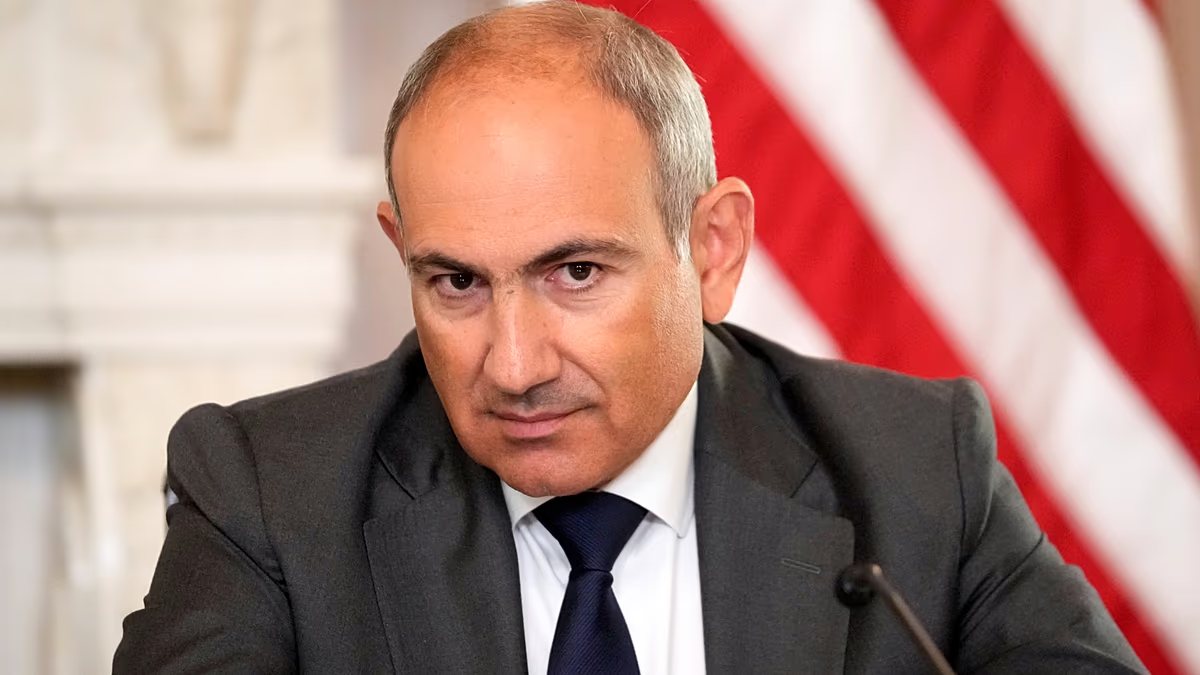
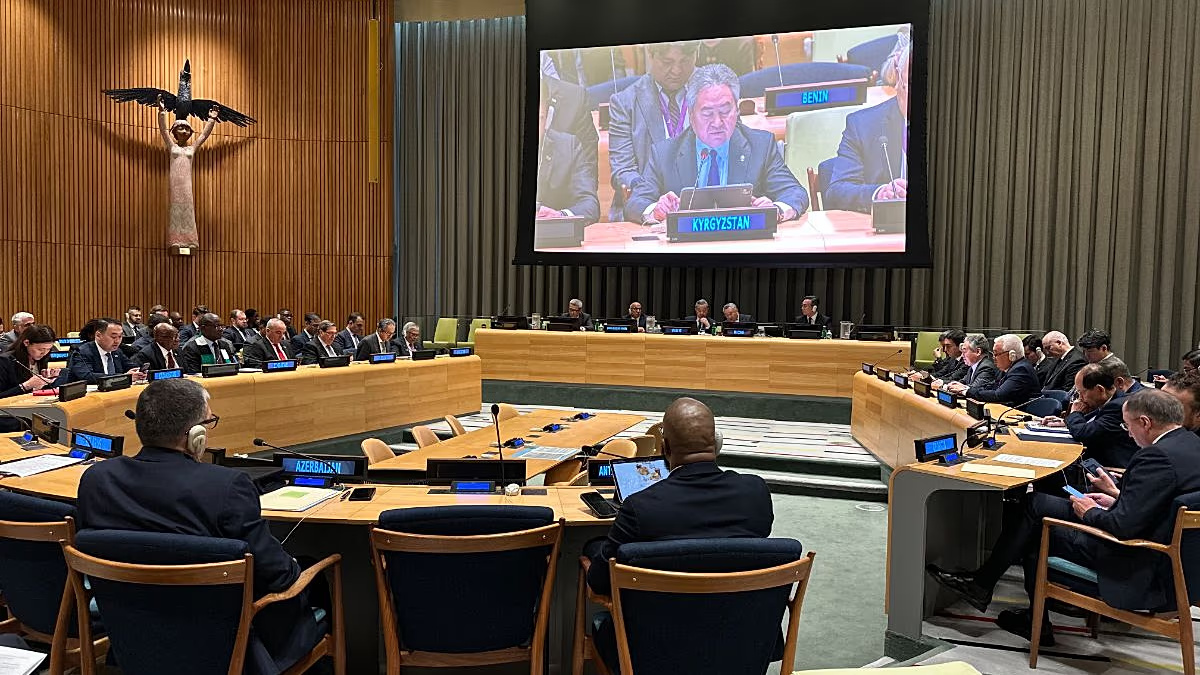
In a significant address to the United Nations, Kyrgyzstan’s Foreign Minister, Jeenbek Kulubaev, has championed a long-standing yet urgent global cause: the reform of the UN Security Council (UNSC). He framed this not merely as an administrative change, but as a necessary evolution to meet today’s complex challenges. Minister Kulubaev argued that the current structure, dominated by a handful of powerful nations with veto power, no longer reflects the realities or needs of the modern world. He called for a system based on genuine sovereign equality, mutual respect, and non-interference—core principles of the UN Charter that he believes are being sidelined by an outdated power dynamic.
Central to Kyrgyzstan’s proposal is the demand for broader representation, specifically for regions that have historically been marginalized in global security decisions. Kulubaev pointed out that Africa, Latin America, and Asia bear significant burdens in global peacekeeping and face acute threats from conflicts, climate change, and food insecurity, yet they hold no permanent seats on the 15-member Council. He emphasized that the UNSC should not operate as a “closed club” where the fates of billions are decided by a few. Instead, it must become a more equitable platform where the voices of developing, small, and landlocked countries—often the most vulnerable to global crises—are heard and their interests considered.
Kulubaev positioned his nation as a potential bridge-builder in this reformed system. Kyrgyzstan, a Central Asian state, sees itself as a voice for smaller nations and a pragmatic contributor to international stability. He outlined key priorities Kyrgyzstan would focus on if granted a seat, including advancing sustainable peace, preventive diplomacy, protecting vulnerable populations, and building trust among states. His vision is of a Security Council that is more proactive and cooperative, addressing not just traditional geopolitical conflicts but also transnational threats like cybercrime, terrorism, and epidemics through strengthened multilateral diplomacy.
The minister’s appeal adds to a chorus of calls that have echoed through the UN for decades. Formal negotiations on Security Council reform have been ongoing since 1993, spanning nearly 30 years of debate without consensus. Various proposals have circulated, including expanding the council to up to 26 seats and creating new permanent or longer-term rotating seats for underrepresented regions. The inertia stems from the immense political complexity of redistributing power, particularly from the current five permanent members—the United States, Russia, China, France, and the United Kingdom—whose veto powers are a legacy of post-World War II agreements.
Despite the gridlock, the pressure for change is mounting. In late 2025, UN Secretary-General António Guterres himself declared reform “imperative and long overdue,” specifically highlighting the need for expansion to give Africa, Latin America, and the Asia-Pacific a fairer say. Kulubaev’s statement reinforces this growing consensus that the system’s legitimacy is eroding. He warned that no single state can address today’s interconnected threats alone, making an inclusive and effective UNSC not just a matter of fairness, but a practical necessity for global security.
In conclusion, Kyrgyzstan’s intervention is more than a national plea; it is a microcosm of a global demand for a more democratic international order. Kulubaev pledged that, if entrusted with a greater role, Kyrgyzstan would serve as a reliable partner committed to the UN Charter and international law. His arguments underscore a simple truth: for the United Nations to fulfill its founding mission of maintaining peace and security for all, its most powerful body must finally represent all. The call from this Central Asian nation is a reminder that the world’s geography of power needs a redrawn map, one where every region has a seat at the table deciding its future.