



Of course. Here is a summary and humanization of the provided content, expanded to six paragraphs.
Paragraph 1: The New Reality for British Holidaymakers
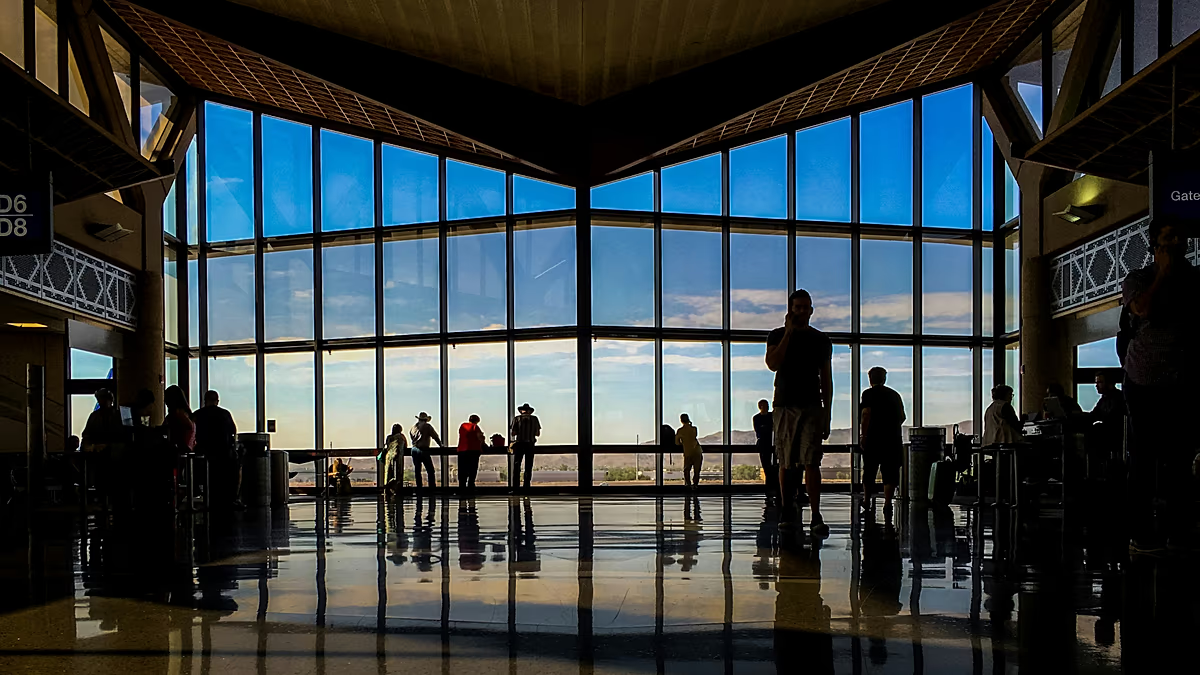
British travellers setting off for European holidays this summer are confronting a significant new hurdle: drastically increased wait times at airports. The core of this disruption stems from post-Brexit border regulations, specifically the EU’s Entry/Exit System (EES). Budget airline Wizz Air is now advising passengers to arrive at airports up to three hours before their flights, a full hour longer than the standard recommendation. This warning comes amidst reports that some travellers have already missed their flights due to lengthy queues caused by these new biometric checks. The system, designed to register non-EU visitors, has transformed the previously routine passport control into a potential bottleneck, casting a shadow over the beginning of many holidays.
Paragraph 2: Understanding the Entry/Exit System (EES)
The Entry/Exit System (EES) is an automated process implemented for non-EU citizens entering and leaving the Schengen Area, which includes most of continental Europe. Since Brexit, UK travellers fall under this category. The system requires the registration of biometric data, such as fingerprints, upon first entry, which is then verified on departure. While intended to enhance security and efficiency, its rollout has been problematic. Since its full implementation in mid-April, it has recorded millions of entries but also caused visible disruption. Across popular tourist destinations like Spain, Portugal, and France, airports have reported significant queues. The situation has been so challenging that Greece has temporarily suspended these checks for British citizens to avoid operational chaos, highlighting the system’s current uneven application.
Paragraph 3: A Summer of Potential Chaos and Industry Concerns
The travel industry is vocal about its concerns, warning that the situation could deteriorate into a “summer of chaos.” Yvonne Moynihan, Wizz Air’s UK managing director, describes the impact as “fragmented across Europe,” with some airports managing smoothly while others struggle profoundly. Her practical advice to passengers extends beyond just arriving early; she suggests bringing portable chargers and water to endure potentially hours-long waits. This sentiment is echoed by ACI Europe, a major airport trade body, which confirms that EES-related queues have already reached up to three and a half hours. They caution that despite some airports scaling back checks during peak times, the problem is expected to worsen as summer travel demand surges, potentially becoming “unmanageable.”
Paragraph 4: Compounding Factors: Fuel, Costs, and Consumer Anxiety
The border queue issue is not the only factor straining this summer’s travel landscape. Geopolitical tensions, particularly conflicts affecting jet fuel supply, are injecting uncertainty into the market. This anxiety is reflected in consumer behaviour, with a trend towards last-minute bookings as travellers hesitate to commit. Meanwhile, the cost-of-living crisis is directly impacting holiday plans. A recent survey revealed that one in five Britons cannot afford a holiday this year at all, with 30% postponing plans and 9% shortening trips to save money. Similar affordability struggles are seen across Europe. While airline bosses like Moynihan express confidence in their operations and supply chains, they acknowledge that sustained high oil prices will likely push airfares up in the future, adding another layer of financial pressure on travellers.
Paragraph 5: Who Does the EES Affect, and Who is Exempt?
Navigating the EES rules is crucial for travellers. The system applies to most non-EU citizens visiting the Schengen Area for short stays (up to 90 days within 180 days). This includes UK nationals travelling for tourism or business, even if they own property in the EU without a residence permit. However, there are key exemptions. Ireland and Cyprus are not using the EES, so manual passport checks continue there. Furthermore, the system does not apply to citizens of EU and Schengen member states, individuals holding long-term visas or residence permits from these countries, or their family members. Other exemptions include train and plane crew on international journeys, armed forces personnel on NATO-related business, and nationals of microstates like Monaco and Vatican City. Understanding these nuances can help some travellers avoid the worst of the queues.
Paragraph 6: Navigating the Summer Travel Season
In summary, the post-Brexit introduction of the EES has created a tangible new challenge for British holidaymakers, manifesting in extended airport arrival times and unpredictable queues. This operational headache is compounded by broader economic and geopolitical factors affecting both travel costs and consumer confidence. The advice from airlines and airports is clear: prepare for a more arduous start to your journey by arriving much earlier, packing essentials for a wait, and carefully reviewing the specific EES requirements for your destination. While the industry hopes to manage the peak season, travellers are advised to approach their summer trips with increased planning and patience, as the era of seamless European travel from the UK has encountered a significant bureaucratic speed bump.