


In the face of a mounting Ebola crisis in the Democratic Republic of Congo (DRC) and Uganda, the global health community is mobilizing with unprecedented speed. The Coalition for Epidemic Preparedness Innovations (CEPI) has announced an urgent acceleration of efforts to develop vaccines against the specific virus driving this outbreak: the Bundibugyo ebolavirus. Unlike the more common Zaire strain, for which effective vaccines exist, Bundibugyo has no licensed vaccines, leaving frontline health workers and vulnerable communities with a critical gap in protection. With the outbreak already claiming lives and threatening to spiral, CEPI’s commitment represents a race against time. As Dr. Richard Hatchett, CEPI’s CEO, starkly warned, “With Bundibugyo virus spreading rapidly and no licensed vaccines, every day counts in the race against this deadly disease.” This declaration is more than a funding announcement; it is a global call to action to prevent a localized crisis from becoming a regional catastrophe.
To answer this call, CEPI is strategically investing in a portfolio of three of the most promising vaccine candidates, identified by the World Health Organization (WHO). This multi-pronged approach spreads the risk and increases the chances of success. The candidates leverage cutting-edge yet proven technologies. Moderna’s candidate utilizes the same mRNA platform that revolutionized the COVID-19 response, offering potential for rapid development and adaptation. Another candidate, from the International AIDS Vaccine Initiative (IAVI), employs a tried-and-tested vaccine vector platform already used in an approved vaccine for the Zaire Ebola strain. The third, from the University of Oxford and to be manufactured by the Serum Institute of India, brings its own robust research pedigree. By funding this trio, CEPI is not putting all its eggs in one basket but is building a diversified arsenal against a common foe, ensuring that if one approach encounters hurdles, others can advance.
The financial commitment behind this effort is substantial and targeted, with CEPI earmarking up to $50 million to propel Moderna’s candidate through preclinical testing and initial human trials. Simultaneously, the Oxford/Serum Institute of India partnership will receive an initial $8.6 million, and IAVI will get $3.2 million to advance their respective programs toward clinical evaluation. This funding is the catalyst that moves these vaccines from laboratory concept to tangible tools. Crucially, these investments are being made during the outbreak, following a paradigm shift in epidemic response that seeks to compress the decade-long vaccine development timeline into months. The goal is to have safe and effective candidates ready for potential deployment in this very outbreak or, at the very least, to have them poised and ready for the inevitable next one.
This initiative has garnered strong endorsement from global health leaders who recognize its profound implications. WHO Director-General Dr. Tedros Adhanom Ghebreyesus praised the move as “exactly the kind of cross-sectoral collaboration that epidemic response demands,” highlighting how a Bundibugyo vaccine could both control the current epidemic and fortify global preparedness. Perhaps even more significantly, Dr. Jean Kaseya of the Africa Centres for Disease Control and Prevention welcomed the investment as “timely and critical to Africa’s health — as well as economic security.” His statement underscores a vital, long-term objective: building sustainable research, development, and vaccine manufacturing capacity on the African continent. This is not just about shipping doses in during a crisis; it’s about empowering regions most affected by these diseases to better defend themselves in the future.
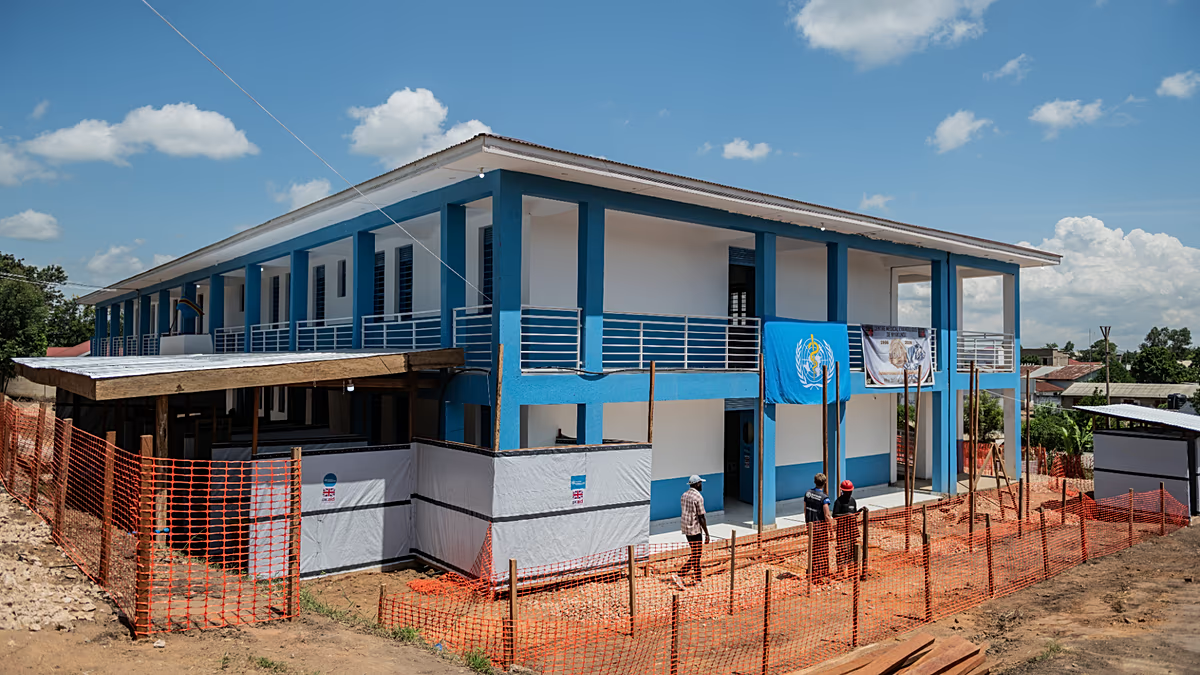
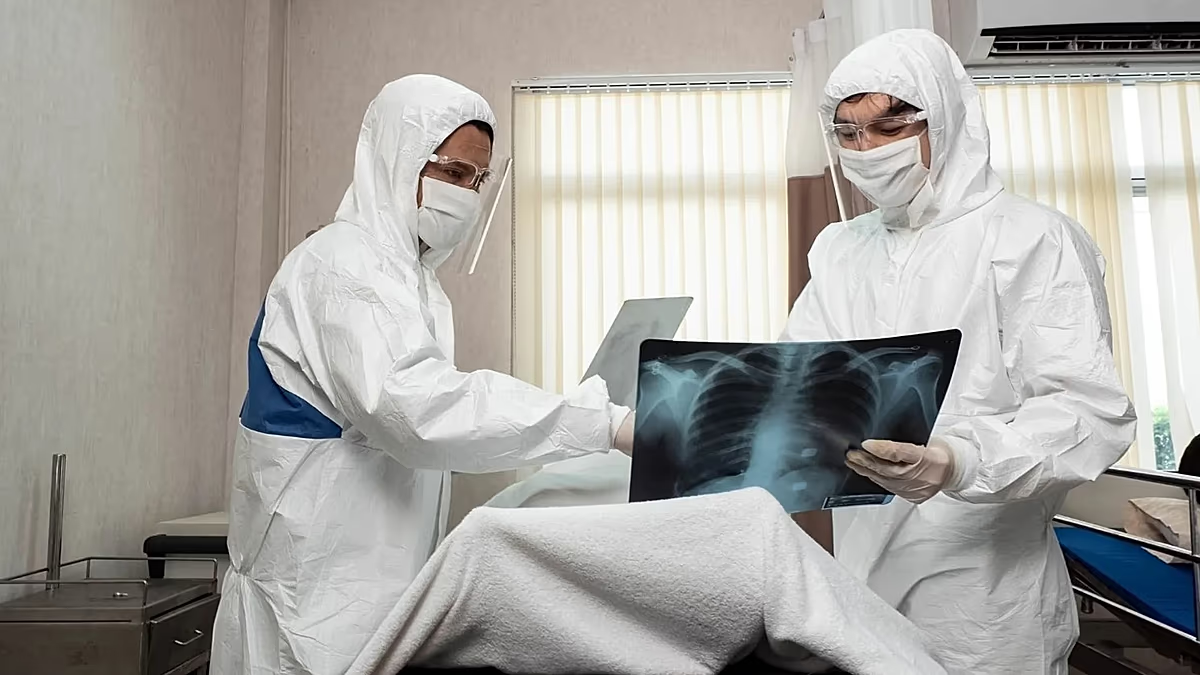
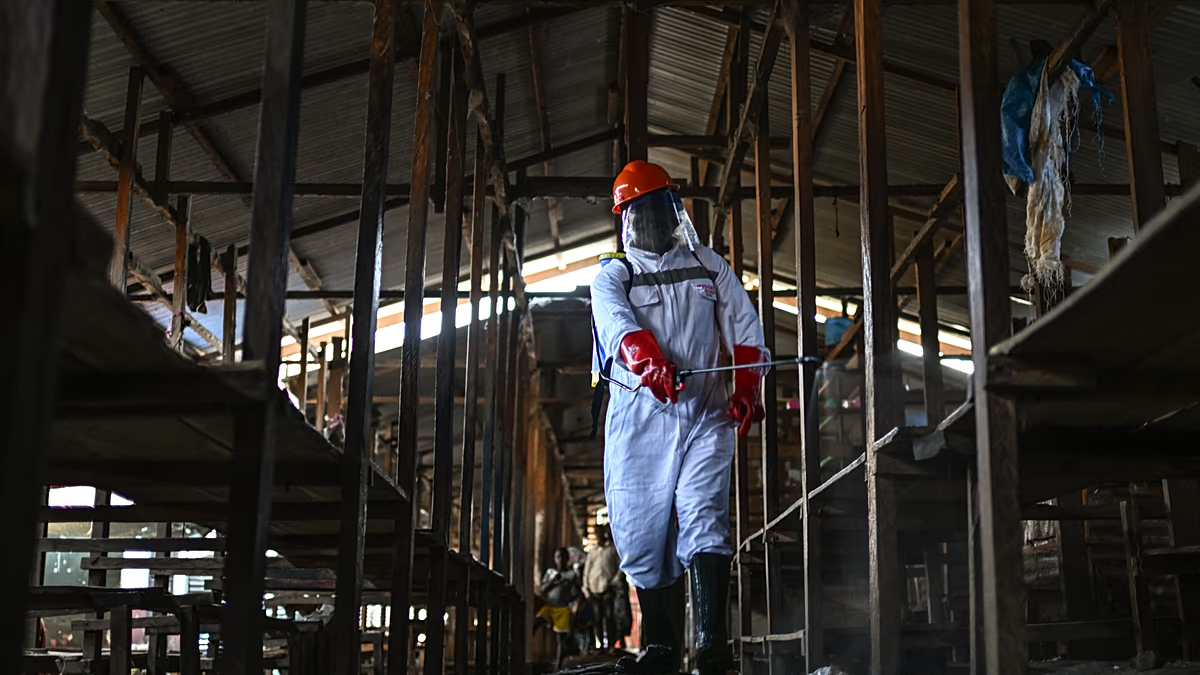
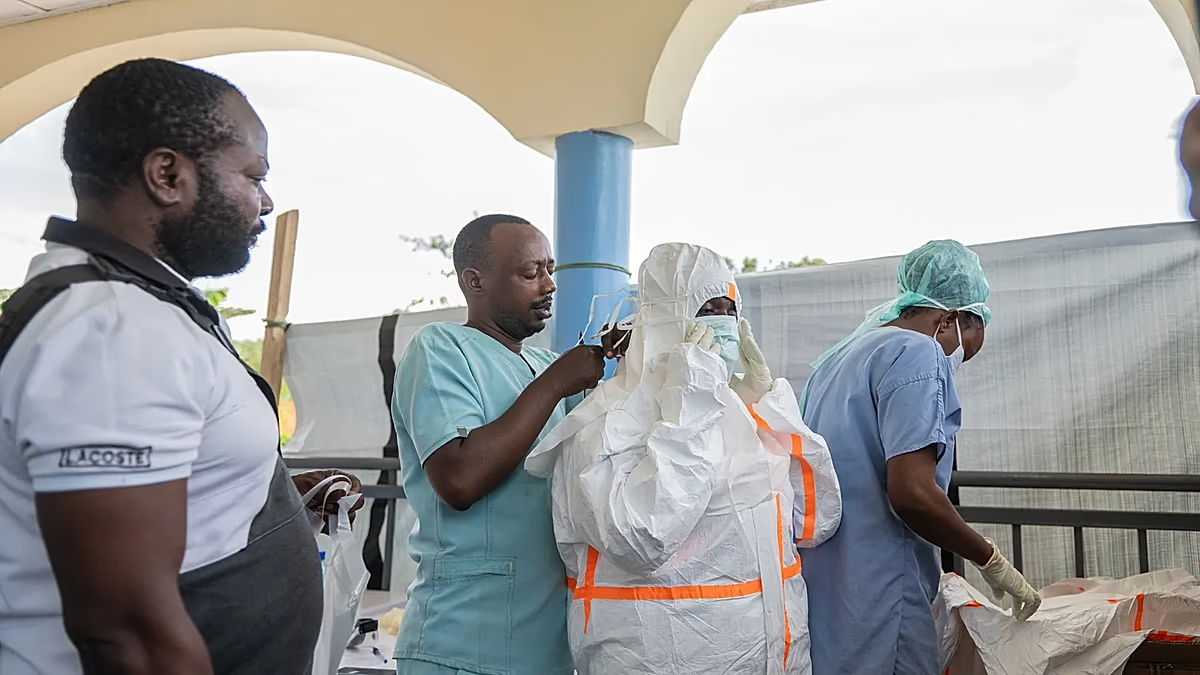
While the accelerated vaccine development offers a beacon of hope for the future, the hard, unglamorous work of containing the outbreak today continues unabated. The WHO emphasizes that the immediate priority remains interrupting transmission using the foundational public health tools that have formed the bedrock of Ebola responses for decades. These include relentless disease surveillance, rapid testing and diagnosis, meticulous contact tracing, isolation and compassionate care for patients, strict infection prevention and control in healthcare settings, deep community engagement to build trust, and safe and dignified burial practices. These measures are irreplaceable; they form the front line that must hold the virus at bay while science races to provide a new defensive weapon. The current statistics—over 282 confirmed cases and 1,000 suspected—are a sobering reminder of the stakes.
Ultimately, CEPI’s urgent push for a Bundibugyo vaccine encapsulates a modern, dual-pronged strategy for epidemic response: fight the fire in front of you with every available tool, while simultaneously forging new, better tools for the fires to come. It is a testament to the lessons learned from past outbreaks, including COVID-19, where platform technologies like mRNA proved their world-altering value. By proactively investing in these candidates now, the global community is working to ensure that the next time the Bundibugyo virus emerges—or a related deadly pathogen—the world will not be starting from scratch. This effort is more than a scientific endeavor; it is an act of global solidarity, aiming to translate the hard-won advances of modern science into tangible protection for the world’s most vulnerable populations, and in doing so, make the haunting phrase “no licensed vaccines” a relic of the past.