


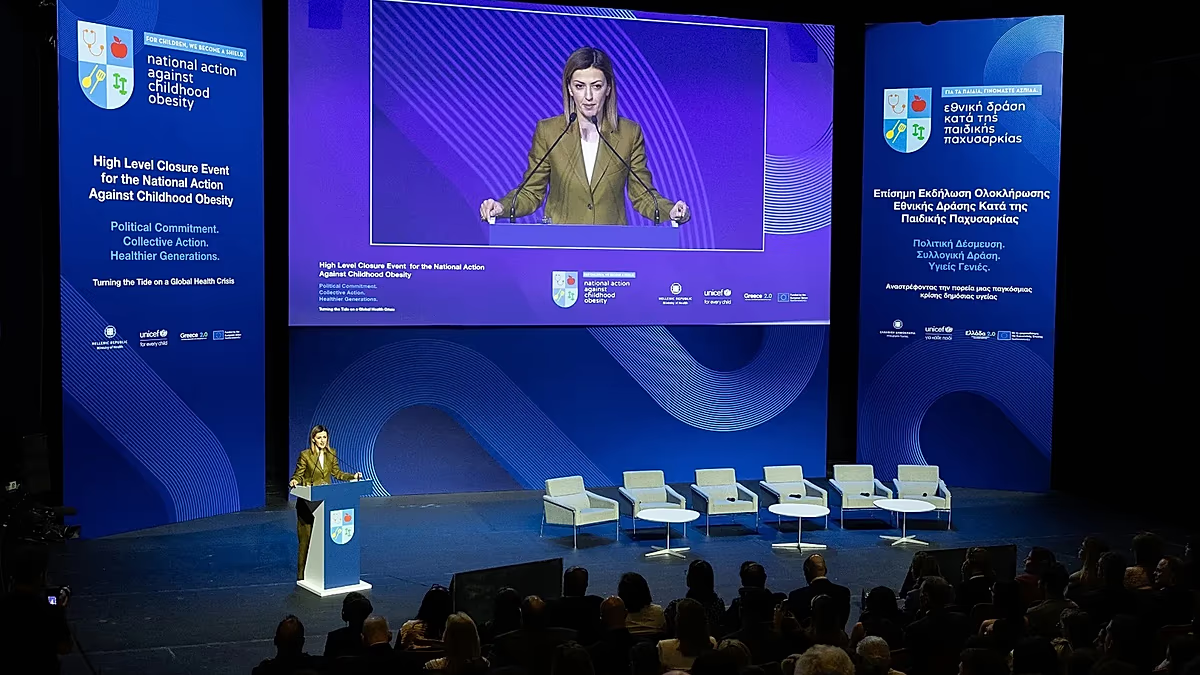
The recent official closing event for Greece’s National Action against Childhood Obesity marked not just the conclusion of a program, but a profound and measurable shift in the nation’s public health landscape. This major initiative, a collaboration between the Greek Ministry of Health and UNICEF, funded by the European Union under the “Greece 2.0” Recovery Plan, has delivered tangible results that are changing lives. More importantly, it has transformed Greece from a country holding “unenvied first places” in European childhood obesity rankings into a model lauded by the World Health Organization for its leading role in Southern Europe. As Deputy Minister of Health Irini Agapidaki highlighted, the nation moved from a state of denial to one of decisive action, with the program reaching into schools and homes to fundamentally alter mindsets about diet and exercise.
The program’s success is rooted in its multifaceted, nationwide approach, which provided direct, personalized support while building a sustainable infrastructure for health. At an individual level, over 1,900 overweight or obese children received free, specialist nutritional counseling through 13,000 one-to-one sessions. The results were transformative: eight in ten of these children achieved a normal body mass index. Critically, for four in ten children with obesity compounded by conditions like diabetes or hypertension, health indicators improved so significantly that their medication could be reduced. Beyond direct intervention, the program fortified the healthcare system itself by training over 1,100 paediatricians and creating a digital referrals platform, ensuring that preventive monitoring of children’s growth became more consistent and systematic.
Simultaneously, the initiative ignited a cultural shift within the education system. Through the “Food for Action” component, thousands of teachers and parents were equipped with digital toolkits, while 31 schools became vibrant “Health Hubs.” The program ensured inclusivity by creating specially adapted materials for children with disabilities. It also addressed nutrition directly, providing over 130,000 healthy meals and fresh fruit to primary school pupils. Perhaps one of the most innovative efforts was “The Journey of Food,” which engaged nearly 100,000 adolescents in workshops about food systems and sustainability, even facilitating the collection and donation of over 20 tonnes of surplus market produce to families in need, blending education with community solidarity.
Understanding that health is built through movement as well as nutrition, the program powerfully promoted physical activity. More than 135,000 children participated in free sports activities, leading to a measurable increase in both organized sports participation and the number of children active for at least an hour daily. This energy culminated in celebratory Festivals of Exercise and Nutrition held across all 13 regions, from Evros to Crete, where over 18,000 pupils gathered in a powerful, collective demonstration of the joy in healthy living. These events symbolized the program’s core mission: to make healthy choices accessible, engaging, and a source of community pride.
The most telling indicator of the program’s deep societal impact is the marked change in parental awareness and involvement. Surveys revealed dramatic increases in parents’ knowledge of WHO guidelines for both healthy eating and physical activity for children. Most significantly, nearly three-quarters of parents reported direct involvement with the program’s services, confirming that its reach extended to every corner of the country. This broad engagement is the bedrock for lasting change, as informed families are better equipped to sustain healthy habits. Experts now project that if the monitoring and management structures established by this action continue, Greece will see a steady decline in childhood obesity rates for decades to come, potentially up to 2040.
In closing, Greece’s National Action against Childhood Obesity stands as a testament to what is possible when government, international organizations, communities, and families unite behind a common goal. It moved beyond statistics and reports to deliver personalized care, systemic training, inclusive education, and community joy. By changing mindsets and equipping an entire generation with the tools for better health, Greece has not only improved the immediate well-being of its children but has also built a resilient framework for a healthier future. The program’s designation as a “model” by the WHO is a recognition that its true success lies not just in kilograms lost or metrics improved, but in having inspired a national journey from concern to concerted, effective action.