

Summary & Humanized Account
A British national, previously hospitalized in the Netherlands after contracting hantavirus aboard a cruise ship, has been medically evacuated back to England. The UK Health Security Agency (UKHSA) confirmed the individual is now following strict infection control protocols. This person is the same case identified by the World Health Organization in early May, linked to an outbreak on the expedition cruise ship MV Hondius. That outbreak has resulted in at least 11 reported cases among passengers, including three tragic fatalities. The evacuation marks a significant step in managing the international response to this concerning incident.
The situation began unfolding aboard the MV Hondius during a voyage from Argentina to Cape Verde. Among those on board were 19 British nationals and four British crew members. After cases of the rare but serious viral infection were identified, the vessel was diverted. A British crew member, described as an expedition guide and former police officer, was among those airlifted from the ship and flown to the Netherlands for specialized medical treatment. His condition necessitated this careful medical repatriation to the UK, coordinated between British, Dutch, and international health authorities.
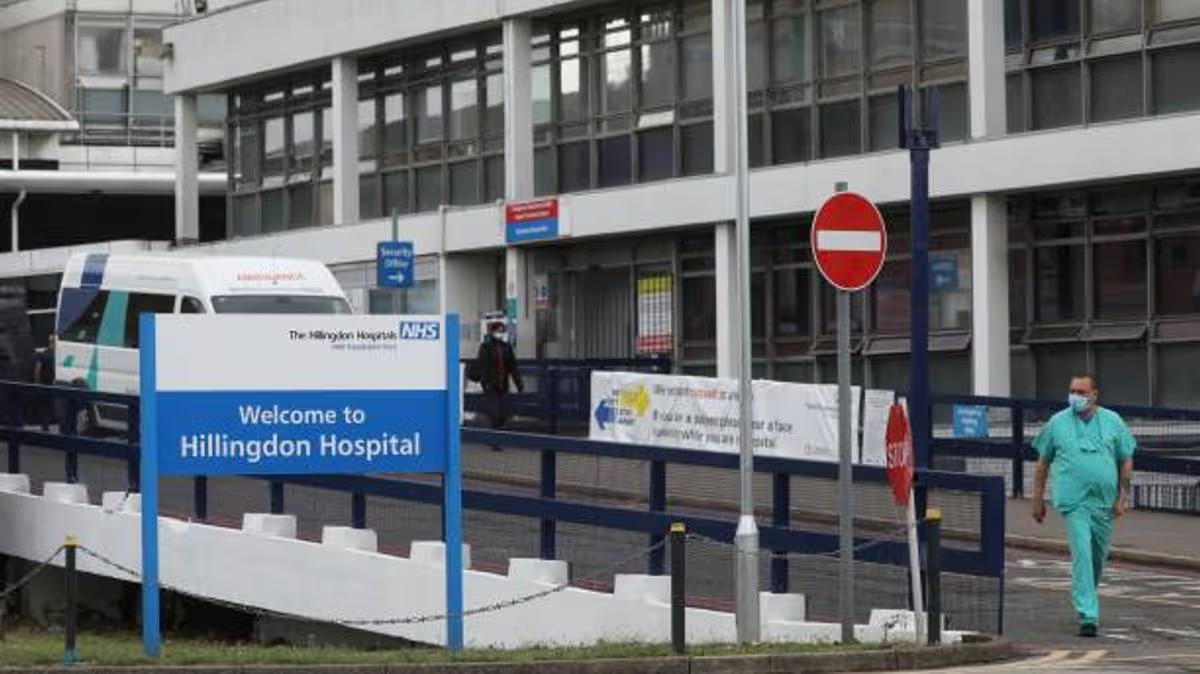
In the UK, the response has involved multiple agencies working to contain any potential spread, though officials consistently stress the risk to the general public remains very low. A group of individuals connected to the outbreak were initially transferred to Arrowe Park Hospital on the Wirral for assessment and isolation. Recently, six of these people have been discharged to complete their isolation at home. This hospital facility, notably used as an isolation centre during the early days of the COVID-19 pandemic, has again become a focal point for managing a public health incident, with officials praising the staff’s hard work.
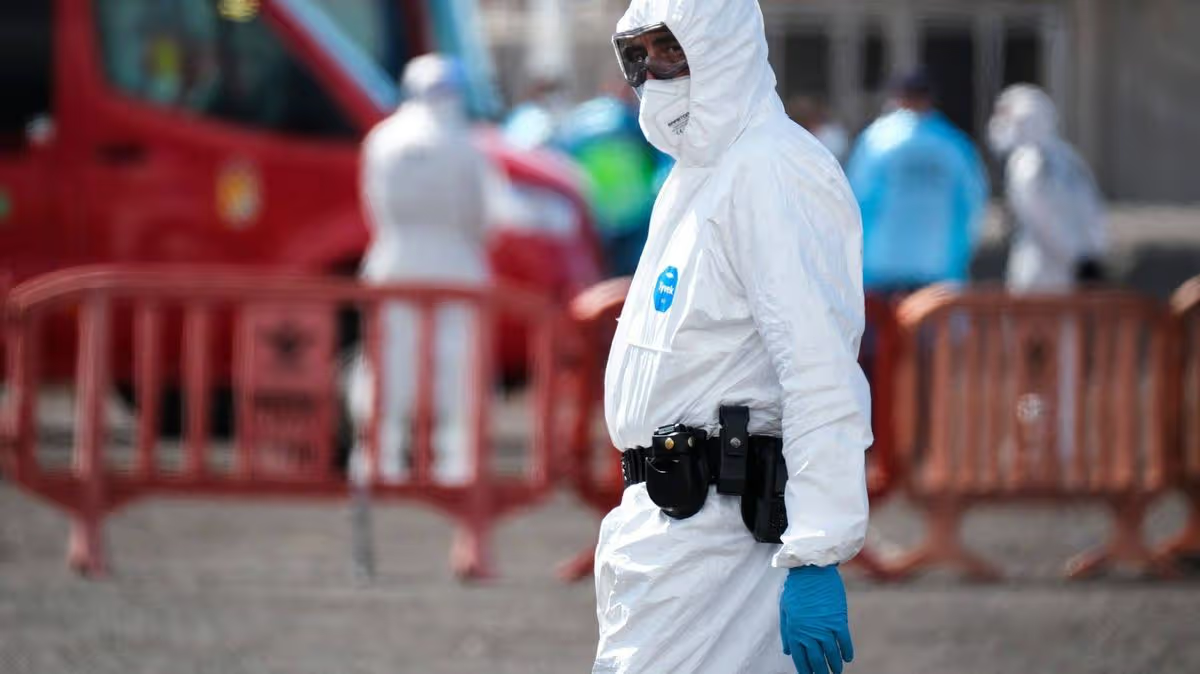
The international dimensions of the outbreak continue to be managed. The MV Hondius itself is now docked in Rotterdam, Netherlands, undergoing a thorough deep clean as directed by local health authorities before it returns to its home port. Meanwhile, health agencies like Public Health Scotland are undertaking contact tracing, reaching out to a small number of individuals in Scotland who may have had potential exposure. These measures highlight the extensive, behind-the-scenes efforts to ensure no further chains of transmission occur.
Dr. Meera Chand, a deputy director at UKHSA, emphasized the collaborative nature of the response, thanking the UK’s Foreign Office and Dutch authorities for ensuring the safe return of the British national. She reiterated that this is a known, contained case and not an indicator of a new or widening threat. Her statements aim to balance public transparency with reassurance, acknowledging the concern such news generates while providing clear facts about the ongoing management of the situation.
This event underscores the complex challenges of managing infectious disease outbreaks in a globally connected world, where travel can quickly link distant locations. The response has involved hospital isolation, home quarantine, international medical evacuations, and ship decontamination. While the direct risk is confined to a very specific group, the coordinated efforts of health authorities across borders demonstrate the ongoing vigilance and infrastructure in place to protect public health from emerging threats.