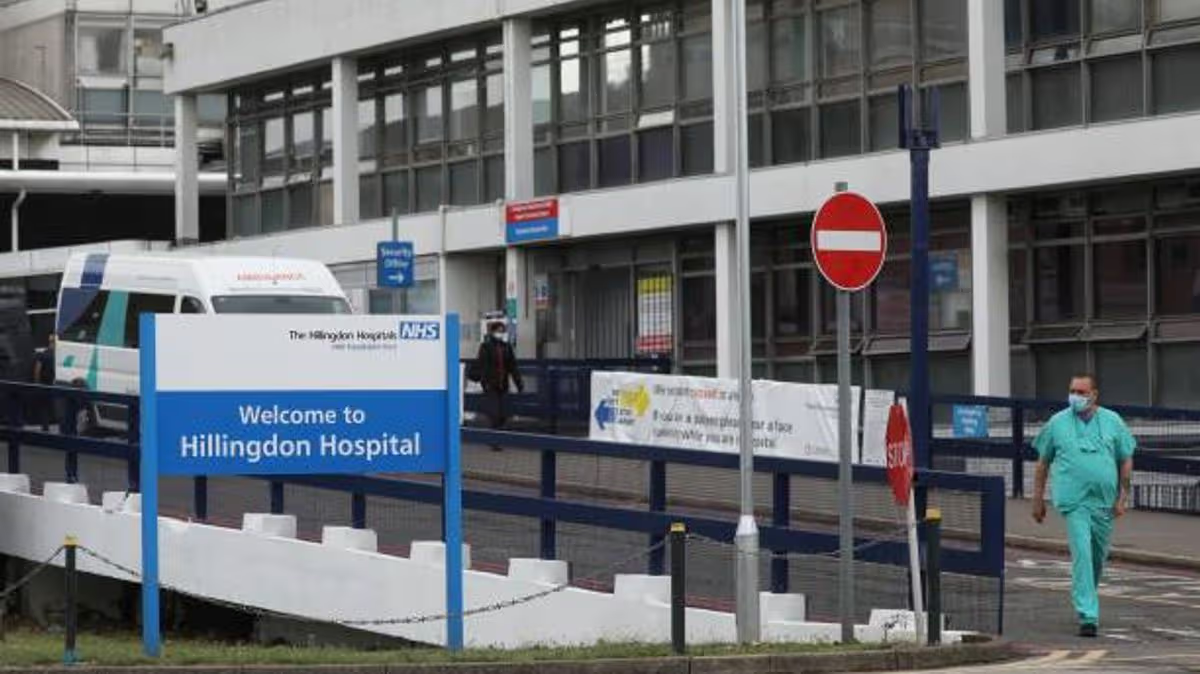




The sanctity of the hospital, a place of healing and refuge, was violently shattered in the early hours of a Tuesday in late May. At Hillingdon Hospital in West London, a doctor in his 50s, dedicated to providing emergency care, became the victim of a brutal assault. While treating a patient in the A&E unit, he was suddenly attacked and stabbed multiple times with a large knife. The swift response of Metropolitan Police officers, who were already on-site for an unrelated matter, likely prevented an even greater tragedy. They rushed to the scene, dragged the 27-year-old assailant away from the injured medic, and placed him under arrest on suspicion of attempted murder and grievous bodily harm. In a chilling postscript witnessed by others in the unit, the alleged attacker was seen smirking during the assault and smiled again as he was led away by police, a haunting image that underscores the profound unpredictability and trauma of the event.
This violent incident did not occur in a vacuum but within a growing national crisis of aggression against healthcare workers. Recent statistics reveal a harrowing trend: recorded acts of violence against A&E nursing staff in England have doubled over the past five years, culminating in over 4,054 incidents in 2024 alone. This equates to more than eleven attacks every single day, transforming emergency departments from zones of compassion into potential front lines. The attack on the Hillingdon doctor is therefore not an isolated anomaly but a severe data point in a disturbing graph, highlighting a systemic failure to protect those who have pledged to protect public health. It raises urgent questions about safety protocols, resource allocation for de-escalation training, and the societal pressures that are boiling over within the very institutions designed to manage them.
In the aftermath, the focus rightly turned to the human impact. The injured doctor, whose identity was protected, underwent treatment at the hospital where he serves. Authorities confirmed that while his physical wounds were significant, his condition was stabilized and deemed not to be life-threatening or life-changing—a small mercy in a deeply traumatic ordeal. The psychological scars for him, his colleagues, and the witnesses who saw the attack are immeasurable and will require long-term support. A spokesperson for the Hillingdon Hospitals NHS Foundation Trust immediately emphasized that the well-being of staff is their “highest priority,” condemning any violence as “unacceptable.” This official stance, while necessary, must now be backed by tangible, reinforced actions to rebuild a sense of security for a staff rightfully shaken to its core.
Complicating the narrative is the reported background of the alleged assailant, who is suspected of having mental health issues. This introduces a layer of profound complexity to the tragedy, intersecting the crises in healthcare safety and mental health provision. It forces a difficult conversation about the capacity of emergency departments, often the default point of crisis for individuals with severe psychiatric needs, to manage such volatile situations safely for both patients and staff. While mental health challenges can never excuse violence, this detail points to broader systemic shortcomings in community-based mental health services, which when underfunded and overwhelmed, inadvertently place additional strain and risk on acute hospital settings and their personnel.
The community and the medical fraternity are left to grapple with a mixture of relief, anger, and anxiety. Relief that the doctor survived the attack; anger that such a betrayal of the healing environment could occur; and anxiety about the erosion of safety in a profession already under historic strain. Each smile from the attacker, as reported by witnesses, deepens the psychological wound, symbolizing a defiance that feels particularly cruel in a setting dedicated to care. This event serves as a stark, bloody reminder of the vulnerabilities faced by healthcare workers, who navigate human suffering at its most raw and are increasingly expected to do so while facing the threat of physical harm.
Ultimately, this stabbing is a crisis point demanding a multi-faceted response. It is a call for a thorough review of physical security measures in A&E units and for enhanced support systems for staff trauma. It is equally a call to examine the pathways for mental health crisis care, to ensure individuals receive appropriate, specialized intervention without overburdening general emergency services. The courage of healthcare workers is not in doubt; they demonstrated it anew in the response to this attack. The question now is whether the system and the society it serves can muster equal courage to confront the underlying issues that made this horror possible, ensuring that hospitals remain safe havens for healing, not arenas for violence. The doctor’s recovery is the first step; the healing of the system’s failures must be the next.