



Of course. Here is a summarized and humanized version of the content, expanded to meet the requested length and structure.
Paragraph 1: The Warning Issued
Holidaymakers planning a trip to Italy are facing an urgent and widespread alert. A full 24-hour nationwide transport strike, set to begin at 9pm on Thursday, May 28th, and last until 9pm the following Friday, threatens to throw the country’s travel infrastructure into disarray. This industrial action is not isolated; it is a coordinated walkout involving multiple unions across nearly every public transport sector. The implications are severe for anyone relying on Italy’s networks, from international tourists arriving at airports to locals commuting by train. The strike promises a day of significant inconvenience, where the smooth, romanticized vision of Italian travel could be replaced by frustration and logistical hurdles.
Paragraph 2: The Heart of the Disruption – Railways and Cities
The core of the disruption will be felt on Italy’s railways, a vital artery connecting its iconic cities. Major operators like Trenitalia, Trenord, and Italo are involved, meaning long-distance services between Rome, Milan, Venice, Florence, Bologna, and Naples are at high risk of cancellations and delays. Outside of legally protected periods, these routes could see severe interruptions. The strike’s impact will ripple through urban centres, affecting metro systems, buses, and regional transport. Tourists visiting world-renowned sites—from the Colosseum and Vatican City in Rome to the canals of Venice and the historic heart of Florence—may find themselves stranded or delayed, not by crowds, but by a lack of functioning local transit to reach these destinations.
Paragraph 3: Limited Protections and the Aviation Sector
In response to the potential chaos, the Italian Ministry of Transport and the Civil Aviation Authority (ENAC) have established limited “guaranteed” operating windows to mitigate the worst effects. For rail commuters, these are between 6am to 9am and 6pm to 9pm. For flights, the protected periods are from 7am to 10am and 6pm to 9pm. These windows are designed to ensure a baseline of service for essential travel. However, the authority for aviation has explicitly urged all passengers to contact their airlines directly for real-time updates, as the situation remains fluid. Major airports such as Rome Fiumicino, Milan Malpensa, Venice Marco Polo, and Naples International are anticipating delays, congestion, and possible schedule changes throughout the day, particularly outside these protected hours.
Paragraph 4: The Wider European Network Impact
The disruption is not confined to Italy’s borders; it has the potential to create a knock-on effect across the European travel network. Experts warn that airline schedules are intricately interconnected. Aircraft and crews are scheduled to move in a precise sequence across multiple countries. The cancellation or delay of flights in Italy can domino into scheduling conflicts and displacements elsewhere, as planes and personnel fail to arrive at their next scheduled location. Furthermore, a surge in rebooking demand from affected Italian passengers could strain customer service systems and availability on alternative flights across Europe, creating secondary headaches for travellers with no connection to Italy at all.
Paragraph 5: Direct Advice for Travellers and Carrier Response
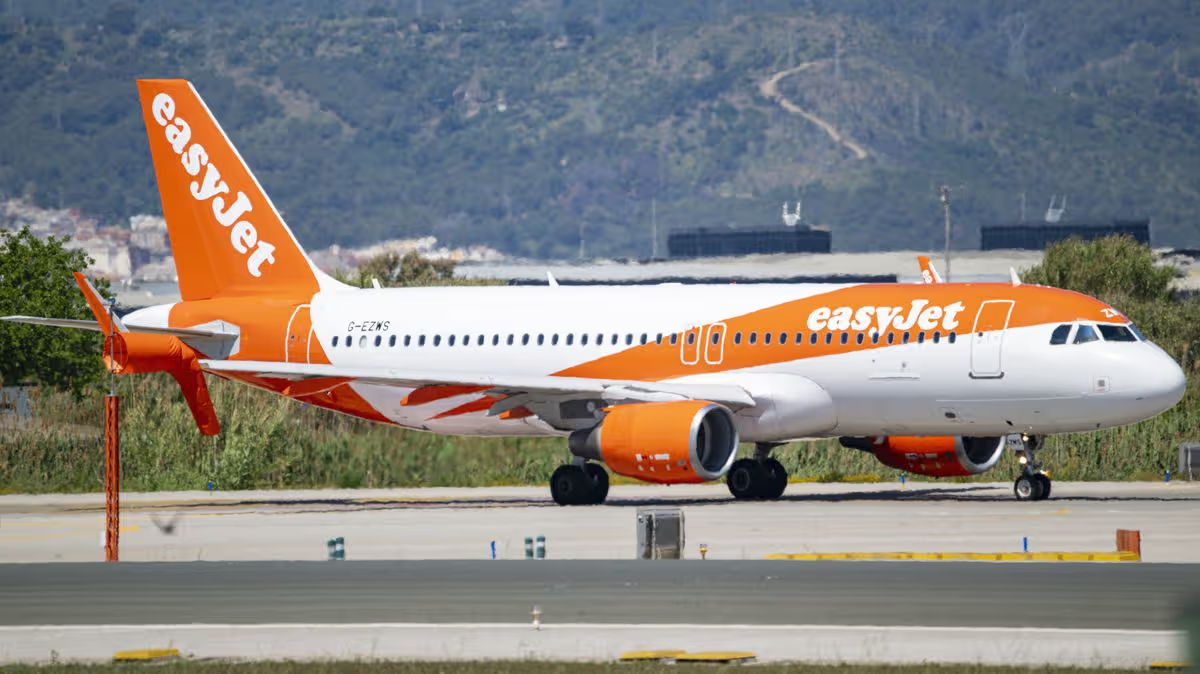
In light of this, the universal advice from travel experts is for passengers to maintain a state of heightened vigilance. They must closely monitor notifications from their airlines and rail operators, as schedules may change rapidly and with little warning. Airlines like easyJet have stated they currently plan to operate their schedules as normal, but have issued a crucial, common-sense advisory: allow substantial extra time for travel to and through airports. The company emphasized that should any flights be impacted, they will contact customers directly with options to rearrange plans, apologizing in advance for any inconvenience. This proactive communication is a critical part of managing passenger expectations during such unpredictable events.
Paragraph 6: The Significance and Context
This strike takes place against the backdrop of Italy’s enduring popularity as a top destination, particularly for British tourists who flock there in millions each spring and summer. The timing amplifies the impact, affecting peak travel season. It serves as a stark reminder of the vulnerability of modern travel to industrial action and the importance of contingency planning. For travellers, it underscores the need to stay informed, be flexible, and build patience into their itineraries. While the protected hours offer a glimmer of structure, the day will ultimately test the resilience of Italy’s transport system and the adaptability of everyone moving through it.