


A Unified Vision for European Rail Travel
The promise of seamless, continent-spanning train travel across Europe has long been a romantic ideal, yet it has consistently stumbled against the reality of a fragmented and complex system. This enduring gap between aspiration and experience is the target of a significant new proposal from the European Commission, ambitiously titled “One Journey, One Ticket, Full Rights.” At its heart, this initiative seeks to address one of the most persistent and frustrating headaches for travelers: the cumbersome process of booking and managing cross-border rail journeys. It represents a deliberate step toward creating a truly unified European rail network, not through laying new tracks, but by harmonizing the digital and commercial landscape that passengers must navigate.
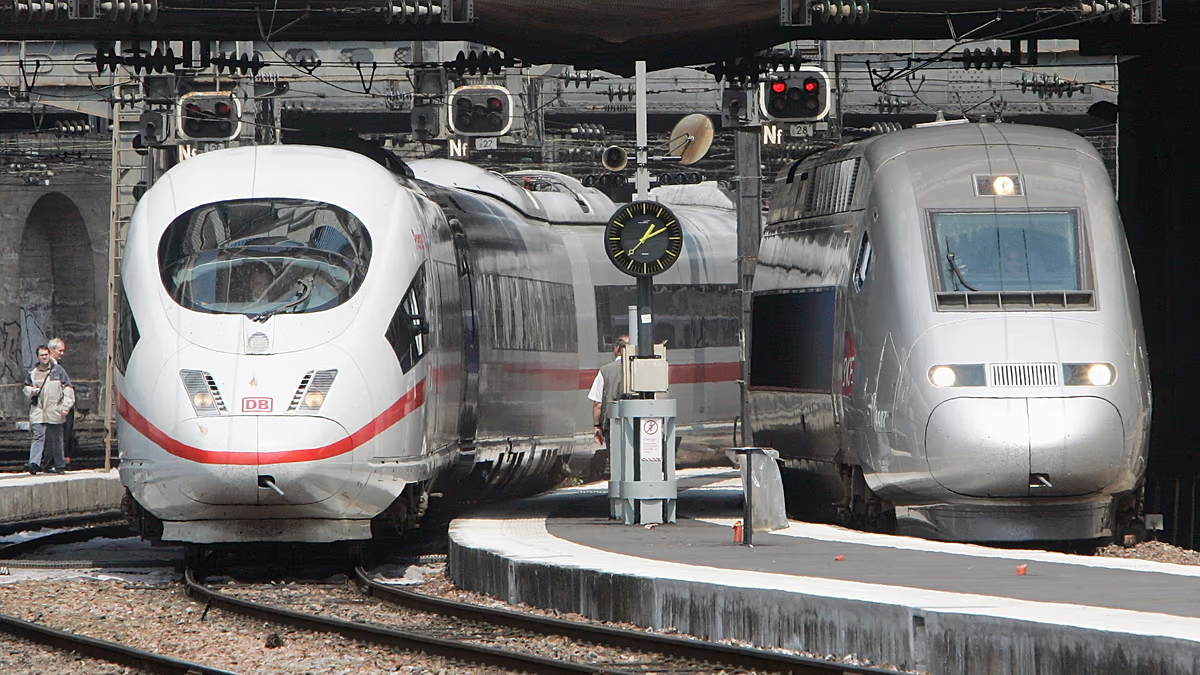
Currently, a trip from, say, Brussels to Vienna is less a single journey and more a logistical puzzle. A traveler must painstakingly research and purchase separate tickets from multiple national or private operators, often on different websites with varying languages and payment systems. This patchwork approach carries significant risk; if a delay on the first leg causes a missed connection on a separately booked second leg, the passenger is typically left stranded with no automatic recourse, bearing the full cost and burden of rebooking. The Commission’s proposal directly attacks this fragmentation. It envisions a future where passengers can simply enter their origin and destination into a single platform, receive a clear overview of all available routes, and purchase one comprehensive ticket covering every segment of the journey, regardless of how many operators are involved.
Beyond the simplicity of a single purchase, the proposal crucially bundles this with robust, unified passenger rights. Under the new framework, the responsibility for managing disruptions would shift from the individual traveler to the operators themselves. If a delay or cancellation occurs, the railway companies would be obligated to reroute passengers onto alternative services and ensure they reach their final destination. Furthermore, clear and standardized compensation rules would apply across the entire journey, eliminating the current confusion where rights can vanish at a national border. This “full rights” guarantee is the essential counterpart to the “one ticket” promise, transforming cross-border rail from a risky logistical challenge into a reliable and stress-free travel option.
To make this vision a reality, the proposal mandates critical technical and commercial reforms. It requires standardized data-sharing between all rail operators and ticketing platforms, creating the digital bedrock necessary for integrated booking systems to function. Perhaps even more transformative is the call for “neutral display” of travel options on comparison websites and booking platforms. This means results would be ranked based on objective criteria like journey time, price, or, innovatively, carbon emissions, rather than being influenced by commercial agreements that might prioritize certain operators. This transparency would empower consumers to make informed choices, potentially boosting the appeal of more sustainable travel options and fostering fairer competition across the market.
However, the path from proposal to reality is fraught with political and industrial challenges. The draft legislation must now undergo the complex European co-decision process, navigating both the European Parliament and the Council of the EU, where member states’ interests will be closely scrutinized. Resistance from major incumbent rail operators is already anticipated, as some may view the enforced data sharing and liability rules as a threat to their commercial autonomy and existing revenue models. Key details, particularly around the technical specifics of data interfaces and the precise apportionment of liability and compensation between multiple operators in a chain of disruption, remain to be negotiated and resolved.
Despite these hurdles, the proposal marks a pivotal moment for European transport policy. If successfully adopted by the Parliament and Council, the new regulatory framework could be implemented before the end of this decade, potentially by 2029. Its success would signify more than just a bureaucratic update; it would be a tangible realization of the European single market in the realm of passenger transport. By finally stitching together the digital and legal fabric of Europe’s railways, the “One Journey, One Ticket, Full Rights” initiative promises to move continental travel beyond its historical barriers, offering citizens a simpler, more reliable, and more competitive alternative to air and road travel for journeys across the Union.