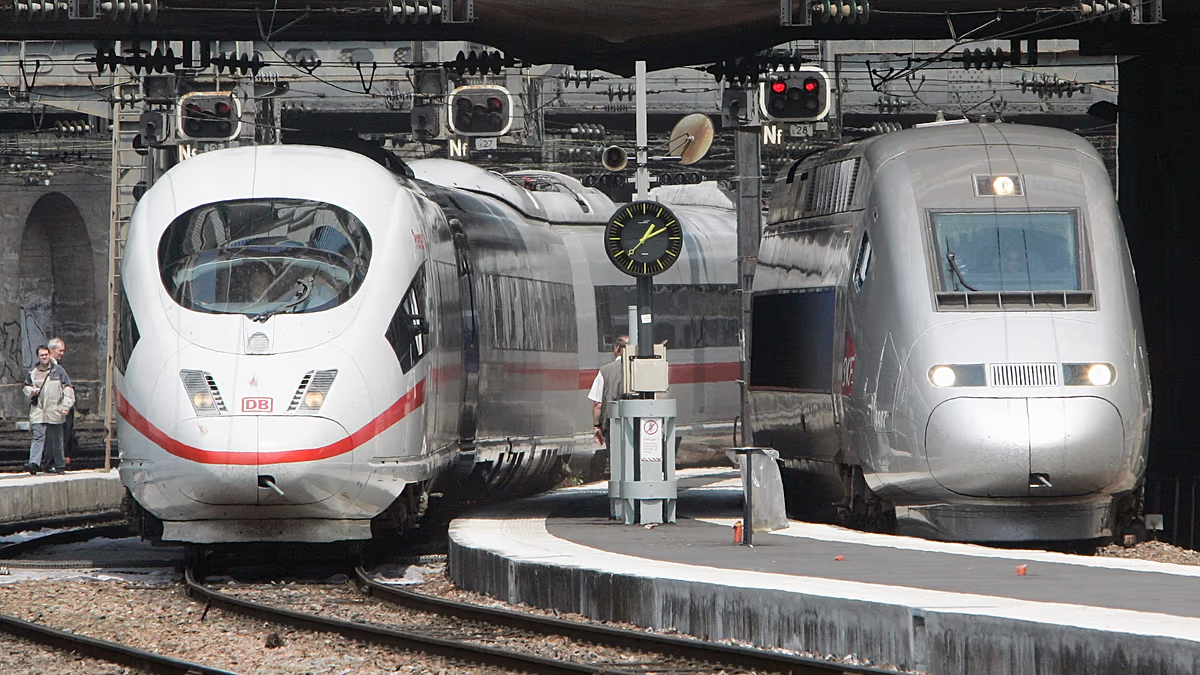



For decades, the dream of seamlessly traversing Europe by train has been undermined by a frustrating digital reality. While the continent’s political and economic structures have unified, its rail ticketing systems have remained stubbornly fragmented, trapped behind national borders. This fragmentation turns what should be a simple, sustainable journey into a logistical puzzle. Passengers hoping to book a cross-border trip often find that the through-journey physically exists but digitally disappears, depending on which national operator’s website they use. Data reveals the stark consequences: on longer routes over 900 kilometres, more than half of all journeys cannot be booked as a single, end-to-end ticket. This digital gridlock has real-world impacts, leaving millions of travellers stranded or discouraged, and forcing a staggering 43% of Europeans to abandon multi-train trips altogether due to the sheer hassle. The process of planning a continental rail adventure now takes, on average, 70% longer than booking a flight, a perverse irony for a mode of transport championed for its convenience and environmental virtue.
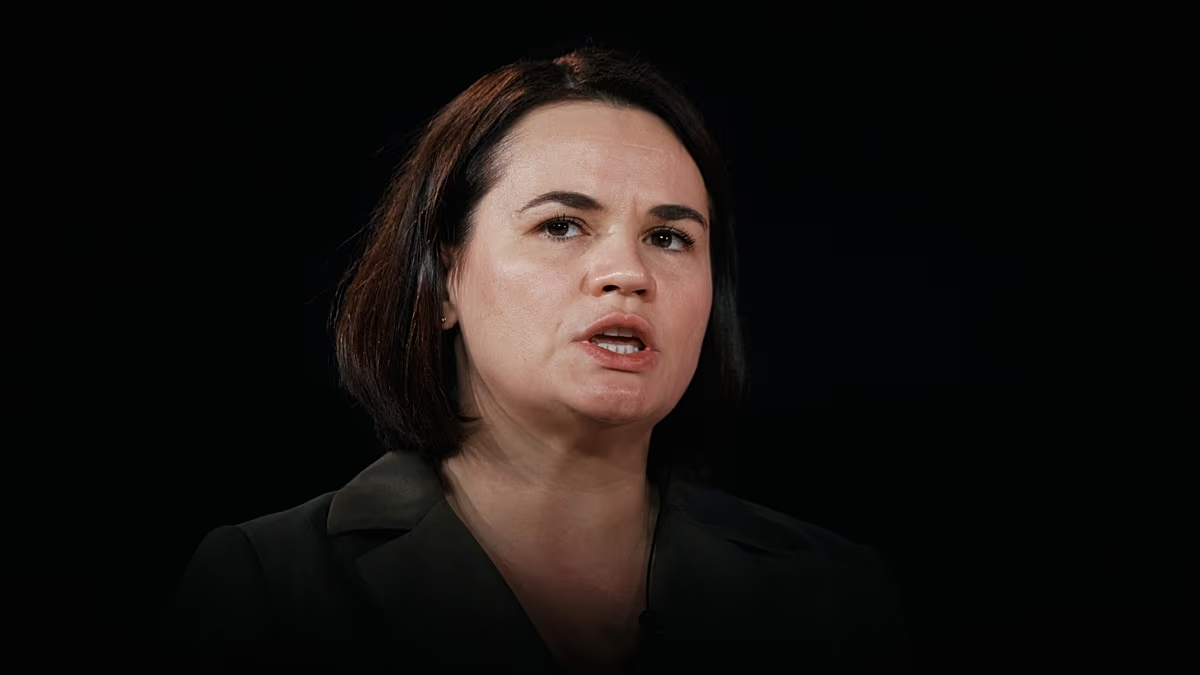
Recognising this crisis of passenger experience, the European Union has introduced a transformative new Passenger Package, announced on May 13th. At its heart is the revolutionary “single ticket,” a legally protected contract that allows travellers to combine multiple rail segments across different operators into one straightforward booking. This means full transparency and, crucially, consistent passenger rights for the entire journey. Should delays occur, passengers are guaranteed rerouting, assistance, meals, accommodation if needed, and clear compensation—25% of the ticket price for delays of 60-119 minutes, and 50% for delays over two hours. The package mandates that dominant national operators must share their full timetable and fare data with independent ticketing platforms, breaking down the closed ecosystems that have stifled competition. As Greens MEP Lena Schilling envisions, the goal is that “you just open your one train app… and then you just search for the connection you need and buy it with one click.” Furthermore, platforms will be required to display travel options neutrally and include greenhouse gas emissions as a default filter, empowering consumers to make truly informed, sustainable choices.
This bold move is not conceived in isolation but as the latest step in a long continuum of EU railway reform. It builds upon previous packages that focused on market liberalisation, safety, and interoperability, and specifically enhances the 2021 Rail Passenger Rights Regulation. However, it directly tackles the critical flaw those earlier rules missed: the disconnect between a liberalised market and the practical reality of booking a multi-operator journey. The new package explicitly links the business of ticketing to the passenger’s lived experience, aiming to eliminate the digital barriers that have persisted despite physical and legal frameworks for a Single European Railway Area. By doing so, it seeks to fulfil the original promise of seamless cross-border mobility, ensuring that the legal right to travel translates into a practical, purchasable ticket.
The potential benefits for passengers are profound, but the package also promises to reshape the industry landscape. The European Commission argues that enforced open data will breed healthy competition, giving smaller, low-cost rail startups the visibility to challenge national monopolies and potentially drive down fares. It creates a standardized data-sharing network that could reduce administrative costs for operators while granting them access to a wider pool of cross-border customers. Importantly, the policy also serves as a lever to compel much-needed infrastructure modernization. As Schilling notes, “If a lot of people ask for something, we must think of how we can increase supply, how we can increase infrastructure.” The promise of seamless digital ticketing creates political pressure to synchronize national signalling systems, eliminate physical border bottlenecks, and expand network capacity to meet the anticipated rise in demand.
Unsurprisingly, this vision faces significant pushback from incumbent operators, represented by the Community of European Railway and Infrastructure Companies (CER). They view the mandatory distribution deals as an “unprecedented regulatory overreach” that strips them of commercial freedom and disincentivizes investment in their own digital platforms. CER Executive Director Alberto Mazzola warns of a power shift from rail operators to digital intermediaries, where dominant third-party apps could eventually impose high commissions, increasing costs for operators and, ultimately, passengers. Their most substantive critique centres on priorities: they argue the EU is putting the digital cart before the physical horse. “You have the infrastructure, then we have the trains, then we have the tickets. We don’t start with the tickets,” Mazzola contends. They point to Europe’s persistent rail infrastructure gaps—from congested corridors to the uneven rollout of high-speed lines and the European Rail Traffic Management System (ERTMS)—arguing that a unified ticket is a “symbolic gesture” without the physical network to support reliable, fast journeys. For them, the focus must remain on concrete, steel, and signalling.
The road ahead will determine whether this package becomes a landmark success or a well-intentioned promise thwarted by practical hurdles. The Commission’s proposal now enters a complex negotiation process with the European Parliament and Council. Its success is inextricably linked to parallel initiatives like the Multimodal Digital Mobility Services framework and accelerated funding for infrastructure projects by 2026. The ultimate test will be whether it can catalyze a virtuous cycle: a better digital experience driving higher passenger demand, which in turn creates the political and financial imperative to upgrade the physical rail backbone of Europe. The goal is nothing less than a unified, digital, and legally protected network that finally makes train travel the obvious, easy, and enjoyable choice for crossing a continent. It is an attempt to weave a seamless digital fabric over the still-patchwork quilt of European rail, hoping that the fabric itself will pull the patches closer together.