
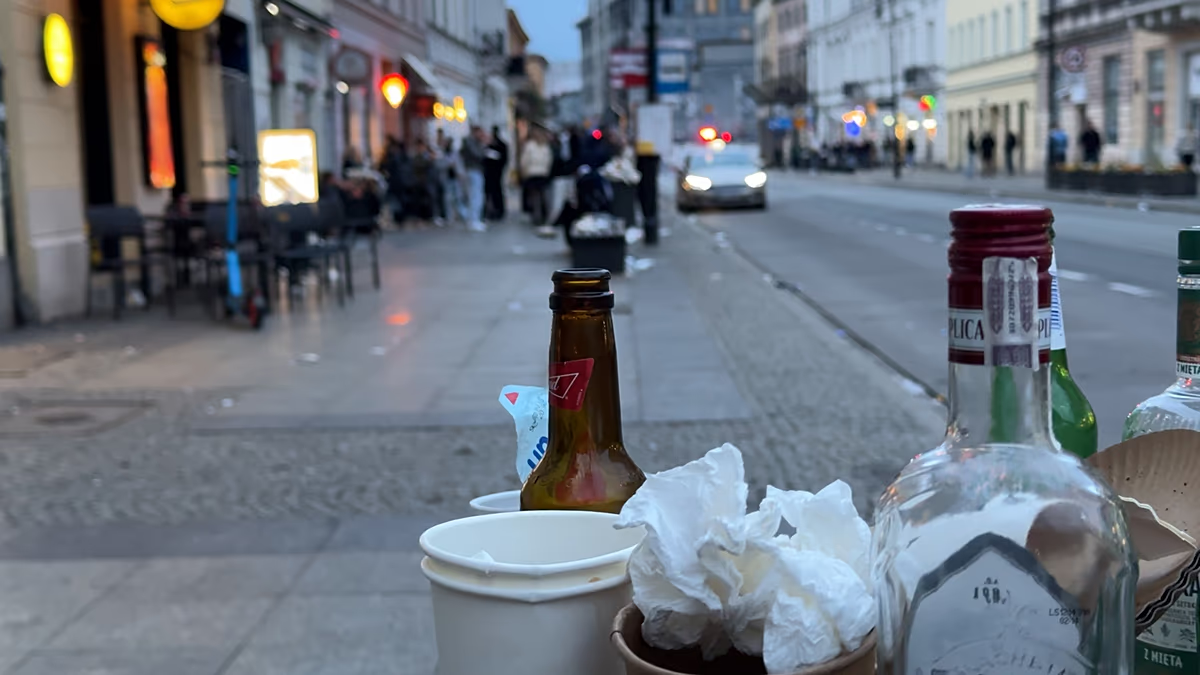


In a significant move aimed at enhancing public safety and urban life, Warsaw’s City Council has enacted a ban on the sale of alcohol in shops, kiosks, and petrol stations between 10pm and 6am. This decision, endorsed by Mayor Rafał Trzaskowski, marks a shift in policy for a leader who admits he is “not a supporter of restrictions,” but who was persuaded by years of debate and compelling data. The ruling is not an outright prohibition; it carefully exempts restaurants, bars, and the duty-free zone at Warsaw Chopin Airport, aiming to balance commercial interests with community well-being. The measure follows a successful pilot program in the Śródmieście and Praga-Północ districts, where authorities reported a noticeable decline in night-time police and municipal guard interventions. Furthermore, the ban targets the phenomenon of “alcohol tourism,” where individuals roam the city late at night seeking out 24-hour outlets, often contributing to disturbance and antisocial behaviour.
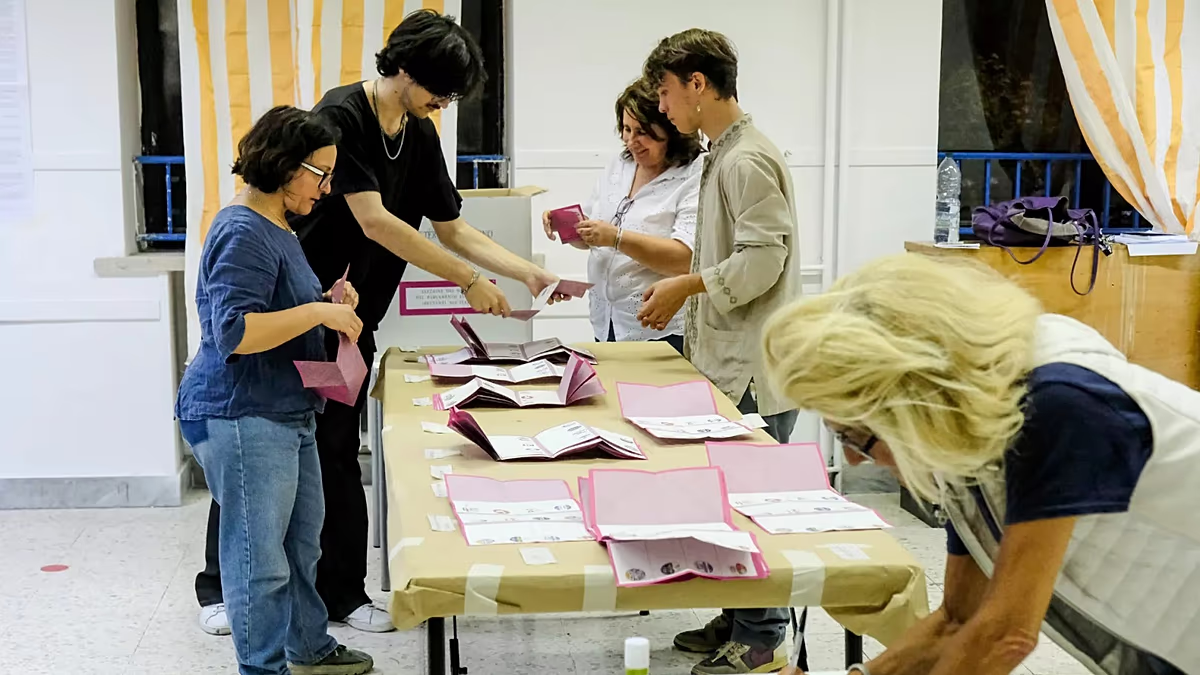
Public sentiment appears to strongly support this regulatory change. In extensive consultations held in 2024, nearly 9,000 Warsaw residents participated, with an overwhelming 81% voting in favour of the night-time sales ban. Of those supporters, 97% believed it should apply uniformly across the entire capital. This consensus suggests a widespread desire among citizens for quieter, safer evenings. In street interviews, many residents, particularly older generations, expressed positive expectations. One elderly woman simply stated, “Thanks to this, it will be much calmer,” reflecting a hope for restored tranquillity. Others drew parallels to historical measures, recalling a communist-era ban on morning alcohol sales, which was intended to combat workplace drunkenness. One senior resident nostalgically noted, “They used to sell alcohol from 1 pm to 10 pm and everyone was happy. I think it is a very good idea.” This historical context provides a sense of precedent and familiarity for the policy.
The rationale extends beyond local experience, with residents citing successful models from other European nations. A young woman, referencing frequent trips to Sweden, commented, “I think it will be safer… where it works well.” This international perspective reinforces the argument that regulated alcohol sales can contribute to public order. However, the decision is not universally applauded. A vocal minority, particularly among younger residents, opposes the restriction. Their concerns are multifaceted: they worry it will stifle the spontaneity of summer evenings in public spaces, potentially drive up alcohol prices in bars and restaurants, and impose an unwanted limitation on personal freedom. In a telling encounter, young men who clearly had been drinking protested, “If there was this prohibition, I would have to be sober – I don’t like that idea.” This resistance highlights the tension between collective safety and individual liberty.
A more pragmatic concern raised by some, including one pensioner, is the potential for the ban to inadvertently stimulate a black market for alcohol. “With prohibition there is always some sort of black market,” he observed, recalling a long-standing tradition of informal sales. Yet, even while acknowledging this risk, he remained supportive, believing the overall benefits—fewer incidents and public rows—would outweigh the negatives. This nuanced view acknowledges the complexity of regulating consumption without eliminating demand. The conversation also touched upon the specific exception for the popular Vistula boulevards, where drinking alcohol is currently permitted despite a broader ban in public places. Most residents interviewed opposed extending the restriction to this beloved social space, arguing for designated areas where people, especially youth, can gather and relax responsibly.
The underlying philosophy for many supporters is not a condemnation of alcohol itself, but a call for moderation and responsible behaviour. One resident aptly summarized this sentiment: “The fact that I don’t drink doesn’t mean others shouldn’t. I’m just saying everything should be done in moderation… you don’t smash bottles in the middle of the boulevard.” This perspective shifts the focus from the substance to the conduct, suggesting that the goal is a more respectful and clean urban environment. The capital’s police have corroborated the positive impact observed during the pilot, confirming a decrease in interventions. They also underscore the serious legal consequences for retailers who violate the ban, including the potential loss of their liquor licence under the Act on Counteracting Alcoholism and Promoting Sobriety, ensuring the rule has enforceable teeth.
As the new regulations prepare to take effect at the beginning of June, Warsaw enters a period of observation and adjustment. Only the subsequent months will reveal whether the restriction on night-time alcohol sales truly translates into the greater peace and safety anticipated by its proponents. The decision represents a deliberate gamble on social order over unrestricted commerce, a compromise endorsed by a majority of the city’s inhabitants. It stands as a contemporary attempt to reclaim the nighttime atmosphere, drawing on historical precedent, international examples, and local pilot data. Whether it succeeds in curbing disturbances without fueling illicit trade or overly dampening the city’s vibrancy remains the unanswered question that now rests with the coming summer nights on Warsaw’s streets.