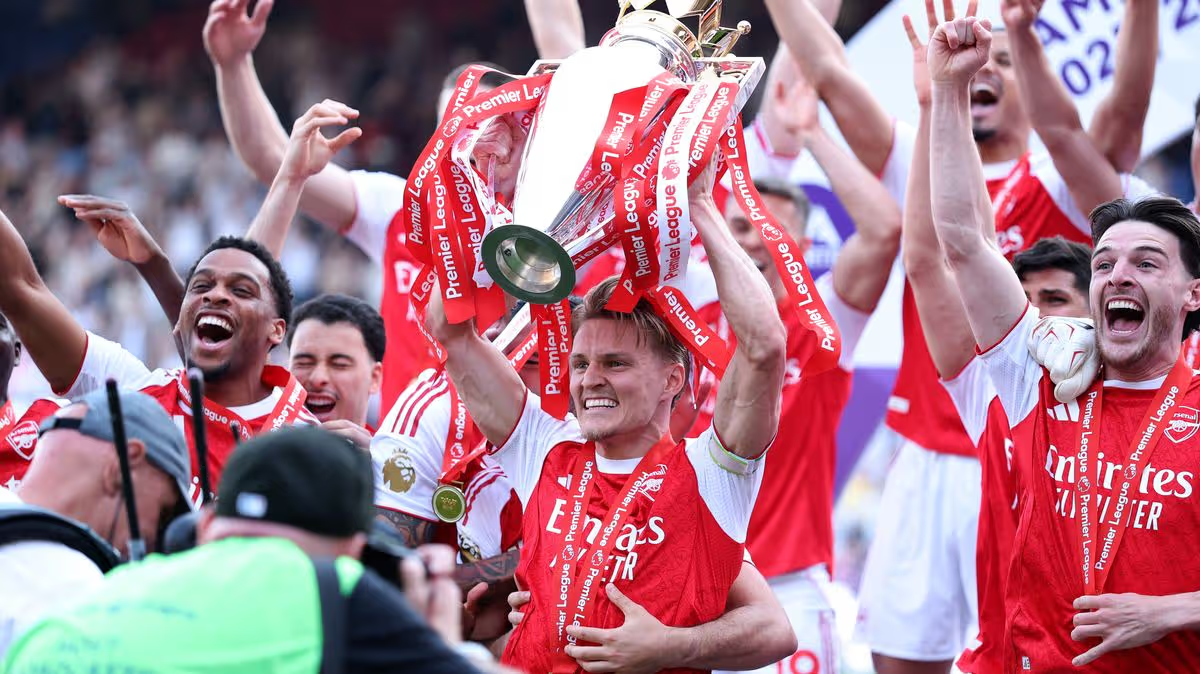



The curtain has fallen on a dramatic 2026-27 Premier League season, one that delivered long-awaited glory, profound disappointment, and every emotion in between. Arsenal finally banished their demons, ending a 22-year title drought with a commanding campaign that saw them finish seven points clear of Manchester City, while at the opposite end, Wolverhampton Wanderers, Burnley, and West Ham United suffered the agony of relegation. Beyond the champions and the relegated, the narrative was one of surprising ascents and shocking declines, a testament to the league’s relentless competitiveness.
For Mikel Arteta’s Arsenal, this was the ultimate validation. After three consecutive second-place finishes, the Gunners transformed from nearly-men to undeniable champions. A shrewd summer transfer window, bringing in talents like Viktor Gyokeres and Martin Zubimendi, provided the necessary depth and quality. They built their triumph on the league’s sturdiest defence and most lethal set-pieces, culminating in a final sprint of five straight victories. This hard-earned success, a reward for years of incremental progress, was the season’s feel-good story. Meanwhile, the feel-great story belonged to Aston Villa, who enjoyed a fairytale campaign under Unai Emery. Not only did they secure a top-four finish with impressive results against their direct rivals, but they also captured the Europa League, ending a three-decade trophy wait and evoking memories of their 1982 European Cup triumph.
The season’s most delightful surprises came from the south coast and the north-east. Bournemouth, under the now-departed Andoni Iraola, orchestrated a magnificent sixth-place finish and Europa League qualification fueled by an astonishing 18-game unbeaten run to end the season, while Sunderland, freshly promoted, staged a final-day surge to snatch seventh place and a European tour. Their successful, heavy investment in the squad, embodied by the inspirational Granit Xhaka, paid off spectacularly. They were joined in celebrating unexpected European qualification by Brighton & Hove Albion, who recovered from a mid-season slump to clinch a Conference League spot. Brentford, too, defied pre-season relegation predictions to finish a commendable ninth, thanks in large part to the goal-scoring exploits of Igor Thiago.
For the traditional giants, however, the season ranged from underwhelming to disastrous. Manchester City’s Pep Guardiola era concluded with an FA Cup and Carabao Cup double, but the failure to retain the Premier League title marked a relative disappointment. Liverpool suffered a alarming collapse, finishing a distant fifth as Arne Slot’s second season unravelled amid tactical issues and high-profile signings failing to deliver. The most profound chaos, however, reigned at Chelsea. A revolving door of managers, a discordant squad, and a scattergun recruitment strategy culminated in a dismal 10th-place finish, with off-field controversies involving captain Enzo Fernandez symbolising a club in utter disarray, now tasked with a major rebuild under new leadership.
The battle at the bottom carried its own drama. Tottenham Hotspur narrowly avoided a catastrophe, with Roberto De Zerbi’s late rally saving them from an unthinkable relegation after another season of turbulence. Nottingham Forest continued their chaotic yet captivating existence, navigating multiple managerial changes to secure safety and enjoy a European semi-final run led by Morgan Gibbs-White. The relegated trio, however, had few positives. Wolves were simply abject, registering a pitiful goal tally, while Burnley were hopelessly out of their depth from the outset. West Ham’s relegation, despite accumulating a historically sufficient points total, sparked fury towards the ownership, a bitter end for a club that had grown accustomed to European football in recent years.
As the dust settles, the season leaves a clear legacy of triumph for Arsenal’s project and Villa’s ambition, and a warning about the perils of instability for the likes of Chelsea and Spurs. The success of clubs like Bournemouth and Sunderland proves that with intelligent management and cohesive planning, dreams can be realised. For the fallen giants and the relegated, the summer represents a painful period of introspection and a formidable challenge to rebuild. The 2026-27 season was a powerful reminder that in the Premier League, past success guarantees nothing, and every campaign writes its own unforgettable story of ecstasy and despair.