


Of course. Here is a summarized and humanized version of the content, structured into six paragraphs.
Paragraph 1: A Routine Flight Turns Unusual
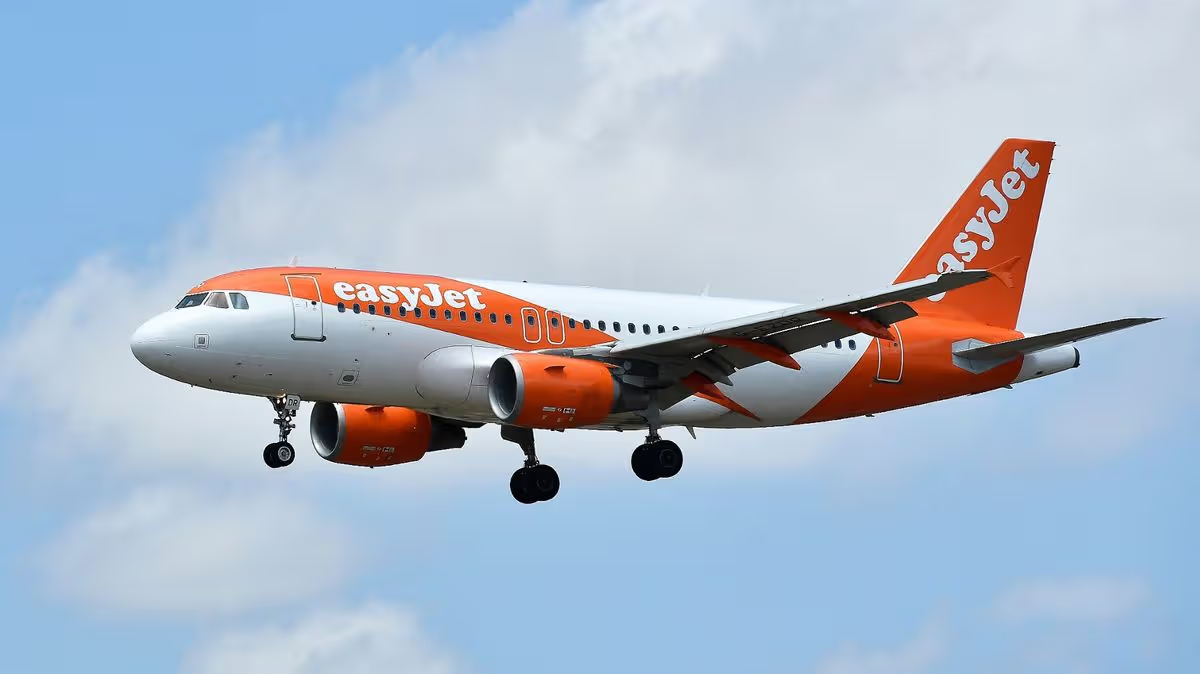
Passengers aboard an EasyJet flight from the Isle of Man to Liverpool found their journey dramatically altered when a routine landing attempt escalated into an emergency situation. The Airbus A319, operating as flight U251, was nearing its destination at Liverpool John Lennon Airport when the normal flow of events was interrupted. What began as a standard approach would soon require quick thinking and decisive action from the flight crew, turning a short hop across the Irish Sea into a memorable event for everyone on board.
Paragraph 2: The Aborted Landing and “Go-Around”
The issue began during the final stages of the landing sequence at Liverpool. As the aircraft prepared to touch down, the pilots identified a potential hazard—another aircraft was blocking the runway. Following strict safety protocols, the crew immediately initiated a “go-around,” a procedure where an approaching aircraft aborts its landing, climbs back into the air, and prepares for another attempt. This maneuver is a standard and well-practiced safety measure designed to avoid any risk of collision or unsafe conditions on the ground.
Paragraph 3: From a Holding Pattern to an Emergency Declaration
After executing the go-around, flight U251 entered a holding pattern, circling at 6,000 feet just outside Liverpool while the crew reassessed the situation. However, the circumstances quickly evolved beyond a simple delayed landing. Shortly thereafter, the crew made a critical decision: they declared a formal mid-air emergency. This was communicated to air traffic control by setting their transponder to “Squawk 7700,” the universal radio code that alerts all ground controllers to an aircraft in distress and needing priority handling.
Paragraph 4: The Decision to Divert to Manchester
With an emergency now declared, air traffic controllers assumed a direct role in managing the flight’s safe resolution. Recognizing that Liverpool’s airport might not be the optimal location for handling an unforeseen incident—possibly due to ongoing runway congestion or the nature of the emergency—controllers provided new navigation vectors. They redirected the aircraft away from Liverpool and toward Manchester Airport, a larger hub with longer runways and more comprehensive emergency support facilities on standby.
Paragraph 5: Preparation and Safe Landing at Manchester
As flight U251 turned towards Manchester, a coordinated ground response was activated. Emergency services at Manchester Airport, including fire and rescue teams, were placed on immediate standby. This is a standard and crucial precaution for any unscheduled arrival under emergency conditions, ensuring that every possible resource is available instantly upon touchdown. Following this guided diversion, the Airbus A319 safely landed at Manchester Airport in the afternoon, bringing the tense situation to a calm and secure conclusion for all passengers and crew.
Paragraph 6: The Aftermath and Standard Safety Protocols
While undoubtedly an alarming experience for the passengers, who were informed they would be landing at a different airport, the event highlighted the robust safety systems integral to modern aviation. From the initial go-around procedure to the declaration of an emergency and the coordinated diversion to a better-equipped airport, each step followed established protocols designed to protect lives. EasyJet has been contacted for further comment on the incident, which serves as a reminder of the industry’s layered safeguards that work seamlessly, even when a flight does not go as originally planned.