

The Allure of Affordable Escapes: Navigating Europe’s Changing Travel Landscape
As the summer travel season approaches, many are feeling the pinch of rising airfare costs. In response, a significant trend is emerging across Europe: the pivot towards shorter, more manageable city breaks. This shift sees travelers consciously swapping distant, long-haul adventures for closer-to-home getaways that promise rich experiences without the exorbitant price tag or lengthy travel times. It’s a movement driven by pragmatism and a desire for immersion, recognizing that a fulfilling holiday doesn’t require crossing continents. This evolving mindset sets the stage for a deeper exploration of value, prompting travelers to ask not just where to go, but how far their budget will stretch once they arrive.
To answer this crucial question, the UK’s Post Office Travel Money has released its comprehensive City Costs Barometer for 2026. This insightful annual report goes beyond flight prices to provide a realistic snapshot of on-the-ground expenses in 50 European cities. It calculates the total cost for two people of 12 typical tourist items, creating a practical budget blueprint. The list is thoughtfully curated, encompassing daily essentials like coffee, beer, wine, and a three-course dinner with drinks; practical transport costs including airport transfers and a 48-hour travel card; key cultural experiences like a sightseeing bus tour and entry to a major museum, gallery, and heritage attraction; and, most significantly, two nights in a three-star hotel. The report wisely notes that a city’s rank matters less than how the prices feel to an individual traveler and how they plan to spend, emphasizing that accommodation costs are often the decisive factor, where even a small change can alter the entire trip’s affordability.
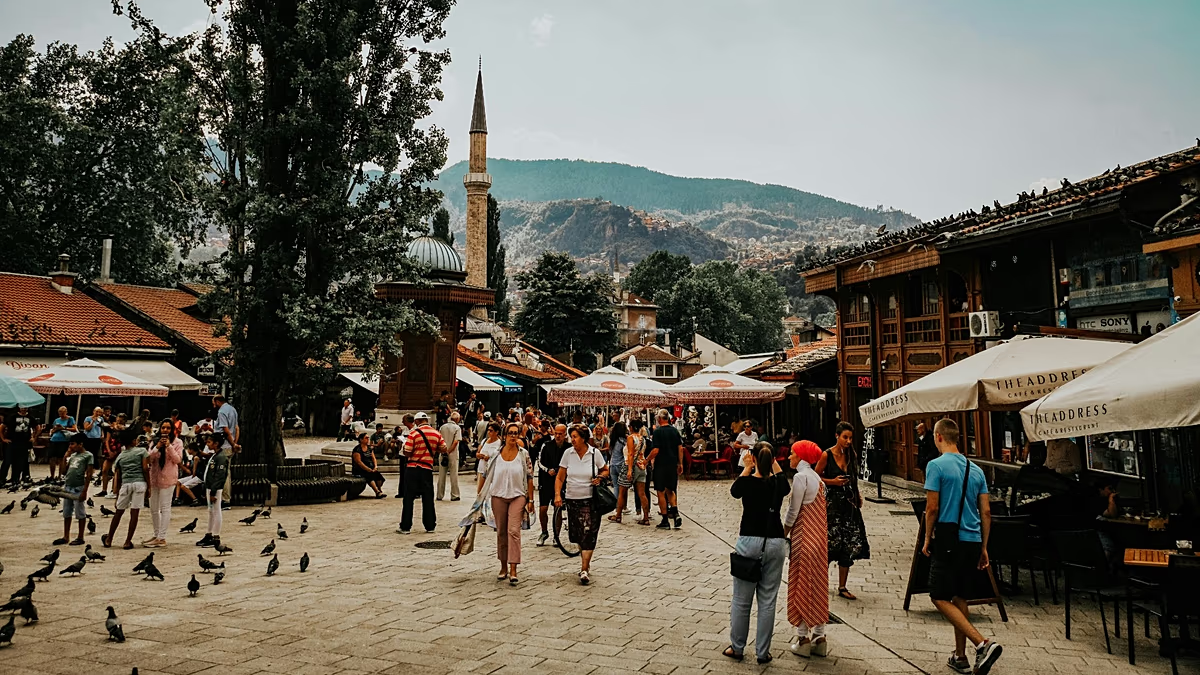
According to this detailed analysis, the crown for Europe’s best-value city break for 2026 goes to Sarajevo, Bosnia and Herzegovina. With a total barometer cost of just £248 (€287), it exemplifies the trend of exceptional value paired with profound cultural depth. Sarajevo’s affordability, driven by reasonably priced hotels, cheap public transport, and low-cost attractions, creates a “perfect” environment for travelers seeking a potent mix of Ottoman and Austro-Hungarian history, compelling stories, and delicious cuisine without financial stress. Eastern Europe continues to dominate the value chart, claiming eight of the top ten spots. Following Sarajevo, Bucharest, Romania (£258/€299) is heralded as “the place to book” for vibrant energy and well-priced food and drink, while Tirana, Albania (£263/€304.50) offers a “laid-back” and “newly popular” alternative with its colourful streets and burgeoning cafe culture. Belgrade, Serbia (£265/€307) “ticks all the boxes” for nightlife, hearty food, and scenic Danube walks, and Trenčín, Slovakia (£272/€315) provides a “quieter alternative” with a picturesque historic centre perfect for a slower-paced visit.
This list highlights a vital truth for modern travelers: cheaper destinations offer a liberating sense of freedom. As the report states, in these cities, you can afford to “decide as you go.” The anxiety of constant budget-checking dissipates when a meal, a museum ticket, or an extra night out doesn’t break the bank. This financial breathing room allows for deeper immersion—spontaneously joining a local festival, extending a café visit, or taking a day trip you hadn’t planned. It transforms a holiday from a pre-paid itinerary into a dynamic exploration where discovery isn’t limited by a tight daily allowance. This sense of liberty is arguably as valuable as the money saved, enriching the travel experience in immeasurable ways.
In stark contrast, the barometer’s other end features some of Europe’s most celebrated and costly destinations. Oslo, Norway claims the title of the most expensive city break for 2026, with a staggering total of £734 (€850). It is followed by Copenhagen, Denmark (£671/€777), Edinburgh, Scotland (£668/€773.50), Geneva, Switzerland (£644/€746), and Barcelona, Spain (£641/€742). The report identifies high accommodation and dining costs as the primary drivers of these elevated prices. However, this does not render these destinations unvisitable; rather, it necessitates a different approach. As the Post Office advises, “In more expensive ones, a bit of planning helps keep costs under control.” This might mean booking accommodations well in advance, seeking out lunch specials instead of expensive dinners, utilizing city tourist cards for bundled attraction entry, or prioritizing free activities like scenic walks and public parks.
Ultimately, this year’s travel landscape invites a more mindful and strategic approach to holiday planning. The rise of the short-haul city break is more than a reaction to airfare hikes; it’s a rediscovery of the diverse gems closer to home. Whether drawn to the historic, budget-friendly lanes of Sarajevo and Bucharest or the iconic, if pricier, boulevards of Barcelona and Copenhagen, success lies in informed choice. By understanding the full spectrum of costs—especially those incurred after landing—travelers can confidently select a destination that aligns not only with their dreams but also with their financial reality, ensuring their summer escape is memorable for all the right reasons.