

The Quiet Revolution: How Mobile Trucks Are Changing the Story of Lung Cancer in England
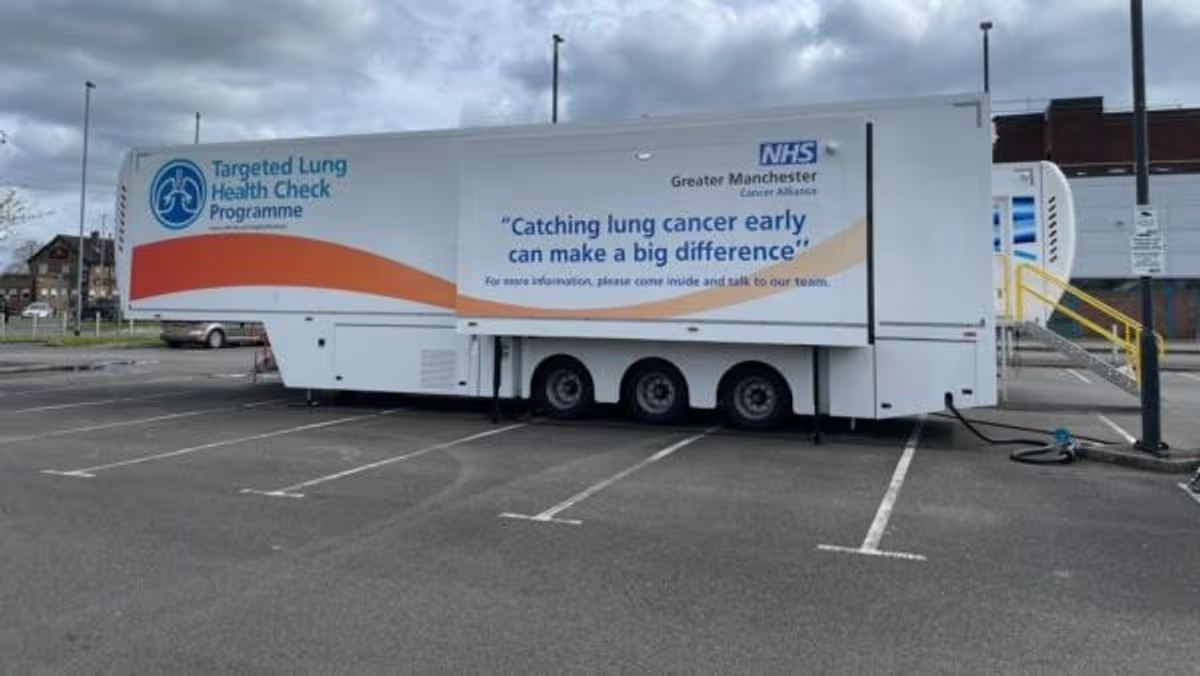
In a quiet but profound revolution for public health, the NHS in England is rewriting the narrative around lung cancer—one of the nation’s deadliest diseases. Since 2019, a pioneering screening programme has strategically deployed mobile scanning units to the heart of communities hardest hit by the illness. These unassuming trucks, parked in supermarket car parks, at sports stadiums, and on familiar high streets, are not just pieces of medical equipment; they are beacons of proactive care. To date, they have successfully identified 10,678 cases of lung cancer. The most critical statistic, however, is that over three-quarters of these diagnoses were caught at stages one or two—the earliest and most treatable phases.
Bringing Hope to the Doorstep
The genius of the programme lies in its design: removing barriers to access. Traditionally, individuals might delay seeking help until symptoms become severe, often leading to late-stage diagnoses. The Lung Cancer Screening Programme flips this model by bringing the service directly to where people live their daily lives. As Professor Peter Johnson, NHS England’s national clinical director for cancer, emphasises, the initiative is “designed around where people already are,” making it profoundly easier and less intimidating for people to get checked. This approach has transformed a potentially daunting hospital visit into a convenient stop during a routine shopping trip, effectively dismantling the logistical and psychological hurdles that often prevent early engagement with healthcare services.
The Lifesaving Difference of Early Detection
The clinical impact of this convenience is staggering. Catching lung cancer at its earliest stages dramatically alters a patient’s prognosis. Officials note that those diagnosed early are 13 times more likely to survive for five years compared to those diagnosed at a late stage. This is the core mission of the programme: shifting diagnoses from emergency, palliative scenarios to opportunities for curative treatment. Early-stage lung cancer can often be treated effectively with surgery or targeted therapies, offering patients not just a chance at survival, but a return to a good quality of life. The 10,678 cases detected represent thousands of individual stories where the trajectory of illness was fundamentally changed by a scan in a mobile unit.
A Personal Testament: Ken Roberts’ Story
The statistics are brought powerfully to life by stories like that of Ken Roberts, a 74-year-old grandfather and company director from Bolton. With no symptoms at all, he received an invitation when a mobile unit was parked at his local Morrisons. He admits he “ummed and ahhed” about attending, but the sheer convenience—the easy parking, the local familiarity—persuaded him. That decision led to a scan and the diagnosis of a stage one lung cancer, treatable with surgery. He now feels “really lucky” and actively encourages everyone to attend their invitations. Ken’s experience underscores a vital truth: these programmes are designed to catch the disease before it announces itself, targeting the silent, early development of cancer in individuals who feel perfectly well.
A National Vision for the Future
The success in targeted areas has paved the way for an ambitious national expansion. With around 50,200 new lung cancer cases diagnosed in the UK each year, the need is vast. The NHS plans a nationwide rollout of the programme by 2030, aiming to invite six million people in England for a lung health check. This expansion is projected to diagnose up to 50,000 cases of cancer early. Health Secretary James Murray frames this as a cornerstone of the National Cancer Plan, which aims for three in four people diagnosed from 2035 to be cancer-free or living well after five years. “Earlier diagnosis is crucial to achieving that,” he states, highlighting a shift in policy from reactive treatment to proactive, community-based prevention and early intervention.
A Call to Action: Embracing the Opportunity
The programme stands as a testament to a modern, compassionate approach to healthcare: meeting people where they are, using technology like AI-enhanced scanners to improve accuracy, and fundamentally prioritising prevention. It demonstrates that when healthcare systems step out of traditional settings and into the community, they can overcome inertia and save lives on a massive scale. The final message, echoed by health leaders and survivors like Ken Roberts, is a simple yet urgent call to action. As invitations expand across the country, the public is urged to see them not as a minor administrative task, but as a potentially lifesaving opportunity. Taking that step into a mobile unit in a familiar car park could, as the Health Secretary notes, be “the most important thing you do this year,” turning a routine errand into a moment that secures a future.