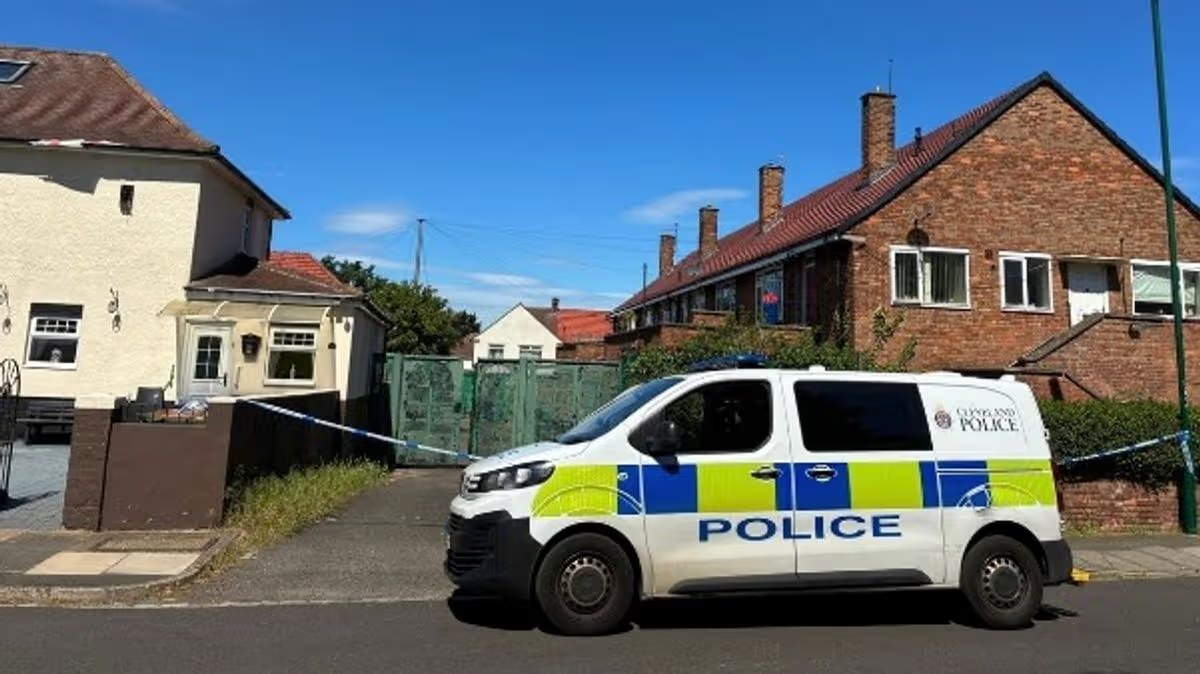



In the quiet hours of a Saturday night, the ordinary rhythm of life in Eston, Middlesbrough, was shattered by a tragedy. Around 11 p.m., a call from a concerned member of the public prompted Cleveland Police officers to rush to Ayton Crescent. What they discovered was a scene of profound violence and loss: a man with significant, grievous injuries. Despite the immediate efforts of the emergency responders, the man was pronounced dead at the location. This sudden eruption of fatal violence in a residential community marked the grim start of a murder investigation, transforming a local street into the focal point of a search for answers and justice.
The police response was swift and comprehensive. Leveraging resources like the National Police Air Service, authorities quickly focused their efforts on identifying those responsible. This rapid action led to the arrest of a 39-year-old woman, who remains in custody as the investigation unfolds. However, the puzzle is not yet complete; police have indicated that inquiries are actively ongoing to locate a second individual connected to the incident. This suggests a complex scenario behind the crime, pushing detectives to piece together the full narrative of what transpired on that fateful night.
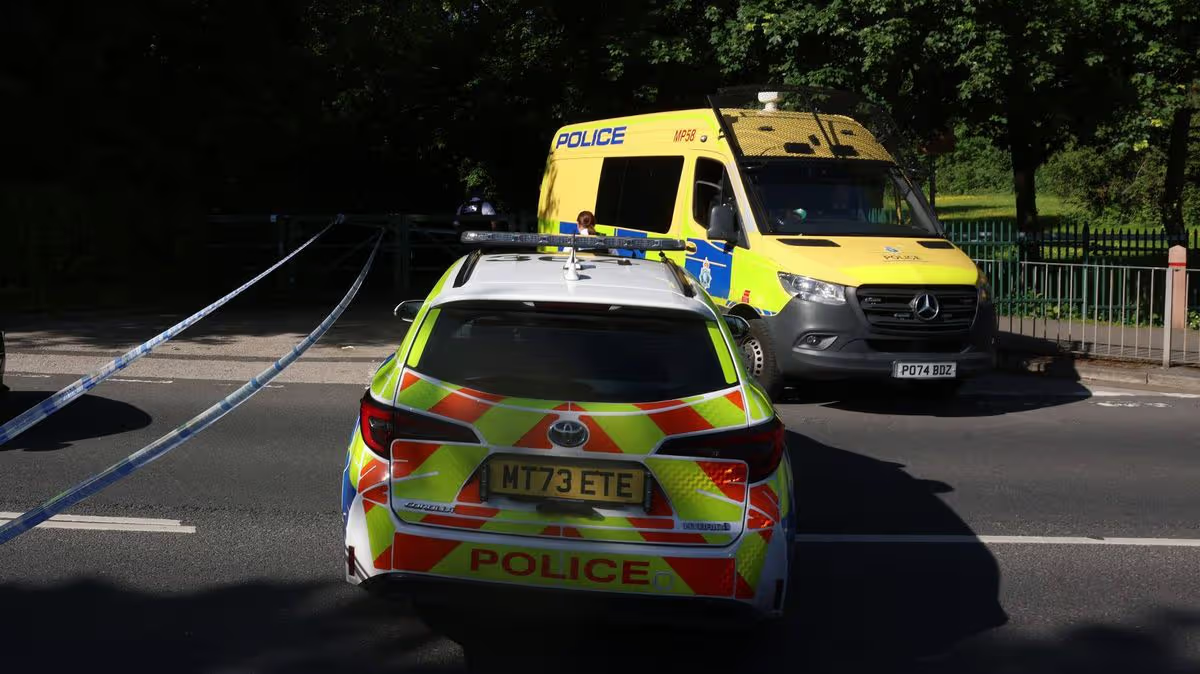
In the wake of the death, Ayton Crescent has become a place marked by both visible and invisible changes. Police cordons now delineate the scene, a stark visual reminder of the intrusion of violence into everyday life. Officers continue to maintain a presence there, methodically gathering evidence. Furthermore, Superintendent Daryll Tomlinson has assured the community that there will be an increased police presence in the wider area. These measures serve dual purposes: to aid the meticulous forensic and investigative work required, and to provide a tangible sense of security to residents shaken by the events occurring so close to their homes.
Addressing the inevitable fear and anxiety that such incidents generate, Superintendent Tomlinson offered a crucial reassurance to the public. He stated clearly that this is believed to be an isolated incident, with no wider risk to the community. This message is vital in restoring a sense of safety and normalcy, aiming to prevent the spread of undue alarm. It underscores that the violence was specific, not random, and that the targeted police action is containing the threat. Nonetheless, the shockwaves of such a loss inevitably ripple through a neighborhood, leaving residents to grapple with the unsettling reality that profound harm can emerge unexpectedly in familiar surroundings.
The path to justice now heavily depends on the collective effort of the authorities and the community. Police have made a direct appeal for information, urging anyone with knowledge that could assist the investigation to come forward. They can contact Cleveland Police directly, quoting reference number SE26098497, or provide details anonymously through Crimestoppers. This appeal highlights that community cooperation is often the cornerstone of solving such crimes; a witness’s observation, a piece of overlooked evidence, or a crucial detail from a resident can become the key that unlocks the case.
Ultimately, this incident is a stark human story of loss, violence, and the urgent pursuit of truth. Behind the police terminology of “serious injuries,” “scene,” and “arrest” lies a profound personal tragedy—a life abruptly ended, a family and friends plunged into grief, and a community confronting vulnerability. The ongoing investigation represents not just a procedural search for suspects, but a societal endeavor to affirm that such acts cannot stand unexplained or unaddressed. It is a reminder of the fragile threads that hold our communal safety together and the concerted effort required to mend them when they are violently torn.