


Here is the humanized and expanded summary, structured into six paragraphs.
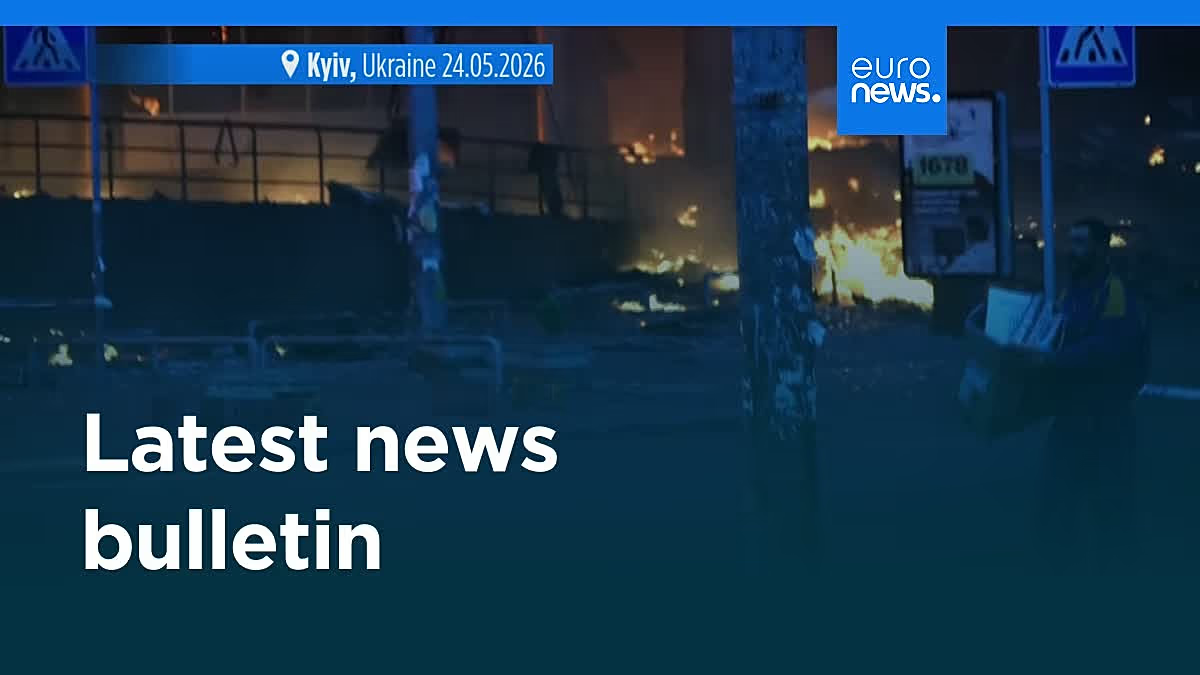
The dawn over Kyiv arrived not with quiet light, but with the acrid smell of smoke and the grim sound of emergency sirens. In the wake of a massive, coordinated Russian missile and drone assault that shook the city overnight, President Volodymyr Zelenskyy walked through the still-smoldering scars of his capital. His visit to the damaged districts was not a distant, formal inspection but a somber journey into the heart of the devastation endured by his people. With his signature green fleece and a face etched with a mixture of defiance and profound weariness, he traversed neighborhoods where ordinary life had been violently interrupted, stepping over rubble that, hours before, had been the walls of homes and the fabric of community.
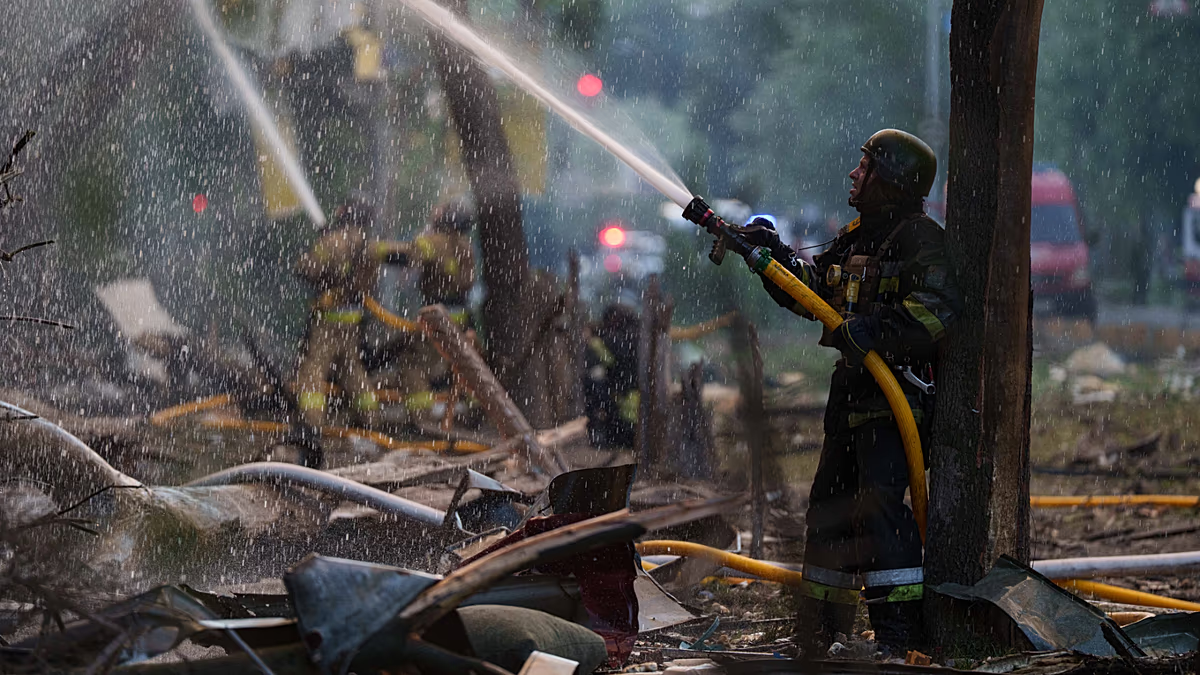
The scenes he witnessed were a brutal catalog of loss. Video footage from his visit showed him intently surveying the gutted remains of residential apartment blocks, where shattered windows gaped like wounds and personal belongings lay scattered amidst concrete and twisted metal. In a particularly symbolic blow, he also inspected damage to the Ukrainian National Chernobyl Museum, an institution dedicated to preserving the memory of one of history’s worst man-made disasters, now itself a victim of modern bombardment. Each shattered exhibit case and dust-covered artifact served as a poignant metaphor: the past horrors the museum commemorates were now mirrored by a present-day catastrophe of deliberate destruction.
The human cost of the night’s terror was stark. Ukrainian authorities reported that at least two people were killed in the onslaught, with dozens more wounded as a barrage of explosions reverberated through the streets. Behind these sterile statistics were stories of sudden terror—families huddled in corridors, the deafening crash of impacts, and the frantic efforts of first responders pulling survivors from the wreckage. Each number represents a life extinguished or irrevocably altered, a personal tragedy that ripples out through families and neighborhoods, compounding the collective trauma of a nation enduring a prolonged assault on its very existence.
Standing amidst this destruction, President Zelenskyy leveled a grave and specific accusation against Moscow. He stated that Russia had deliberately targeted civilian infrastructure, citing the damaged homes, schools, and the cultural landmark of the Chernobyl Museum as evidence. This charge, repeated throughout the conflict, frames the attack not as a military miscalculation but as a conscious strategy to terrorize the civilian population and erase Ukrainian identity. Furthermore, Zelenskyy revealed a troubling tactical detail: that Moscow had deployed its advanced hypersonic Kinzhal (“Dagger”) ballistic missile in the strike. This marked only the third reported use of the high-speed, difficult-to-intercept weapon in the war, signaling both a demonstration of Russia’s remaining high-end capabilities and a possible escalation in the technical ferocity of its attacks on urban centers.
Zelenskyy’s presence on the ground served multiple, powerful purposes. It was an act of solidarity, demonstrating to frightened citizens that their leader shares their peril and witnesses their suffering firsthand. It was a gesture of resilience, visually asserting that the heart of Ukrainian governance remains beating and unbroken, even amid the ruins. Perhaps most importantly, for a global audience, it was a piece of strategic communication. By documenting the aftermath and personally pointing to the evidence of civilian targeting, Zelenskyy continues to rally international support, bolster calls for enhanced air defense systems, and frame the narrative of the war as a struggle between a brutal, indiscriminate aggressor and a defiant nation protecting its homeland.
Ultimately, this single event—a president walking through bomb damage at dawn—encapsulates the enduring reality of Ukraine’s war. It is a conflict fought on front lines with tanks and trenches, and in city streets with missiles and drones aimed at the spirit of the people. The attack on Kyiv, featuring both indiscriminate barrages and precision, high-tech weapons, underscores the relentless and multi-faceted pressure Russia seeks to maintain. Yet, in Zelenskyy’s deliberate, public inspection of the wounds inflicted upon his capital, we also see the enduring Ukrainian response: a refusal to be normalized to the horror, a commitment to bear witness, and a steely determination to rebuild and resist, no matter what falls from the night sky.